Tag Archives: Inspirational

THE SPIRITUAL DANCE OF INSPIRATION

Who inspires you? Whom do you inspire? Where does your inspiration lead you?
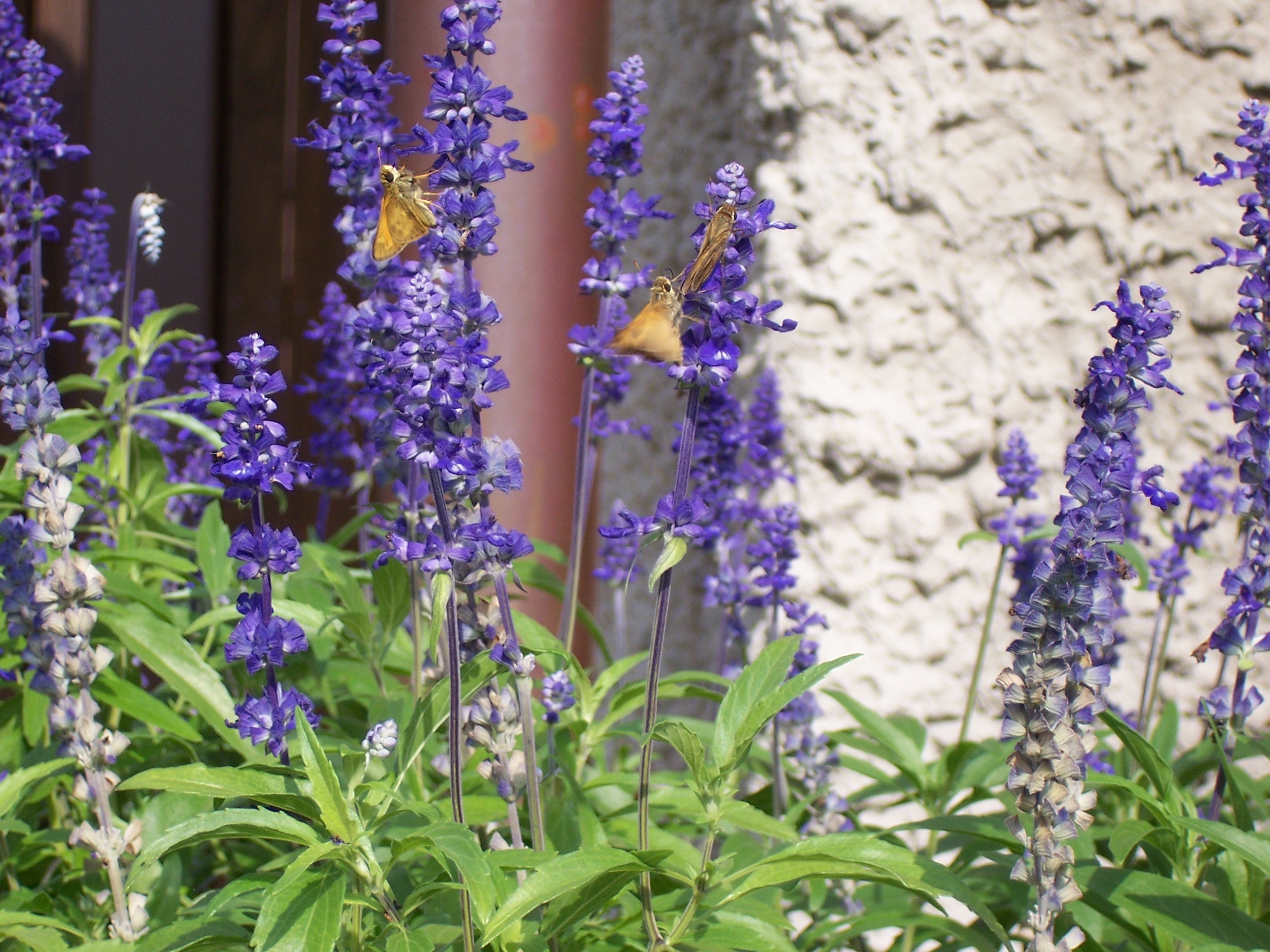
“You are here to enable the divine purpose of the universe to unfold.  That’s how important you are!”  Eckhart Tolle

You are unique. Live your life authentically, for only you can bring to the world what you were meant to bring.  If you do not live out your passion, it is not only your loss, but the world’s loss.  As the days grow longer and we spend more time inside, now is a good time to look deeper and explore whether you are living your true purpose.

I’ve been a dancer, teacher, and writer.  I love creating a new dance or piece of writing, but beneath all that is my real purpose—to inspire.  When I was first presented with this purpose, I thought, “How superficial.”  Compared to all the people who were feeding the hungry and curing the sick, it didn’t seem concrete enough to matter.  But then, I realized that I had done things I would never have done had I not been inspired by others.

As a teenager, I read about Isadora Duncan, the mother of modern dance.  She defied convention by living free from the constraints placed on the women of her time and created a new, freer form of dance.  She inspired me to become a modern dancer, but also to reject a conventional life that defined who I could be in terms too narrow for me to become who I truly was. As a result, dance became a powerful spiritual as well as creative practice, and in the process, my body which had been weakened by childhood diseases became strong.

In 1958, after living in the segregated South most of my life, I wrote an essay on prejudice for a ninth-grade English assignment.  My teacher’s comment was “With this objectivity, you would make a good journalist.”  She was the first person who encouraged my writing.  I was shy and introverted and couldn’t imagine interviewing people, but I thought, “Maybe people need to hear what I have to say.  Maybe my words matter.”  So I enrolled in speech classes and continued writing, knowing in my heart that someday I would write seriously.

By the time I had to make a choice about how to earn a living, another teacher had inspired me.  My eleventh grade history teacher had his students read and discuss classics like Utopia, The Prince, and 1984.  Instead of teaching wars, he used literature to teach the great ideas of each period and history came alive for the first time.

How Living Our Purpose May Inspire Others

As a result of these two teachers and the motivation that I could teach dance as well as teach English, I became a high school teacher dedicated to teaching students how to think.  I loved seeing their eyes light up as a concept became clear.  I loved seeing them become totally absorbed in creating a project.  I wanted to help them become lifelong learners and have the courage to become who they really were.

Find Your Calling to Live Fully

As my life has evolved and people have responded to my work, regardless of its form, I have come to understand inspiring others is my calling.  At the heart of each of us is a passion and purpose that enlivens us.  As it calls to us, we must find a way to answer the call or we will always wonder what could have been.  Sometimes the call comes from our interaction with others.  Sometimes it comes from that voice within whispering to us during the night when we lie awake.  Sometimes it slams into us because of loss and tragedy.  But it is our soul calling us back to ourselves and who we really are.  May you find your calling.

If you are searching for your calling, I highly recommend the classic book, Callings: Finding and Following an Authentic Life, by Gregg Levoy.  It speaks deeply and eloquently about this topic.  If you live your calling, what is it?  Please share what it means to you under comments.

©2011 Georganne Spruce

Related Articles:  What Oprah Knows for Sure About Your Calling, How to Find Your Calling

ACCEPTING THE RHYTHMS OF LIFE

“Not everything that is faced can be changed.  But nothing can be changed until it is faced.”  James Baldwin

Accepting Divine Order

When I first heard the term divine order, I latched onto it as way of describing the fluctuations in life that I didn’t always understand.  If a wonderful synchronistic event occurred, I labeled it divine order.  If something thoroughly unpleasant or tragic occurred, I labeled it divine order.  Divine order became the way I described all the mysteries in life.  It explained the unexplainable and helped me to accept what I couldn’t understand.

Learning to accept what is, whether we like what is happening or not, helps us to find peace and erases the resistance that may prevent us from understanding what is occurring.  At times, it may not be clear if what is occurring is a good or bad thing, but by accepting that it is in divine order, we acknowledge it is part of our reality.

Denial Undermines Our Power

People have a tendency to deny the negative experiences of life.  By doing so, we prevent ourselves from growing.  We need to acknowledge all experiences so that, if we are able to improve a situation, we don’t let the opportunity pass by.  Some things can’t be changed, but ignoring the ones that can only makes us feel less empowered or victimized.

The recent events at Penn State are a perfect example.  Many who were aware of the child abuse there chose to do nothing.  They denied and hid what they knew.  They refused to face the horrific effect their lack of action had on many young children.  Being unwilling to face their responsibility to stop this abuse, in the end, led to their disgrace.  Denial only delays the day we have to face the thing we fear.

Accepting What We Cannot Change

Unlike the Penn State disaster, there are events that occur over which we have no control.  The only thing we can control is our response.  A loved one becomes addicted to drugs.  Time after time they make foolish and dangerous choices, and time after time, we talk to them, and love them.  We may pay for them to see a counselor or go through a drug rehab program, but nothing we do changes their behavior.  We have faced the situation and are unable to change it, so we must accept it as it is.

Is the self-destruction of our loved one in divine order?  It is very difficult to believe it is, yet it may be the very experience that will eventually transform this person in a truly positive way.  In the middle of it, we have no way to know.  We can only accept what is and have faith that there is a karmic or spiritual reason for our loved one’s behavior.

Our society has encouraged us not to express negative feelings.  We’re supposed to be positive all the time, and in one sense, our society has encouraged us to deny what we really feel.  There’s nothing healthy about this although it is best for us to be aware of expressing those feelings appropriately.  But denying that we feel what we feel makes it impossible for us to resolve those problems and the issues around them.  We have to face it, if we want to change it.

The Divine Gift of Acceptance

Every year in January, a spiritual group to which I belong has a gift exchange.  We each bring an item that has meant a great deal to us, but one that we are ready to release.  The items are placed on a table and each person gets to choose.  Then, that person explains why they have chosen the gift and the person to whom it belonged explains what it meant to them.  Several years ago, I chose a stone a friend had originally bought at a Deepak Chopra seminar.  Across the stone is written “Acceptance,” and it lies on a table in my family room where I see it often to remind me that I need to accept what I cannot change.  Every year, I think, “I’m ready to let go of this.  I’ve learned about acceptance,” but inevitably life presents me with another lesson to illustrate that I still have more to learn.  I guess I have to accept the fact that I need to keep the stone for at least one more year.  How do you find acceptance with the difficult areas of your life?

© 2011 Georganne Spruce

Related Articles: Acceptance and Surrender, 12 Practical Steps for Learning to Go With the Flow, Dangers of Denial

INSPIRATIONAL REFLECTION: DANCING DEEPER

“Learning without reflection is a waste, reflection without learning is dangerous.” Confucius

Who Are You Really?

When I start feeling restless, I know I need to stop, quiet myself and go within.  My restlessness always comes from being too engaged with the outside world and not taking the time to reflect on who I really am and why I’m frantically rushing around.

Usually, when I’m rushing, it is because I want to be efficient or productive.  At that moment, I think it’s important to cram as much activity as possible into the day. It’s like dancing the salsa without the sensuality.  I define myself as the one who gets things done, the one you can depend upon to complete the task on time.  I buy into our cultural idea that being productive is what gives us value and that not being productive is laziness.  I am off-center.

Dancing Deeper

When we take the time to be quiet and go deeper, to save the salsa for another time and sit in silence, we find the dance within is smooth, a solo performed at adagio or lento, rising and falling with our breath.  What is unnecessary drops away.  We awaken to who we really are spiritually.  Here we can see that society’s and our self definitions are not who we are.  We are Oneness.

The book Oneness by Rasha points out the significance of these moments when we connect to the Divine.  “When one is in conscious alignment with the sum totality of one’s connectedness to All That Is, there is no limit to what can be experienced or created in physical form.”  (p. 230)

So here is the secret to infinite success.  It is inside of us. This is the connection that awakens us and empowers our dance of life to be all it can be.

Tools For Awakening to the Dance Within

There are many ways to experience reflection.  Sitting quietly or meditating is one.  If our quiet minds are disturbed by fears, then we need to direct our minds to release this fear.  During this quiet time, we may choose to ask for guidance or simply be open to whatever insights or thoughts emerge.  Walking or sitting in the forest or near the sea shore, any place where we have contact with Nature, may be very helpful.  This approach is what I would call passive reflection.

There are other, more active ways to reflect.  Journaling about events may stimulate new perspectives or insights.  Writing down our feelings is very healing and often inspiring.  I have been surprised a number of times when I wrote something, then suddenly thought, “That’s not true.  That’s my ego blowing this incident out of proportion.”  There are also times when I only become aware of a significant insight after I’ve written it down.

Similar things happen in the silence when we read from spiritual or inspirational works.   A truth suddenly appears in words we’ve hardly noticed before.  An idea that conflicts with our current perspective on an issue may shock us.  These discoveries are part of the dance too.  Reflection provides us with an opportunity to learn, as Confucius said.

Understanding Reflective Inspiration

An understanding of the lessons we need to learn from our experiences doesn’t always come at the time we are experiencing the lesson.  Time and distance often give us clarity.  Twenty years after a long-term relationship ended, I was still having dreams in which issues from this relationship were resolved or new insights appeared.  I had spent an extraordinary amount of time trying to understand the conflicts of the relationship soon after it ended, but it took years for my reflections on this subject to reveal the truths hidden underneath. Never assume that a reflection that doesn’t produce immediate insights is wasted.  Reflection provides an opening where wisdom may appear in its own time.

How do you make time for reflection in your life and what have you learned from it?

© 2011 Georganne Spruce

Related Sites:

Reflecting on the Divine Presence in Our Lives

AWAKENING THROUGH SPIRITUAL REFLECTION: WHAT DO YOU MIRROR?

“Do you ever wonder if the guy in the puddle is real, and if you’re just a reflection of him?” Calvin and Hobbs

Seeing Who We Really Are

Do you ever find yourself observing someone’s behavior, being irritated by it, then suddenly realize the reason it irritates you is because it’s a reflection of your behavior?  The idea that we are mirrors for each other is a powerful one, but whether or not we learn from these experiences depends on what we are willing to see.

Sometimes reflections are so clear, exact replicas of our faces, words or behavior that we cannot miss the message.  Other times, like the picture above, the reflection seems cloudy with undefined edges and unclear images.

Sharing Our Awakening

Last night, I listened to a presentation on Human Design with several people, many of whom are friends.  We discovered that most of us belonged to the same design type.  As the characteristics of our type were revealed, we mirrored one another with startled stares, exclamations, and laughter, amazed by our similarities. We were told that the strategy for centering our energy was “to wait and respond.”  To use our will power to force things to happen would create frustration.  Considering the fact that several of us are self-employed, we also mirrored our shock at this revelation.  How could that be?

Awakening Through Reflection

As I attempted to integrate our similarities, I also became aware that some of my companions, in the past, have reflected my behavior in ways I don’t particularly like.  I was looking at both sides of the mirror at one time.  Flashes of memories came flooding back:  the times I wanted to control something that was uncontrollable, the times I responded insensitively to another because I was frustrated (ouch), the times when I held back information for fear I would reveal too much of myself, and most of all, the ways I criticized the person mirroring this to me.  Each person in that room was my teacher.

Reflecting Who We Really Are

Along with getting a glimpse of the way others mirror who I am, I became aware that the strategy for my design type, wait and respond, was basically the same as the major spiritual lesson I had been learning.  About a year ago, unhappy with the direction of my life, I meditated on how to create a less stressful life where I could put my writing at the center.  I felt I needed a master plan.  Then, the awareness came to me that all I needed to do was to take the first step.

Wait and Respond

I was tired.  Tired of trying so hard.  Tired of planning.  I decided to try a different way.  So I took the first step.  I began writing my memoir every day, decided to set up a blog and learn to use social media for marketing.  Okay, I did have sort of a plan, but what should I do first other than work on the memoir?

I waited.  Before long, what I needed showed up.  The community college offered courses on social media and blogging, and a woman I knew understood this new technology.  I took the courses and my friend became my mentor.  Waiting, something I hate to do, led me to the next step; then I responded.  The human design strategy simply reflected back to me what I already knew: when I wait, what I need shows up, then I respond.

I have much to reflect upon as I look deeper into the experience I had last night.  Some of edges in these reflections are crystal clear, while others are blurred and mysterious.  The latter will require that I go deeper.  In next week’s blog, I will explore the way we may use reflection to do that.

When you look at those close to you, what do they reflect back to you?  What are you willing to see?

ZQT4PQ5ZN7F5

© 2011 Georganne Spruce

Related Articles:

I See You, Now See Me – Neale Donald Walsh

How God Tells You It’s Time To Change – Wayne Dyer