Tag Archives: Relationships

AWAKENING TO OPENNESS

“It takes a lot of courage to show your dreams to someone else.”  Erma Bombeck

How much of yourself do you share with other people?  If you don’t share much, what fear prevents you from doing that? Why do you feel you must hide a part of yourself?

010 (3)

Hiding or Not Hiding

I met a woman some time ago who seems to be a very nice person.  We’ve been in several discussions; yet I know nothing really personal about her except for her political beliefs.  Her emotional life remains hidden.

I have also recently met a man who is so open that I continue to be amazed by the depth of what he is willing to share.  Instead of practically pulling teeth like I’m used to doing with many men, communication with him is so easy.  He just says what he thinks and goes deeper without my asking him to.

Trust Is at the Core of Openness

There are so many things that affect our willingness to be open.  At the core of it is trust, the two-fold kind.  We have to feel we can trust the person with whom we are sharing our stories, and we also have to trust ourselves and believe we have something of value to share.

While it is true that we must use discretion in what we reveal to others, our ability to share deeply with others enriches our lives.  There have been times in my life when I felt no one understood me and no one really wanted to know what was going on inside me.  Those were barren, lonely times because I was surrounded by people who were not comfortable sharing much of themselves, so they really didn’t want to hear about my deeper thoughts and struggles.

However, most of my life I have had at least one best friend with whom I could share anything and who would share anything with me.  Sometimes what one of us thought or did shocked the other, but we were always there for each other whether we approved of the other’s choices or not.  Our trust in each other created an incredible intimacy and richness to our lives.

openness

Openness Requires Discretion

Of course there are times when it isn’t wise to be open.  Sharing too much about one’s personal life in the work place can be distracting and inappropriate.  If a friend or partner has misused the information we have shared, we need to reconsider the wisdom of sharing so much with that person.  Sometimes we just have to set boundaries in order to feel safe enough to be open.

Once, when my relationship with a man I loved was breaking up, I shared this with a friend, never dreaming she would pass the information on to two women I hardly knew.  They then shared with a neighbor.  Soon afterwards, I walked into the ladies restroom at my spiritual community and a woman I barely knew told me how sorry she was that this man and I were splitting.

I was shocked.  I had told only my closest friends who I thought would be discrete.  When I tracked this back to the source, I told that friend how upset I was, and she was very sorry.  Her perception of how close I felt to her two woman friends was different than what I felt, and when we sorted it out, she agreed not to share my relationship information with anyone without asking my permission.  With this understanding in place, I felt comfortable sharing with her in the future.

Being Who We Are Creates Connections With Others

While we have to be wise about our openness, we also miss so much in life when we are afraid to show others who we truly are.  As I’ve said many times, when I decided to publish my memoir, I had to overcome the fear of being open.  Being that open felt vulnerable, but I couldn’t tell my story in a way that would benefit those who read it unless I was transparent.  It took quite a while to find the courage to do that.

I’m glad I made that decision because my being open has allowed others to open up to me, to share their deepest thoughts and tragedies, to share things with me that they would never have shared with me had we not had the book to connect us.  When we understand that others have had similar experiences, it often helps us to stop judging ourselves and just know that our “failures” are only human.

I like what Tony Schwartz says:  “Let go of certainty.  The opposite isn’t uncertainty.  It’s openness, curiosity and a willingness to embrace paradox, rather than choose up sides.  The ultimate challenge is to accept ourselves exactly as we are, but never stop trying to learn and grow.”

Openness Enriches Us Spiritually

When we truly accept who we are and love ourselves, we can also accept that we make mistakes.  To be open to living life at its fullness, we have to interact with others, explore our thoughts and lives together.  We have to be open to the idea that it is often our mistakes that teach us the lessons we really need to learn in order to grow and become who we truly are.

When we show our dreams to someone else, they may know exactly what we need to make those dreams come true. Openness allows us to connect, explore, and discover “the buried treasure” within each of us. When we do that and open our hearts to each other, life can be oh, so sweet.

© 2013 Georganne Spruce                                                          ZQT4PQ5ZN7F5

Related Articles:   Love:  It’s Not Where You Look But Who You Are – Wayne Dyer,  Do You Worry About What Others Think of YouInitiating Relationships With Honesty, Openness and Directness

AWAKENING TO RELATIONSHIPS: COMMITMENT, Part 4

“‘I will always love you,’ means nothing unless the mind is fearlessly aligned with the heart.  It takes the courage of a warrior to make and to keep a vow of love.”    www.lovedovetarot.com

Christmas 2012 018

Have you ever committed to a love relationship, friendship, or profession?  What is at the core of your choice not to commit to something you actually want?  Do you feel that if you commit to someone you will lose your freedom and you value that above all else?

For the last three weeks, I’ve been writing about what I feel are the most important elements in any relationship: empathy, intimacy, integrity, and commitment.  Today, I’m writing about commitment, and although it’s a major issue in love relationships, I believe it’s also very important in many areas of life.

Developing Any Skill Requires Commitment

In my late teens, I realized I wanted to be a modern dancer and knew that the sporadic classes I’d taken were not enough.  At that point, I had to commit to daily classes to develop my skills, and when I had to miss a class, I worked out by myself.

When I moved to Washington, DC, I had to travel into the city and committed to taking daily classes no matter what.  In fact, I even found a high school teaching job where I didn’t start teaching until 11:00 am so that I could take a class every morning.  It was this commitment that made it possible for me to develop the technique and skill to be good enough to eventually dance with a company.

In cases like this or in developing skills, commitment to training allows us to fulfill our goals and desires.  The problem is that this isn’t always easy, and when things get hard, many people give up so that they never feel a sense of accomplishment.  The discipline feels too confining.  However, if we want to feel good about ourselves, we have to be committed to being the persons we want to be and be willing to search for what we need and practice that skill in our lives.

Spiritual Practices Require Commitment to Learn

I grew up in a family that was very emotionally reactive, and so I modeled that behavior for many years.  At some point, though, I realized that behavior wasn’t working well for me, and I thought meditation might help me find a more peaceful way to be.  I was right, but it took some time and commitment to reach a point where I could center myself in the midst of an argument or difficult situation.  Just learning to feel peaceful when I was meditating wasn’t enough.

Meaningful Relationships Require Commitment

Perhaps the most complex situation where we make a commitment is in a relationship because it isn’t about just disciplining ourselves to do something we want to do.  There is another person whose well-being we must consider.  This is also true of friendships because to sustain a long term friendship, we need to practice empathy, integrity, and intimacy.  Parents also have to be committed to their children and help them develop as happy and whole individuals and not abandon them when they are most difficult.

In Loving Relationships We Can Grow and Expand

With a divorce rate at over 50% in this country, it appears commitment between adult partners is quite challenging.  I would venture to guess that all those relationships lack at least one of the elements I consider important.  They are all essential in creating a loving relationship that is healthy and meaningful, and a good relationship can be one of the best places to grow and expand who we are and our ability to love.  That takes time.  No matter how much we think we know someone, when we marry or move in together, the dynamic may change and require adjustments.  That is why being truly committed to make the relationship work is really important.  It takes time to grow together and deepen the love between two people.

Green River Cove Trail 006

To Love Requires A Fearless Mind

It also takes more than love to create a successful relationship.  “‘I will always love you,’ means nothing unless the mind is fearlessly aligned with the heart.”  I love this quote because it points out that we have to make decisions that come from the heart and release the fears that arise and block our thinking.  When life becomes difficult, we can always find reasons to run away, but if we are committed and mature, we take responsibility for doing what we can to solve problems and move forward in a positive way. We find the courage of the warrior.

When we fear we will lose our freedom by being in a relationship, what we really fear is that we will lose our sense of self if we merge too much with another, and if we don’t love ourselves, we may fear we aren’t capable of being loved.  I was once with a man who loved me very much, but he seemed ashamed of his love because his concept of masculinity was that a man who needed a woman was weak.  In his need to be masculine, he made selfish choices and felt bad about them, but refused to change his behavior.

Good Relationships Grow With Time

But it is possible to be in a relationship where we become more of who we are with someone we love, for love opens and expands us.  I see the beauty of long term commitment in the relationships that some of my married friends have who have been together for 30 years.  They have not been diminished by commitment.  Their love has grown and expanded.  They have had the freedom to be who they are and follow their interests because they love each other for who they truly are.  They have all had to make adjustments and changes, but in the end, it has been worth it to have loving partners who are deeply committed to them to share the joys and sorrows of life.

You have To Know And Love Yourself First

But here’s what I think is the key.  If you know who you are and are confident, freedom isn’t such an issue because knowing who you are gives you great inner freedom and you won’t make choices that violate your integrity.  You have to first trust yourself before you can trust someone else.  Trusting and knowing yourself means you’ll make a better choice in choosing a partner and you won’t settle for less than what you need.  You’ll choose someone with whom you can grow and expand and have mutual respect.

I think Timothy Keller sums it up in this statement:  “To be loved, but not known is comforting but superficial.  To be known and not loved is our greatest fear.  But to be fully known and truly loved is, well, is a lot like being loved by God.  It is what we need more than anything.  It liberates us from pretense, humbles us out of our self-righteousness, and fortifies us for any difficulty life can throw at us.”  And so it is.

What have been your experiences with commitment?  Please Comment.

© 2013 Georganne Spruce                                                                      ZQT4PQ5ZN7F5

Related Articles:  Heart to Heart: The Importance of Freedom and Commitment in Intimate RelationshipsRelationship Problems: CommitmentDo You Have a Fear of Commitment

AWAKENING TO RELATIONSHIPS: EMPATHY, Part 1

“No one cares how much you know, until they know how much you care.” Theodore Roosevelt

Intimate relationship

Intimate relationship (Photo credit: Masashi Mochida)

How do you feel when you are able to empathize with one you love?  Does having someone empathize with you draw you closer?  How important is empathy in your life?  Is it a part of love?

It’s spring again and the days grow longer and the light becomes more intense.  On winter’s cold days, I enjoyed curling up under a blanket to read, writing in my journal, or watching a few televisions programs.  But with the Spring Equinox, something shifts, and although March can’t decide whether it’s winter or spring, a few flowers are beginning to blossom.

The light pulls at me and I want to be outside.  Something opens in me—my heart feels exposed and touched by the blossoms and the song of new birds returning to the area.  I want to be the light spreading through the forest.

Edith Wharton said, “There are two ways of spreading light: to be the candle or to be the mirror that reflects it.”  One way I can spread light is through my words, and today the word that compels me to speak is empathy because I’ve decided to write a series of blogs on relationships and feel it is the most essential quality in a loving or caring relationship.

034

Empathy In Healthy Relationships

We have many kinds of relationships with friends, family, lovers, or co-workers, and the quality of those relationships involves several aspects: empathy, intimacy, integrity, and commitment.  In healthy relationships, all these aspects function in a positive way.  They create a meaningful connection, but the lack of empathy always creates separation.  When a therapist friend of mine stated that the main reason for divorce in this country is lack of empathy, I wasn’t surprised.

Empathy is the deep emotional understanding of another’s feelings or problems.  We may feel what the other person is feeling because we’ve had a similar experience or we may be emotionally sensitive enough that we can imagine how they feel.  It is a deeper understanding than sympathy which is merely an intellectual understanding of what the other person feels.

Parents Must Teach Children Empathy

In any kind of relationship, empathy makes it possible for two people to bond in a caring way.  Empathy comes from a loving and spiritual place within us, and it is a skill we hopefully learn as children from our parents’ behavior.  Parents must teach children to identify what they feel and encourage them to talk about what bothers them and makes them happy or angry.  Otherwise, they may withdraw or develop dysfunctional ways, such as bullying, to express their frustration.

I have had the experience of talking with an adult, expressing my anger about a situation, and had them pull away.  One friend even asked me why I was angry at her when I was talking about a situation that had nothing to do with her and where she wasn’t even present.  I came to understand that when people, like my friend, have been reared to believe it isn’t acceptable to feel negative emotion or to express it, they withdraw when those feelings are expressed by others.  They may have the ability to empathize only when acceptable emotions are expressed.

Lack Of Empathy May Damage Relationships

This withdrawal can be damaging to a love relationship.  I had a similar experience with a man who was unable to see how some of his behaviors were hurtful to me and this caused on-going conflict.  He had learned in childhood that the way to be safe when there was conflict was not to express feelings and to physically withdraw.  This behavior may have protected him as a child, but as an adult, his inability to empathize with my feelings prevented us from having a deeper emotional connection.

Empathy Is Essential To Community

I am fortunate to live in a beautiful mountain community where spiritual awareness is at a high level.  Still, I meet people who are so stuck on being right that their narrow-mindedness separates them from the group or community. They don’t see how disrespectful they are.  The problem isn’t that their thoughts or beliefs are too different from the groups’ ideas, but that they have to prove theirs is the only right idea. They create separation rather than connection. They clearly lack empathy.

Adults Can Learn To Be Empathetic

Expressing empathy says, “I care,” and we all want to know someone cares.  It is deeply hurtful when those we love are not empathetic.  Even when we reach adulthood without this vital skill, it is still possible to learn how to empathize through therapy or just retraining ourselves, not only to listen to others, but to listen to ourselves.  We can go inside and learn to identify what we are really feeling and set our intention to become more aware.  Peter Gerlach says that emotions point to a need that needs filling.  If we don’t know what we’re feeling, we can’t fill our own needs, much less someone else’s.

I think Roosevelt was right, “No one cares how much you know, until they know how much you care.”  Take the time to listen and be empathetic.  This is one of the deepest and most loving ways we may connect with other people, letting them know we understand their pain and frustration.  When we can risk sharing more intimate thoughts and feelings, we may come to know and love each other in profound ways.  Expressing empathy in a relationship may transform it.  We are all One after all.

© 2013 Georganne Spruce                                                           ZQT4PQ5ZN7F5

Related Articles:  Empathy in Leadership: Ten Reasons Why It Matters, Living in Patience with Your Emotional Pain Body – Eckhart Tolle, 5 Barriers to Empathy in Marriage (and How to Overcome Them)

AWAKENING TO THE GUIDES IN OUR LIVES

“Be grateful for whoever comes, because each has been sent as a guide from beyond.”    Rumi

Who have been the major guides in your life?  What have you learned from them?

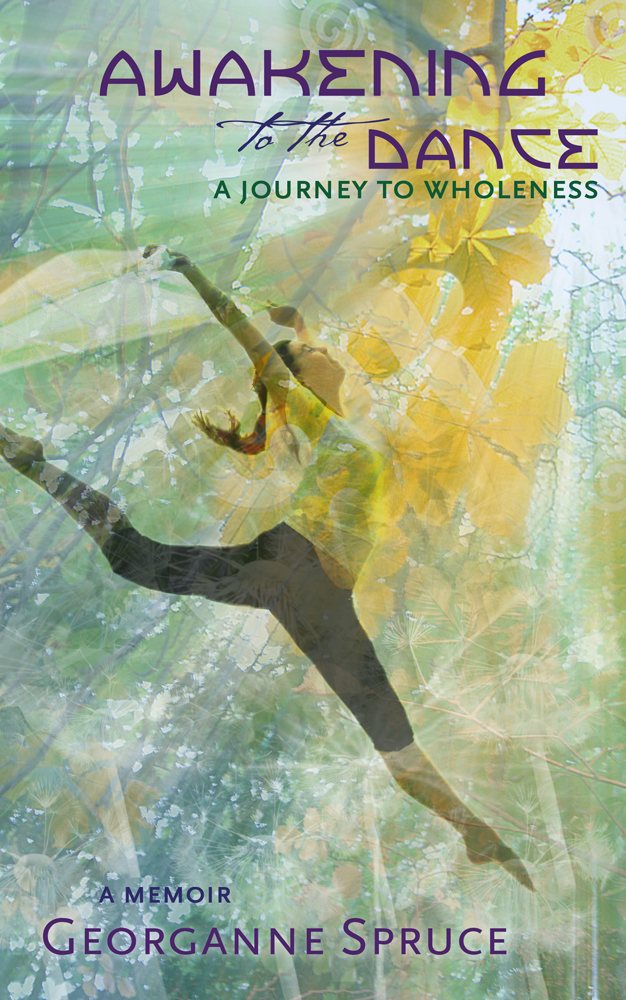
Throughout the last year and a half, as I edited and prepared Awakening to the Dance: A Journey to Wholeness, I became more aware of the many transformations that took place in my life because of the influence of other people.  Some were pleasant experiences; some were not; some were lovely and disappointing. 

I’m not sure I believe the old saying, “Time heals all wounds,” but I do believe time gives us the ability to see those old experiences in a more enlightened way.  As we grow and learn, we hopefully come to a deeper understanding of our lives and the lessons we’ve learned from our life challenges.  At this point in my life, I have a whole basket of thank yous to hand out that I would never have viewed as good things at the time they happened.


Being Thankful For the Chaos

The summer after my divorce many years ago, I studied dance with Erick Hawkins. His gentle classes were just what I needed, and I learned more than one life lesson from him.  I wrote about the first awareness, concerning an injury, in the post “Body and Soul As One.”  The second awareness occurred as a result of a comment.

Hawkins in El Penitente, 1930s

Hawkins in El Penitente, 1930s (Photo credit: Wikipedia)Hawkins.  

“That summer, Erick Hawkins was my spiritual teacher. One day, he said that in Zen one said, ‘Thank you’ when things were at their worst. The idea was profound—that we should be thankful for all experiences because we could learn from them and become more aware. Although I learned to have more respect for myself after the injury, I wasn’t yet able to see what positive things I had learned from my divorce. So I thanked Erick Hawkins for opening my heart and showing me how to have compassion and respect for myself as well as for others. I could even say, ‘Thank you for the chaos of my life,’ having faith that someday I would know what good sprang from it.”

Forgiving Ourselves and Others

Now, many years later, I can see how badly matched my ex-husband and I were, and how we were so unprepared, at that stage in our lives, to give each other what we needed in a relationship.  I no longer blame him or me for the hurtful choices we made, but I did learn how a good relationship requires the kind of communication we didn’t have.

Feeling Gratitude For What Is Good

It was many years before I really embraced Hawkins advice, but now part of my daily gratitude practice is being thankful for the difficulties that arise in my life.  I say, “Thank you for this difficulty and the valuable lesson I will learn from this.”  I have learned that nothing is meaningless and trust that the opportunity to learn lessons is everywhere.

The next relationship I was in, I chose a man who was an artist and whose spiritual life was entwined with art like mine.  I wrote about this relationship in the book as well.

“In the quiet of an early Sunday morning, I reread the letter from Neal that had arrived the day before. Embracing me with his words, he said I was very dear to him and that he found pleasure in my mind, smile, laughter, and movement. How lucky I was to have found a fairly liberated man, but a part of me was afraid to surrender and love him completely because losing him would then be unbearable. The spiritual bond that our art created between us was deep, for sometimes he thought he was me—that was the only way he knew to describe it, as if we had developed from the same root. We hurt in similar ways, we grieved in similar ways, and we celebrated in similar ways. When we danced or made love, a sheer, pure pleasure flowed through us. We could appreciate silence, share it, and not feel ill at ease. Even with hundreds of miles between us, I felt his touch.”

The relationship lasted for eight years.  At times we were just friends; at other times, we were lovers considering marriage.  There was joy, laughter, and tears, but despite our powerful connection, we parted.  Although we loved each other, he didn’t really want what I would call a relationship, and I could not live the way he wanted us to live. Despite that, the list of positive things I learned from that relationship is endless, not the least of which was that I could be loved for who I truly was.

Letting Go And Finding A Better Life

These are only two examples of the many guides who have passed through my life and taught me who I am and how to live with more joy and meaning.  When I began to write my memoir I was searching to understand why I was experiencing so many negative things.  Now I can look back and say, “It was time for me to move on and I wasn’t moving,” so the Universe made it impossible for me to stay where I was, and I am so grateful.  Without that push I might not have come to North Carolina, I might not be writing, I might not have the life I love.

What is one of the important lessons you’ve learned from a guide in your life?

I hope you will want to read more of my story and how I used my spirituality to grow and change. Awakening to the Dance: a Journey of Wholeness is now available as a paperback at Create Space and as an ebook on Amazon and Barnes and Noble.  The paperback is also available on Amazon in this country and some European countries.

I will continue to the Wildness Series as I have time to interview some wonderfully wild people I know.

©2012 Georganne Spruce                              ZQT4PQ5ZN7F5