Monthly Archives: February 2015

AWAKENING TO THE SILENCE OF SNOW

“A snow day literally and figuratively falls from the sky-unbidden-and seems like a thing of wonder.” Susan Orlean

2015 004

Back in the days when I taught full-time, a snow day was truly a gift from the Divine. To have the day off, I didn’t have to get permission, find a substitute, or prepare another lesson in advance, nor did I have to leave the house. It was a free vacation day, and I always felt that I could do anything I wanted that day, even when I had papers to grade.

Love the Silence of the Snow

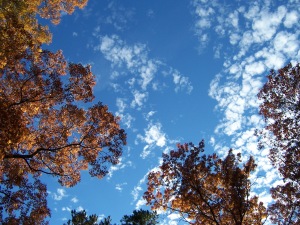
Now, what I love is the silence. The way the snow wraps around the earth, the trees, and buildings. Bare brown branches become beautifully outlined in snow and silhouetted against a blue sky. The snow becomes a blanket of diamonds as it reflects the sun’s light.

2015 007

Snow Days Are For Snuggling

It is a snuggly morning, and now I have a snuggly partner, my husband. We linger under the warm covers until hunger hits and then we eat pancakes with eggs and oatmeal. The dog who is let out to “do her business” finds a lot more business to do than usual, sticking her nose into the snow up to her eyes, trying to find a scent that tells her this is her usual place.

Snow Is For Playing

The teenager across the street is trying to learn to ski on the small slope from the street to his house, but soon his friends arrive with an array of winter equipment, none of which they actually use. Before long, it becomes party-time and they disappear into the house.

The daily parade of dog walkers has begun thanks to the city that was well-prepared and cleared the street rather early this morning. The little dog that is of a strange mix and usually wears a sweater has on red shoes today. Our dog, which is out in the yard and usually barks loudly at this one, just sits and stares. I suspect the little dog’s outfit doesn’t fit with her fashion sense, but she’s too polite to express her dismay.

dog-wearing-booties

The Silence Of Snow Connects Us With Spirit

It is strange how something as cold and wet as snow can create the feeling of warmth, but then I am reminded that when I meditate, I often reach a point where I feel warm and protected, aware of that peace of being in touch with something greater than myself, that loving energy of Spirit.

It is not a day for deep mental meandering. It is a day just to be.

How do you like to spend a snow day? Please comment.

© 2015 Georganne Spruce                                               ZQT4PQ5ZN7F5

AWAKENING TO WINTER’S DELIGHT

“Give me the splendid, silent sun with all his beams full-dazzling.” Walt Whitman

winter-snow-landscape-snowy-tree-trees-wintry-3

Do you enjoy winter and its snowy days? Do you like the glint of the sun on ice? Or do you love to curl up near a fire and disappear into a book or write poems about a lost love?

Quiet Winter Days May Be Creative

I have to admit I am rather excited by snowy days when I don’t have to go out and can use the weather as an excuse to just read and nap while the winds whip around the house and spill branches into the yard. And yes, I build a fire in the fireplace and sometimes poems rise to the surface as I sit, not needing to do anything.

I lived in Nebraska for two years when I taught dance in the university and winter lasted most of the year. The first thirty days I was there in December and January the temperature was below zero. It wasn’t unusual to walk around in snow up to my knees.

On one of those days I wrote this poem. No doubt many of you can relate to this picture today.

NEBRASKA WINTER

 Ice bends the trees of this arid land

So that woods appear like shrub forests,

Locked in a white crystal blanket.

The sun sparkles, shatters, plays

Off the hills like a melody of mirrors

Playing songs through the air.

The land flies by as we drive,

Like silver plates skipped on a stream.

Gray deer dart across our path,

Flying shapes connected to the land

By color and vibrance,

Alive in this frozen world

Where ice has stopped the flow of human life.

Only what is close to the land

Survives, vibrantly, through the ice.

Unlike most days in Nebraska, the sun has come out today and melted the icy streets in this North Carolina mountain town, but it has been a lovely contemplative day. I’ve been sifting through my poetry, deciding it is time to publish some and trying to decide where.

Winter, A Time To Turn Within

Winter is the perfect time to turn within and contemplate our lives and evaluate what is working and what is not. When spring arrives, we will be too distracted by the beauty it showers upon us to stay inside ourselves to do this work. But when the cold frosts the windows and makes the stairs treacherous, it feels safe to go inside, to do winter’s version of spring cleaning and decide how we want to change our lives during this year. So, I guess the decision I’ve made is to get busy sharing my poetry, make a book, get it published, and publish some poems on the internet.

miley-sitting-in-the-road

Poetry Is A Very Personal Form

Poetry is so personal, and I feel nervous about putting it out there. Silly, isn’t it, when I’ve already published a memoir that is very personal. So today, I’ll share another poem which really is a silly poem I wrote as I imagined being a tree. We poets do things like that. Of course, maybe I was a Druid in another life.

WINTER CONVERSATIONS

Mountains hold up the snow,

While cedars talk of rumors

In the wind,

Shaking their heads as if to say:

“Mother Earth better watch out

For those wily hunters of fortune.”

snowy-trees

 Wishing all my readers a lovely warm day!

How do you like to spend a cold winter day? Is it a good time for you to turn inward? Please share and comment.

© 2015 Georganne Spruce                                               ZQT4PQ5ZN7F5

Related Articles:  13 Ways of Making Poetry a Spiritual Practice,
Sanity: A Dialogue with Echkhart Tolle

AWAKENING TO OUR WILD CREATIVITY

“Without wildness we have no creativity. No species does.” Matthew Fox
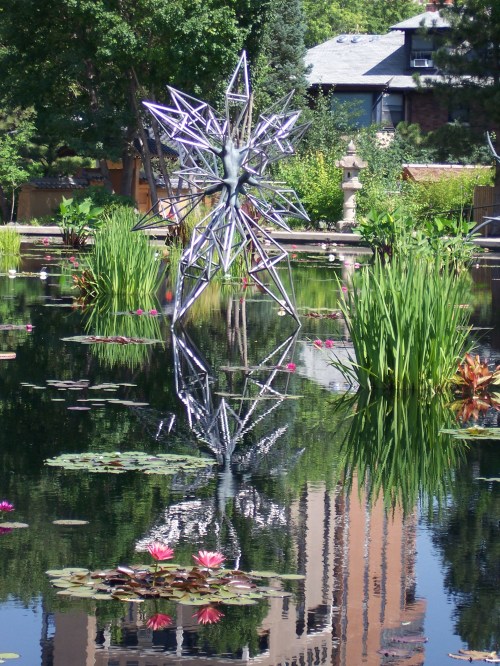
Denver 008

Is your wildness alive in you? How does it express itself? Is it part of your creativity?

Recently, when I watched the film Marion Woodman: Dancing in the Flames, I was moved by her comments about integrating her perfectionist and wild aspects. I definitely related to her comments and challenges because, as I explained in last week’s blog Awakening to Release Our Perfectionism, these aspects are parts of my personality.

We Can Express Our Wildness Through Creativity

I remember only too well playing in the mud, climbing trees and hiking in the forest where I had so much freedom, but like Marion, on Sunday I had to dress up in a dress and patent-leather shoes and move in a very lady-like fashion. It didn’t help that I was often ill as a child and confined to my bed.

Instead of experiencing my wildness by running around the yard, I spent many hours in bed designing paper doll clothes, reading, or sewing. It was then that my mind learned to run wild even when my body couldn’t. There was no teacher there to critique my artistic work and my mother never criticized it. In fact, she always encouraged my creative expression.

Perhaps I didn’t need to run wild so much because we lived close to nature with chickens and rabbits in the back yard pen and a garden that produced corn, potatoes, green beans, and lettuce. The chinaberry tree in the back yard produced leaves, flowers, and berries that we used to spice up our mud pies. When the family did something together it was usually outdoors in a park or by a stream where my brother and I swam and our parents fished for bass or catfish.

Wildness Is A Natural Aspect Of Nature

Living so close to nature, its cycles seemed natural just as it seemed natural, although not pleasant, that during tornado season when the sirens sang, we hid in the safest part of the house. We knew the chaos of nature as well as its serenity. We accepted it as part of life.

When we create a work of art or any creative thing, it appears first within us. It may be only a glimmer of an idea, swimming around in our mental fog, and we may not be quite clear what it wants to be: a project, a poem, a song, or a new way to cook chicken.
2013 005

Creativity Comes From Chaos

Matthew Fox says, “Creativity happens at the border between chaos and order. Chaos is a prelude to creativity. We need to learn, as every artist needs to learn, to live with chaos and, indeed, to dance with it as we listen to it and attempt some ordering.” This learning to create order from chaos may well be one of the most useful aspects of being creative, regardless of what activity we embrace.

We Discover Who We Are Through Creativity

It is in these creative moments, trying to create form from chaos, that we use our minds in ways that benefit us mentally and emotionally. Through this process we also express who we are, allowing our wildness to take us into unknown territory and express and create in the way that only we can. What we create may surprise us as well as those around us.

In the ninth grade, I drew a charcoal picture one day in art class that totally mystified my teacher. “Different,” she said to my parents who visited the class on parents’ night. In the foreground was a phoenix and in the background were dark clouds and fallen Greek columns from the front of what was probably a Greek temple.

Neither the teacher, nor I, nor my parents had any idea of the symbolism contained in the picture. It was only years later when I studied mythology and symbolism that I understood. In Greek mythology, the phoenix is a bird that dies and is reborn, a symbol of immortality. I don’t know what the storm was in my life at the time, but clearly, I survived it for, in some sense, I was the phoenix. There was life in the midst of destruction.

Nature Teaches Us About Natural Wildness

Because my life has been so enriched by my closeness to nature and the seasons and I see the cycles as opportunities to explore various aspects of myself, I have found peace with my wildness. I understand that the best way to tame it is through loving it and expressing it through creative activity, just as the earth cycles through its version of death and rebirth.
2014 012On her website, Jennifer Currie interprets the meaning of the Tarot cards and she speaks about wildness as it is expressed by the Strength card where a woman usually embraces a lion. “You don’t tame the beast by beating it down—you tame it through love and acceptance.” And I would add—by using it to create.

Being Close To Nature Reduces Stress and Violence

Too often when we are children, our wildness is squelched without a creative alternative being offered that allows us to tame our own wildness with love. Perhaps one of the reasons inner city youth become violent is that they do not have a place where they can “run wild” without causing harm or being harmed. Instead of encouraging them to express that wildness creatively, the environment models being “lawless.”

I am thankful that there are now many programs that take youth out into the wilderness and introduce them to authentic wildness. Scientific studies are beginning to show that the time we spend in the forest or on the mountain have a calming effect on the brain and help to release stress. Therefore, it is very beneficial for adults and children to find time when we can just be with the natural world.
2013 009 (2)

Creativity Connects Us With All That Is

While we need to be able to live with the wildness that comes as a normal part of life, we also need to learn how to find peace with it and allow it to feed our creativity in ways that will bring new awareness and expression into our lives. It is in our creative moments that we often connect with Spirit and become One with all that is.

Are you in touch with your wildness?  How do you express it in your life?  Please share and comment. 

© 2015 Georganne Spruce                                                   ZQT4PQ5ZN7F5

Related Articles:  Creativity: Where the Divine and Human Meet by Matthew Fox(video)Creativity in the Wild: Improving Creative Reasoning Through Emersion in Natural Settings, Does Nature Make Us Happy?

AWAKENING TO RELEASE OUR PERFECTIONISM

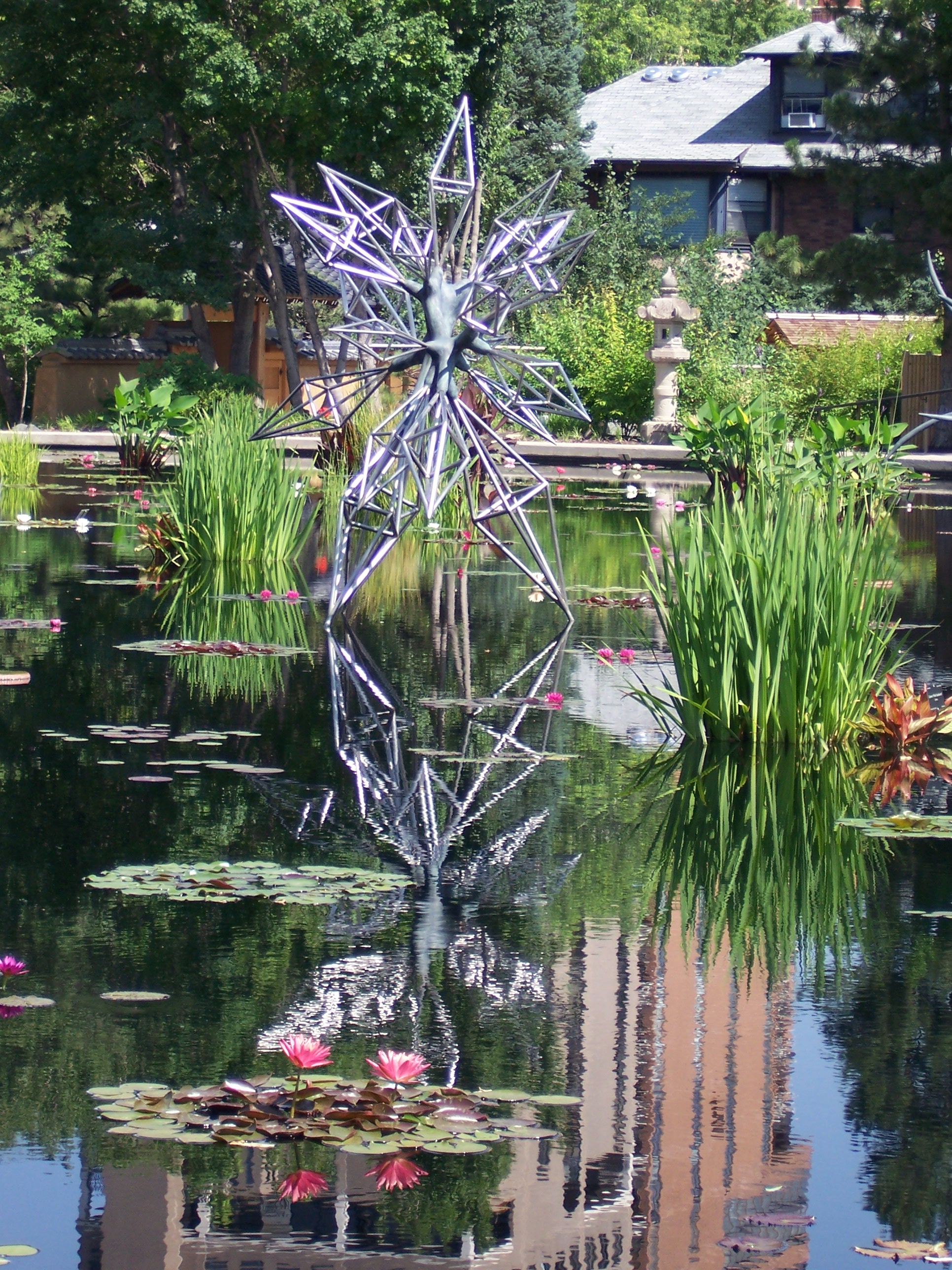
“It is easier to be better than you are than to be who you are. The point here is that perfection belongs to the gods; completeness or wholeness is the most a human being can hope for.” Marion Woodman Serene pool

Are you a perfectionist? Does that work well for you? Does it create problems with other people or your family? Do you see an advantage to letting go of it?

Why do we try to be perfect? Perhaps because somewhere in our lives we received the message that it was not acceptable to be anything less. In my case, I thought if I could do everything correctly that my parents wouldn’t scream so much, but of course they screamed at each other more than at me. Despite that, I felt I should be able to make my mother, especially, more happy.

High Expectations in Childhood Create Fear of Failure

The other part of it that came from my childhood was that my parents said I was special and intelligent; therefore, I should always make straight A’s in school and do things well. I shouldn’t waste my intelligence or talents but always do my best.

This made more of an impression on me than it might have because I was weak from illnesses and was a disaster playing any physical game at school—even simply throwing a ball. I needed to make up for that somehow and I did do very well in academics and reasonably well in music, especially singing.

We Want to Be Perfect Because We Want To Be Loved

Sadly, when we follow the perfectionist path in life, we are destined to fail often. We set our standards so high they are virtually impossible to attain and so we often feel inadequate. This disappointment is inevitable because as Marion Woodman points out “perfection belongs to the gods.”

Often the need for perfection is focused on external creations rather than going within to find ways to grow and evolve. We need to look perfect, do our jobs perfectly, find the perfect mate, say the perfect thing, and paint the perfect picture. We crave the love and attention that we believe will result from this, and we often do not see the connection between our trying to be perfect and our failure in relationships and other areas of our lives.

cat

Becoming Whole Is More Important Than Being Perfect

This pursuit often takes us away from what is most important—becoming whole and complete as our true selves because this journey requires us to take chances. If we take a chance, we may fail—it’s very risky and it conjures up an enormous amount of fear. We have to go within and there are no clear guidelines for succeeding. We have to rely on our very unconcrete intuition.

Pursuing perfection in many areas of our lives will often lead us to moments when we are confronted with how unhealthy or stressful our pursuit really is. These times are opportunities that offer us the possibility of change, moments when we can see there is a connection between what is not going well in a relationship or with our health and the demands we make on ourselves.

Health Challenges May Teach Us Lessons

In the late 90s I was diagnosed with Chronic Fatigue Syndrome. My adrenals were depleted, my cortisol levels were off the chart, and I was vitamin and enzyme deficient. I lived in New Orleans, down river from chemical plants and in a climate where mold thrived. Most doctors didn’t acknowledge the existence of the syndrome at that time, but I found a doctor in Tucson who specialized in treating this naturally and whose plan had been helpful to a friend of mine.

I spent several days at the Tucson clinic with many different practitioners. The phrase they kept repeating to me was “you’re being too hard on yourself.” When the therapist there told me I needed to be kinder to myself, I insisted, “I don’t feel like I’m so hard on myself—I just want to do things well. Why is that a bad thing?”

“It’s a matter of degree,” he said and recommended I read The Spirituality of Imperfection. I felt so overwhelmed that I broke down in tears. He continued, “Remember, there’s always light in the darkness, and even if it’s a small glimmer, pay attention to it.”  (Awakening to the Dance: A Journey to Wholeness, p. 186)

Releasing Our Perfectionism Frees Us

By the time I left the clinic, I was able to see some of the ways that perfectionism was harming me. I was dedicated to healing naturally, and that was a major challenge because I had to change my diet, take many supplements at different times, and be in bed at 9:00 pm every night. In addition, I had to continue teaching so I could afford the treatment.

Chronic-Fatigue

This journey of healing took me inside the deepest part of myself and I had to let go of so many things I had thought were absolutely necessary and fed my perfectionism. At first I felt deprived by having to eat only healthy, organic food, but with time it became a satisfying habit. I became adept at reading food labels to avoid preservatives, sugar, and all chemicals.

I revived my meditation practice and read spiritual and inspirational books. I became used to not going out at night and had long conversations with two friends who also had chronic fatigue. I began recording my dreams which often revealed significant messages.   Within two years, I was significantly better and within four years I was completely healed. Unfortunately, others I knew healed much more slowly. I was blessed.

Releasing Perfectionism Is An Internal Journey

Throughout this process, I learned to accept my imperfections and to love myself despite them. Most significantly, I learned to ask others for help when I needed it and not feel I was a failure because I couldn’t completely take care of myself. Although the process of healing often frustrated me, I learned I had no alternative but to release those feelings. Hanging on to anger and frustration only made me feel worse.

If we are wise, we will recognize there is a difference between pursing perfectionism and simply doing something well. One often distresses us and those around us while the other brings delight to all. By developing those aspects of ourselves that complete us and make us whole, we are honoring our most sacred selves, and we learn to love ourselves. After all, wanting to be loved is often why we pursue perfectionism. By nurturing our spiritual cores we are developing our wholeness and that is an inspiring journey.

What has been the most important part of your journey to become whole?  Please share a comment.

© 2015 Georganne Spruce

Related Articles:  Loving Yourself: Getting Beyond Approval and Perfectionism (video)