AWAKENING TO BEFRIEND OURSELVES

“I now see how owning our story and loving ourselves through that process is the bravest thing we will ever do.”  Brene Brown

 workshop 011

Are you as supportive of yourself as your best friend is supportive of you?  Do you have the courage to own your own story even if you don’t like it?  What are you willing to do to empower yourself?

I’m glad April is over because I don’t feel so guilty any more that I didn’t complete a project I promised to complete.  It wasn’t anything terribly important.  It certainly wasn’t earth shattering.  I doubt that anyone cared about it but me.  But I’m a person who values commitments and so I’m rather disappointed in myself.

I had joined the event called NoPoWriMo which meant that I committed to write a poem every day.  It didn’t have to be polished and it could be a first draft.  I only completed six poems.  Why?  Well, the rest of life intervened in ways I couldn’t ignore.

Opportunities to do events or publicize my book and preparation for a Release Your Fear workshop that I gave on Saturday took more time than I expected.  A wonderful new friend came into my life with whom I chose to spend some time.  Everything that pulled me away from writing the poetry was really good and more important.

Being More Conscious of Intuition

My error was apparent from the moment I made the decision to do this event.  My intuition said quite clearly, “This will put more pressure on you.  You don’t need to take on one more thing.  If you feel pressured, you won’t be able to write poetry.  You won’t be in the right frame of mind.”  Clearly, I should have listened, but my sometimes overly optimistic self said, “I’ll find time.  It will be a nice way to relax in the evening.”  Hah!

So, I failed to meet the goal I had created for myself.  Although this wasn’t anything that impacted my life in a negative way, it’s a good example of how I used to have too much of a tendency to over commit.  I would get so involved with so many activities and people that I would be exhausted all the time.  This felt like I was backsliding.  As an introvert, I must have my quiet time each day in order to recharge, but for years, I often didn’t leave enough room for it.

Loving Ourselves to Make Good Choices

The damage I’ve done to myself by pushing too hard or over committing is one of the stories I need to own.  I have a tendency in this area to make bad choices because there are so many interesting things I love to do.  But if I love myself, I have to be willing to say no, not only to myself, but to others as well.  Usually it’s easier to say no to myself; it’s much harder to say it to someone else.

Going Deeper to Awaken

Compared to many stories, my poetry experience is trivial.  For example, feeling we failed at relationships is a much harder one for most of us.  It is important that we take the time to understand why it didn’t work and the part we played.  When we can do that, we can learn to make better decisions and choices the next time.  But then, after the analysis and owning our part of the story, we need to love ourselves enough to forgive ourselves, knowing we did the best we could at the time.

At those moments when we are most disappointed in ourselves, can we give ourselves what our best friends would give us?  Elizabeth Gilbert once said, “Never forget that once upon a time, in an unguarded moment, you recognized yourself as a friend.”

Eat, Pray, Love

Eat, Pray, Love (Photo credit: Wikipedia)

Experiencing Friendship With Yourself

As your friend, you will listen carefully to that voice in your head that tells you you’re not good enough, and you will tell yourself about all the ways you are good enough.  You will have compassion for that hurt child within you who sometimes feels powerless to change what makes you unhappy.  You will empathize with your hurt self and reassure that self that things will be better and that you have the courage to seek out the hard answers.  You will remind yourself that you deserve the very best and that what you desire will come to you.

Our best friend

Empowering Ourselves On Our Spiritual Journey

When we hear these things from our best friends, it feels good to know someone cares so much, but when we can say these things to ourselves and believe them, we empower ourselves.  The bravest thing we can ever do is to look inside and openly observe our deepest self.  The next bravest thing we can do is begin the journey to fix what needs repairing.  These journeys may be challenging, but they will be more manageable if we learn to be our own best friend.

© 2013 Georganne Spruce                                                         ZQT4PQ5ZN7F5

Related Articles: Befriending OurselvesThe Art and Craft of Befriending Your ExperienceIs it Realistic to Befriend OurselvesBefriend Yourself 

AWAKENING TO OPENNESS

“It takes a lot of courage to show your dreams to someone else.”  Erma Bombeck

How much of yourself do you share with other people?  If you don’t share much, what fear prevents you from doing that? Why do you feel you must hide a part of yourself?

010 (3)

Hiding or Not Hiding

I met a woman some time ago who seems to be a very nice person.  We’ve been in several discussions; yet I know nothing really personal about her except for her political beliefs.  Her emotional life remains hidden.

I have also recently met a man who is so open that I continue to be amazed by the depth of what he is willing to share.  Instead of practically pulling teeth like I’m used to doing with many men, communication with him is so easy.  He just says what he thinks and goes deeper without my asking him to.

Trust Is at the Core of Openness

There are so many things that affect our willingness to be open.  At the core of it is trust, the two-fold kind.  We have to feel we can trust the person with whom we are sharing our stories, and we also have to trust ourselves and believe we have something of value to share.

While it is true that we must use discretion in what we reveal to others, our ability to share deeply with others enriches our lives.  There have been times in my life when I felt no one understood me and no one really wanted to know what was going on inside me.  Those were barren, lonely times because I was surrounded by people who were not comfortable sharing much of themselves, so they really didn’t want to hear about my deeper thoughts and struggles.

However, most of my life I have had at least one best friend with whom I could share anything and who would share anything with me.  Sometimes what one of us thought or did shocked the other, but we were always there for each other whether we approved of the other’s choices or not.  Our trust in each other created an incredible intimacy and richness to our lives.

openness

Openness Requires Discretion

Of course there are times when it isn’t wise to be open.  Sharing too much about one’s personal life in the work place can be distracting and inappropriate.  If a friend or partner has misused the information we have shared, we need to reconsider the wisdom of sharing so much with that person.  Sometimes we just have to set boundaries in order to feel safe enough to be open.

Once, when my relationship with a man I loved was breaking up, I shared this with a friend, never dreaming she would pass the information on to two women I hardly knew.  They then shared with a neighbor.  Soon afterwards, I walked into the ladies restroom at my spiritual community and a woman I barely knew told me how sorry she was that this man and I were splitting.

I was shocked.  I had told only my closest friends who I thought would be discrete.  When I tracked this back to the source, I told that friend how upset I was, and she was very sorry.  Her perception of how close I felt to her two woman friends was different than what I felt, and when we sorted it out, she agreed not to share my relationship information with anyone without asking my permission.  With this understanding in place, I felt comfortable sharing with her in the future.

Being Who We Are Creates Connections With Others

While we have to be wise about our openness, we also miss so much in life when we are afraid to show others who we truly are.  As I’ve said many times, when I decided to publish my memoir, I had to overcome the fear of being open.  Being that open felt vulnerable, but I couldn’t tell my story in a way that would benefit those who read it unless I was transparent.  It took quite a while to find the courage to do that.

I’m glad I made that decision because my being open has allowed others to open up to me, to share their deepest thoughts and tragedies, to share things with me that they would never have shared with me had we not had the book to connect us.  When we understand that others have had similar experiences, it often helps us to stop judging ourselves and just know that our “failures” are only human.

I like what Tony Schwartz says:  “Let go of certainty.  The opposite isn’t uncertainty.  It’s openness, curiosity and a willingness to embrace paradox, rather than choose up sides.  The ultimate challenge is to accept ourselves exactly as we are, but never stop trying to learn and grow.”

Openness Enriches Us Spiritually

When we truly accept who we are and love ourselves, we can also accept that we make mistakes.  To be open to living life at its fullness, we have to interact with others, explore our thoughts and lives together.  We have to be open to the idea that it is often our mistakes that teach us the lessons we really need to learn in order to grow and become who we truly are.

When we show our dreams to someone else, they may know exactly what we need to make those dreams come true. Openness allows us to connect, explore, and discover “the buried treasure” within each of us. When we do that and open our hearts to each other, life can be oh, so sweet.

© 2013 Georganne Spruce                                                          ZQT4PQ5ZN7F5

Related Articles:   Love:  It’s Not Where You Look But Who You Are – Wayne Dyer,  Do You Worry About What Others Think of YouInitiating Relationships With Honesty, Openness and Directness

RELEASING OUR FEAR TO AWAKEN

“Love is what we were born with.  Fear is what we learned here.”  Marianne Williamson

Big River 001

How often do you avoid doing something you need to do because of fear?  How often do you feel fearful?  How do you let go of fear in order to move forward?

We Are Divine Beings With Worth

When we awaken in the morning, the rest of our lives are before us, and the decisions we make each day determine the quality of that life and how we will experience it.  We were born in love, a divine being with worth, but often the living of this life takes its toll.  If our childhood was filled with love and we had nurturing parents, we have the best chance to create that kind of adult life for ourselves.  However, if our childhood was filled with conflict or abuse, we had to learn coping mechanisms for survival, and while they may have helped us survive, they may have caused us to shut down parts of ourselves.

Fear Blocks Our Spiritual Awakening

The process of awakening is never ending.  In Oneness, awakening is described as “ascension” but one never arrives at a destination; one always continues growing.  In this earthly life, the one thing that limits our awakening more than any other is psychological fear.  It is the source of all dysfunctional behavior and every fear we experience is either a fear of rejection or a fear of inadequacy.  Our response to the problems that stimulate these fears is blocked by the fear unless we release it.

The fear that causes us to fight or flee when we are physically threatened is a different kind of fear; it is natural fear and one that we want to respect.  It causes the adrenaline to flow when we need the strength to out run a physical threat.  It causes that chill down the back or the intuitive knowing when harm is near, and it directs our mind to avoid the threat.

Thoughts Full of Fear Do Not Support Our Best

Psychological fears are different.  They may prevent us from pursuing the profession that is our passion or cause us to settle for less than what we need in relationships.  We may have internalized negative ideas about ourselves from an unloving childhood or from failures in our lives and feel that we are not worthy of happiness.  How we experience life depends so much on how we think, and if our thoughts are often filled with fear, our thoughts will not support the best in us.

We Must Embrace the Pain Of Growth

Our society has taught us to deal with pain by taking some kind of painkiller:  pills, drugs, sex, food, anything to stop the pain without having to go deeper to look at the emotional source of the distress because going deeper would be painful.  Marianne Williamson says, “It takes courage…to endure the sharp pains of self-discovery rather than choose to take the dull pain of unconsciousness that would last the rest of our lives.”

We need to shift our thinking to understand that sometimes pain is good, especially when it raises our consciousness.  Recently, a part of my foot started hurting like the beginning of plantar fasciitis, which I previously had for several years.   It was a signal that my foot wasn’t supported properly.  I visited the podiatrist and discovered that the orthotics I wear in my shoes needed more support in a certain area.  Emotional pain is also a warning—something is wrong and needs to be fixed or the pain will increase.

The method of releasing fear that I teach clears the mind of the block created by fear so that the mind can pull through information that will help us solve the problem that created the fear to begin with.  First, we direct the mind to release the fear and allow it to leave.  With the fear gone, we can access memory, past lives, spiritual, and psychic areas of the mind where there is information that will help us solve the current problem.

Trust That the Mind Free of Fear Will Serve Us

When we ask Source or Spirit for the answer, we have to believe we will receive it.  The problem is that it may not come when we expect it or look like we wanted it to.  Abundance is a good example in my life.  It appears in the form of money gifts, service exchanges, love, friendship, sharing information, free classes on a skill I need to learn, and work for which I’m paid.  The abundance in my life appears in a multitude of forms.

Beaver Lake 5-07 024

How does this happen?  Because I believe that I will receive whatever I need when I need it and am ready to receive it.  The best way to attract abundance is to feel abundant and be grateful for every little good thing that happens.  Most of all, I no longer fear not having enough.  Having released that fear provides an unobstructed channel of energy through which good things can come to me.

The Awakening Path Is Endless

Marianne Williamson points out that it takes courage to face the pain of discovery.  We also have to release the fear that going into our muck won’t make things better.  We were created in love and to love we must return.  Love is what we are at our core, but “fear is what we learned here.”  What we have learned, we can unlearn when it does not serve us.  The reality of awakening is that we do outgrow certain ideas or circumstances in our lives.  We have to be willing to move on when the time comes.  The path of ascension is always there.  How quickly we awaken is our choice.

Please share your experience with fear and awakening.

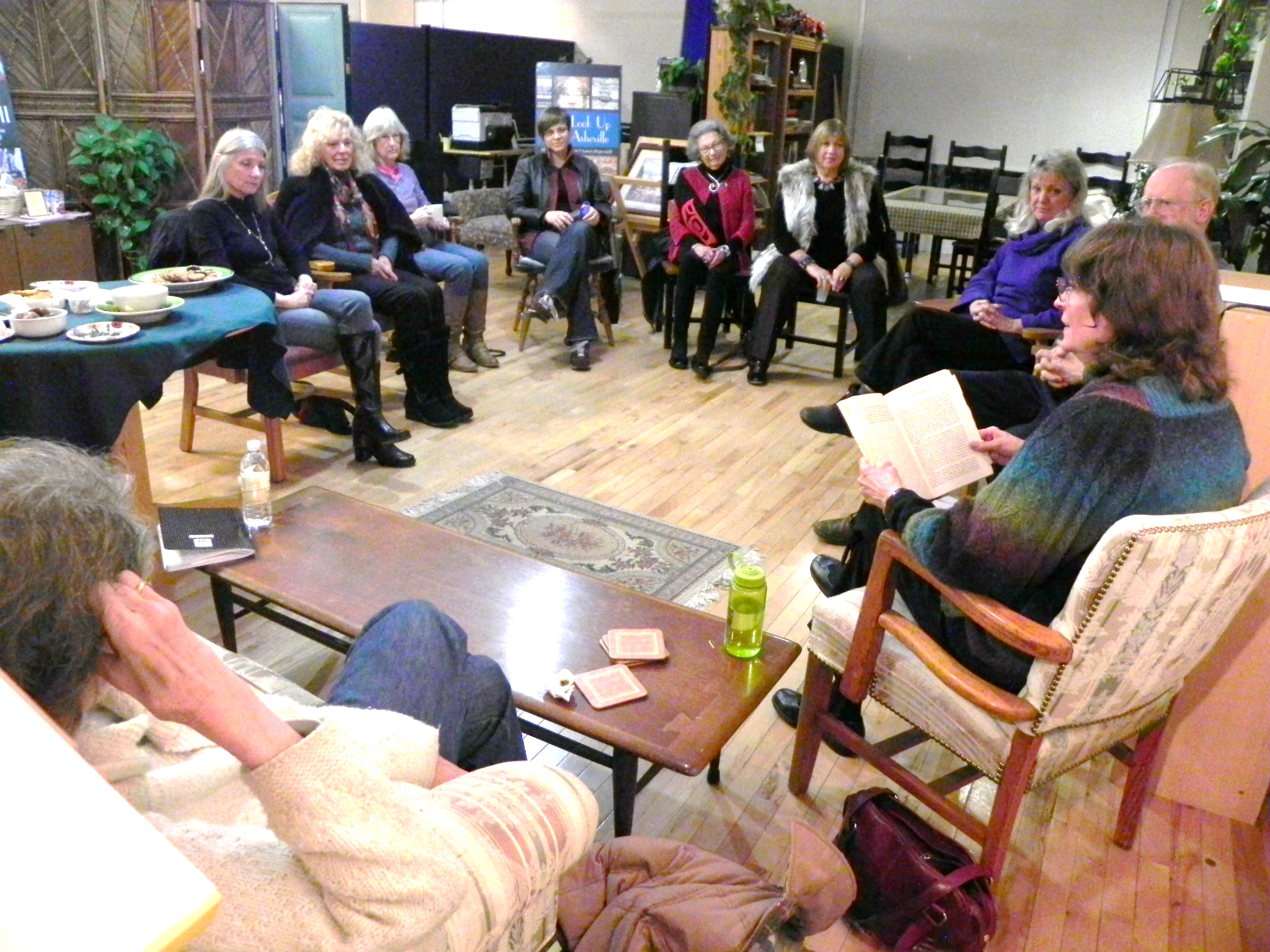
 My next “Release Your Fear” workshop is Saturday, April 27, 10:00 am to 12:00 at Jubilee Community, 46 Wall St., Asheville, NC, $15 at the door.  If you want more information, see this link or email me at lifedancer33@charter.net.

© 2013 Georganne Spruce                                                            ZQT4PQ5ZN7F5

Related Articles:  What is Spiritual Awakening, The Mind-Body Connection: Fear Manifests in Many Diseases Fear: Your Worst Enemy

AWAKENING TO RELATIONSHIPS: COMMITMENT, Part 4

“‘I will always love you,’ means nothing unless the mind is fearlessly aligned with the heart.  It takes the courage of a warrior to make and to keep a vow of love.”    www.lovedovetarot.com

Christmas 2012 018

Have you ever committed to a love relationship, friendship, or profession?  What is at the core of your choice not to commit to something you actually want?  Do you feel that if you commit to someone you will lose your freedom and you value that above all else?

For the last three weeks, I’ve been writing about what I feel are the most important elements in any relationship: empathy, intimacy, integrity, and commitment.  Today, I’m writing about commitment, and although it’s a major issue in love relationships, I believe it’s also very important in many areas of life.

Developing Any Skill Requires Commitment

In my late teens, I realized I wanted to be a modern dancer and knew that the sporadic classes I’d taken were not enough.  At that point, I had to commit to daily classes to develop my skills, and when I had to miss a class, I worked out by myself.

When I moved to Washington, DC, I had to travel into the city and committed to taking daily classes no matter what.  In fact, I even found a high school teaching job where I didn’t start teaching until 11:00 am so that I could take a class every morning.  It was this commitment that made it possible for me to develop the technique and skill to be good enough to eventually dance with a company.

In cases like this or in developing skills, commitment to training allows us to fulfill our goals and desires.  The problem is that this isn’t always easy, and when things get hard, many people give up so that they never feel a sense of accomplishment.  The discipline feels too confining.  However, if we want to feel good about ourselves, we have to be committed to being the persons we want to be and be willing to search for what we need and practice that skill in our lives.

Spiritual Practices Require Commitment to Learn

I grew up in a family that was very emotionally reactive, and so I modeled that behavior for many years.  At some point, though, I realized that behavior wasn’t working well for me, and I thought meditation might help me find a more peaceful way to be.  I was right, but it took some time and commitment to reach a point where I could center myself in the midst of an argument or difficult situation.  Just learning to feel peaceful when I was meditating wasn’t enough.

Meaningful Relationships Require Commitment

Perhaps the most complex situation where we make a commitment is in a relationship because it isn’t about just disciplining ourselves to do something we want to do.  There is another person whose well-being we must consider.  This is also true of friendships because to sustain a long term friendship, we need to practice empathy, integrity, and intimacy.  Parents also have to be committed to their children and help them develop as happy and whole individuals and not abandon them when they are most difficult.

In Loving Relationships We Can Grow and Expand

With a divorce rate at over 50% in this country, it appears commitment between adult partners is quite challenging.  I would venture to guess that all those relationships lack at least one of the elements I consider important.  They are all essential in creating a loving relationship that is healthy and meaningful, and a good relationship can be one of the best places to grow and expand who we are and our ability to love.  That takes time.  No matter how much we think we know someone, when we marry or move in together, the dynamic may change and require adjustments.  That is why being truly committed to make the relationship work is really important.  It takes time to grow together and deepen the love between two people.

Green River Cove Trail 006

To Love Requires A Fearless Mind

It also takes more than love to create a successful relationship.  “‘I will always love you,’ means nothing unless the mind is fearlessly aligned with the heart.”  I love this quote because it points out that we have to make decisions that come from the heart and release the fears that arise and block our thinking.  When life becomes difficult, we can always find reasons to run away, but if we are committed and mature, we take responsibility for doing what we can to solve problems and move forward in a positive way. We find the courage of the warrior.

When we fear we will lose our freedom by being in a relationship, what we really fear is that we will lose our sense of self if we merge too much with another, and if we don’t love ourselves, we may fear we aren’t capable of being loved.  I was once with a man who loved me very much, but he seemed ashamed of his love because his concept of masculinity was that a man who needed a woman was weak.  In his need to be masculine, he made selfish choices and felt bad about them, but refused to change his behavior.

Good Relationships Grow With Time

But it is possible to be in a relationship where we become more of who we are with someone we love, for love opens and expands us.  I see the beauty of long term commitment in the relationships that some of my married friends have who have been together for 30 years.  They have not been diminished by commitment.  Their love has grown and expanded.  They have had the freedom to be who they are and follow their interests because they love each other for who they truly are.  They have all had to make adjustments and changes, but in the end, it has been worth it to have loving partners who are deeply committed to them to share the joys and sorrows of life.

You have To Know And Love Yourself First

But here’s what I think is the key.  If you know who you are and are confident, freedom isn’t such an issue because knowing who you are gives you great inner freedom and you won’t make choices that violate your integrity.  You have to first trust yourself before you can trust someone else.  Trusting and knowing yourself means you’ll make a better choice in choosing a partner and you won’t settle for less than what you need.  You’ll choose someone with whom you can grow and expand and have mutual respect.

I think Timothy Keller sums it up in this statement:  “To be loved, but not known is comforting but superficial.  To be known and not loved is our greatest fear.  But to be fully known and truly loved is, well, is a lot like being loved by God.  It is what we need more than anything.  It liberates us from pretense, humbles us out of our self-righteousness, and fortifies us for any difficulty life can throw at us.”  And so it is.

What have been your experiences with commitment?  Please Comment.

© 2013 Georganne Spruce                                                                      ZQT4PQ5ZN7F5

Related Articles:  Heart to Heart: The Importance of Freedom and Commitment in Intimate RelationshipsRelationship Problems: CommitmentDo You Have a Fear of Commitment

AWAKENING TO RELATIONSHIPS: INTEGRITY, Part 3

“Living with integrity means: Not settling for less than what you know you deserve in your relationships.  Asking for what you want and need from others.  Speaking your truth, even though it might create conflict or tension.  Behaving in ways that are in harmony with your personal values.  Making choices based on what you believe, and not what others believe.”   Barbara De Angelis

036

Do you have integrity?  In all situations or just some?  On what beliefs do you base your integrity?  Do you act with integrity when you know it will create difficulties?

Integrity is the third element in what I call the essentials for a good relationship of any kind.  The elements I’ve already written about are empathy and intimacy, and I’ll conclude the series next week with the topic of commitment.

Integrity Strengthens Trust and Love

Integrity is usually defined as being true to your moral or ethical principles, so it has meaning only when it is coupled with a belief system.  In a relationship, acting with integrity can create trust and strengthen love because you learn you can depend on the other person to act in accordance with their values.  This, of course, assumes that you are in a relationship with someone whose values are compatible with yours.

Integrity Begins With Being True To Your Self

I like Barbara De Angelis’ quote because it covers several important aspects of integrity, mainly the idea that we must be true to ourselves if we are to be true to others.  That’s where it starts—being true to yourself.  Only then can you be true to others.  When we always try to please others to the extent that we go against our own values or harm ourselves, we are out of integrity.

What Is Integrity In A Relationship

Years ago, I was in a relationship with a man whom I deeply loved.  We were both creative people and that bound us in a spiritual way that was very powerful.  But over and over, to be with him, I made choices that were not good for me financially.  One time, I cashed out a life insurance policy so I had the money to spend an extended amount of time with him to see if we could live together.  At the time, I was unemployed, but a month before I was to leave to see him, I was offered a good job and I turned it down.  I put the relationship first.

Our relationship had always been off and on because he was afraid of commitment although he clearly loved me, and when things were good between us, they were very good.  But in this case, I had sacrificed my security by turning down a job to be with him and expected him to understand I would need to get work.  He kept insisting that I needed to create my own business and not work for any institution.  He was self-employed and had no respect for people who worked for institutions.

I had tried to be self-employed, but I didn’t have the financial resources he did, so I had to work for other people.  He had a fit over this.  While he was true to his values, he had no respect for my needs—a not unusual dilemma in relationships.  The situation disintegrated from there.  I asked for his understanding and didn’t get it.

At this point, I realized I was settling for a lot less than I deserved.  Clearly, his set of values and mine were not compatible.  I didn’t feel I should have to sacrifice my financial security to be with him, and he couldn’t afford to take care of me, nor did I want him to.  But I was not taking care of myself and I didn’t feel good about that.  However much I disliked the choices this man made in relation to me, he was being true to his own belief system, no matter how selfish I may have judged it.  It became clear that he would not change anything in order to be with me.  At that point, I finally had the sense to walk away.

Being True To Ourselves Empowers Us

What became very clear to me was that, by speaking my mind and not sacrificing what I needed in a relationship, I felt more empowered, although it created conflict.  I found the courage to be more of who I was and committed to living with more integrity in relationships.  I could not live with someone who felt he would be out of integrity in order to meet my needs.

Daisy's first days 032

Integrity Is The Core For Decision-making

Living with integrity helps us to respect ourselves even when it creates difficulty, but without it, we lack an inner core from which to make decisions.  On the other hand, we also need to look at our value system.  Does it allow us to live with integrity and relate to others in a loving and caring way?  Most of us want to be in a relationship in order to share in a deep and loving way, and that may require some compromises.

Relationships Require Compromise

The question is always: what can you compromise and still be true to yourself?  Some couples want to keep the peace no matter what they have to do because they are afraid to explore what is hidden and unknown.  The problem with hiding ourselves is that we can never be loved for who we really are because our partner never knows who we are.  It may never dawn on us that our partner might love us more if they knew who we truly were.

The Value Of Shared Values

It’s not a choice I would make.  I want the person I’m in a relationship with, even in just a friendship, to know who I really am and show me who he really is.  I want the relationship to have integrity based on a shared set of values, and if the price we pay is to disagree sometimes, so be it.  Disagreements hopefully lead to a discussion that leads to a deeper understanding of each other and enriches the relationship.  Besides, making up can be a lot of fun.  It’s all good.

Please share your thoughts by leaving a comment.

© 2013 Georganne Spruce                                                                     ZQT4PQ5ZN7F5

Related Articles:  Selling Out: Compromising Integrity in Intimate Relationships,  Integrity in RelationshipsTrust Your Inner Self – Wayne DyerA Lesson on Integrity from Gandhi

AWAKENING TO RELATIONSHIPS: INTIMACY, PART 2

“Real intimacy is a sacred experience.  It never exposes its secret trust and belonging to the voyeuristic eye of a neon culture.  Real intimacy is of the soul, and the soul is reserved.”   John O’Donohue, Anam Cara: A Book of Celtic Wisdom

Bee seeks flower for intimate relationship

Bee seeks flower for intimate relationship (Photo credit: ZaraBaxter)

What does intimacy mean to you? Do you experience intimacy in all your relationships?  Is it important to you? 

Many Types of Intimacy

Like empathy, I feel that intimacy is an important part of relationships, and we can experience it with friends or lovers because it can be experienced physically, emotionally, intellectually, and spiritually.  Intimacy is an aspect of relationship that comes from one’s deepest nature.  It is personal and private and based on trust.

The Intimacy of Friendship

A couple months ago, I sat in a café on a cold, blustery day with a close friend who had been out of town for a couple of months.  As I sat sipping my coffee, I felt warm all over, not so much from the coffee as from the pleasure of being with this person to whom I can tell my deepest secrets without ever fearing she will share them inappropriately.  I trust her completely because she is truly a loving and empathetic person and treats relationships as sacred.

At home or Intimacy

At home or Intimacy (Photo credit: Wikipedia)

The Challenges of Emotional Intimacy

It is also possible for a person to be intimate in one aspect, but not in another.  I once dated a man whose intellect was amazing.  Having a conversation with him was like making love with words, for the passion of our ideas and the way they intertwined was so exciting.  I could always say what I thought without fearing that he would criticize me.  Even if he disagreed, he did it with respect and admired my intellectual ability.

Unfortunately, our relationship didn’t last because I couldn’t trust him emotionally.  When there was emotional conflict, he often responded angrily and shut off all possibility of discussing the issue.  His ego was so fragile.  He would say hurtful things to assert his power. Although I loved him, being emotionally intimate with him was impossible, and without that, the physical intimacy was not satisfying.

Intimate Communication

As John O’Donohue says, “Real intimacy is of the soul.”  This suggests that in order to experience real intimacy, we must connect at the soul level, and that requires us to share what is deepest within us.  We must find the courage to share our feelings, to express our love, to show empathy when our friend or lover is in distress.  We have to learn to listen, and if we are to be trusted, we must demonstrate in the relationship that we will always make loving choices and respect each other.

But in any relationship, the way we communicate has a powerful impact on the intimacy level of the relationship.  I have had the pleasure of experiencing Imago Relationship Therapy which is based on the idea that we draw to us people who bring our deepest childhood wounds to the surface so that together we can heal those wounds.  Developed by Harville Hendricks, who has written many wonderful books on relationships, the process involves learning to communicate so that one can listen and respond with compassion.   Without this, a relationship has little chance of developing intimacy.

The Intimacy of Making Love

A physical relationship without an emotional connection is merely having sex.  While the touching and closeness provides us with pleasure, it involves only physical intimacy.  When we make love, we are relating in a deeper way, and intimacy, an aspect of love, is present.  It may take on another whole dimension of experience that enhances the emotional aspect of a relationship, for it is about giving pleasure to each other, not just pleasuring oneself.

The reason we are so drawn to a sexual experience is that it takes us beyond this earthly realm.  It is ironic to me that some religions see sex as unspiritual because an organism is an ecstatic experience that blots out ego and time.  After I balance my chakras, I integrate the work by drawing energy from the base of my spine, up the spine and over my head.  It feels virtually like an orgasm.  This loss of time and space is also typical of Tantric practices.

Ecstatic Spiritual Intimacy

There are many examples of religious ecstasy that reflect the same experience.  In Rumi’s poetry, he speaks of his relationship with God as a lover’s relationship.  In the writings of St. Teresa of Avila, the 16th century Christian mystic, her experiences of religious ecstasy seem to reflect this same lost of ego and time.

And so this aspect of intimacy and the spiritual intimacy we experience in meditation, take us to a deeper relationship with Spirit. The experience of Oneness transcends the earthly and connects us with all that is.  On earth, there is no greater and satisfying relationship than one that encompasses the emotional, intellectual, physical and spiritual aspects of intimacy.  Challenging to create—oh, yes it is, but in the end it is worth it even if we only manage some aspects of the intimacy.  Even that is far superior to a relationship that lacks them all, for when no intimacy is present in a relationship, it can serve only a superficial purpose.

How important do you think intimacy is in a relationship?

© 2013 Georganne Spruce                                                                   ZQT4PQ5ZN7F5

Related Articles: Tantra:  Sexual and Religious Ecstasy, Harville Hendricks – Imago Couples Therapy, Rumi Love and Ecstasy Poems

AWAKENING TO RELATIONSHIPS: EMPATHY, Part 1

“No one cares how much you know, until they know how much you care.” Theodore Roosevelt

Intimate relationship

Intimate relationship (Photo credit: Masashi Mochida)

How do you feel when you are able to empathize with one you love?  Does having someone empathize with you draw you closer?  How important is empathy in your life?  Is it a part of love?

It’s spring again and the days grow longer and the light becomes more intense.  On winter’s cold days, I enjoyed curling up under a blanket to read, writing in my journal, or watching a few televisions programs.  But with the Spring Equinox, something shifts, and although March can’t decide whether it’s winter or spring, a few flowers are beginning to blossom.

The light pulls at me and I want to be outside.  Something opens in me—my heart feels exposed and touched by the blossoms and the song of new birds returning to the area.  I want to be the light spreading through the forest.

Edith Wharton said, “There are two ways of spreading light: to be the candle or to be the mirror that reflects it.”  One way I can spread light is through my words, and today the word that compels me to speak is empathy because I’ve decided to write a series of blogs on relationships and feel it is the most essential quality in a loving or caring relationship.

034

Empathy In Healthy Relationships

We have many kinds of relationships with friends, family, lovers, or co-workers, and the quality of those relationships involves several aspects: empathy, intimacy, integrity, and commitment.  In healthy relationships, all these aspects function in a positive way.  They create a meaningful connection, but the lack of empathy always creates separation.  When a therapist friend of mine stated that the main reason for divorce in this country is lack of empathy, I wasn’t surprised.

Empathy is the deep emotional understanding of another’s feelings or problems.  We may feel what the other person is feeling because we’ve had a similar experience or we may be emotionally sensitive enough that we can imagine how they feel.  It is a deeper understanding than sympathy which is merely an intellectual understanding of what the other person feels.

Parents Must Teach Children Empathy

In any kind of relationship, empathy makes it possible for two people to bond in a caring way.  Empathy comes from a loving and spiritual place within us, and it is a skill we hopefully learn as children from our parents’ behavior.  Parents must teach children to identify what they feel and encourage them to talk about what bothers them and makes them happy or angry.  Otherwise, they may withdraw or develop dysfunctional ways, such as bullying, to express their frustration.

I have had the experience of talking with an adult, expressing my anger about a situation, and had them pull away.  One friend even asked me why I was angry at her when I was talking about a situation that had nothing to do with her and where she wasn’t even present.  I came to understand that when people, like my friend, have been reared to believe it isn’t acceptable to feel negative emotion or to express it, they withdraw when those feelings are expressed by others.  They may have the ability to empathize only when acceptable emotions are expressed.

Lack Of Empathy May Damage Relationships

This withdrawal can be damaging to a love relationship.  I had a similar experience with a man who was unable to see how some of his behaviors were hurtful to me and this caused on-going conflict.  He had learned in childhood that the way to be safe when there was conflict was not to express feelings and to physically withdraw.  This behavior may have protected him as a child, but as an adult, his inability to empathize with my feelings prevented us from having a deeper emotional connection.

Empathy Is Essential To Community

I am fortunate to live in a beautiful mountain community where spiritual awareness is at a high level.  Still, I meet people who are so stuck on being right that their narrow-mindedness separates them from the group or community. They don’t see how disrespectful they are.  The problem isn’t that their thoughts or beliefs are too different from the groups’ ideas, but that they have to prove theirs is the only right idea. They create separation rather than connection. They clearly lack empathy.

Adults Can Learn To Be Empathetic

Expressing empathy says, “I care,” and we all want to know someone cares.  It is deeply hurtful when those we love are not empathetic.  Even when we reach adulthood without this vital skill, it is still possible to learn how to empathize through therapy or just retraining ourselves, not only to listen to others, but to listen to ourselves.  We can go inside and learn to identify what we are really feeling and set our intention to become more aware.  Peter Gerlach says that emotions point to a need that needs filling.  If we don’t know what we’re feeling, we can’t fill our own needs, much less someone else’s.

I think Roosevelt was right, “No one cares how much you know, until they know how much you care.”  Take the time to listen and be empathetic.  This is one of the deepest and most loving ways we may connect with other people, letting them know we understand their pain and frustration.  When we can risk sharing more intimate thoughts and feelings, we may come to know and love each other in profound ways.  Expressing empathy in a relationship may transform it.  We are all One after all.

© 2013 Georganne Spruce                                                           ZQT4PQ5ZN7F5

Related Articles:  Empathy in Leadership: Ten Reasons Why It Matters, Living in Patience with Your Emotional Pain Body – Eckhart Tolle, 5 Barriers to Empathy in Marriage (and How to Overcome Them)

AWAKENING TO COMPASSIONATE COMMUNICATION

“Every man takes the limits of his own field of vision for the limits of the world.”  Arthur Schopenhauer

best of most of group

What do you do when you are offended by what someone says to you?  How often do you stop and think about your response before speaking?  How can you create peace in a conflicted situation?

We can only see what we can see.  When I was four, my world consisted of the house where my parents and I lived, my great aunt’s and great grandmother’s house next door, my grandparents’ garage apartment and my grandfather’s carpentry shop below, and the yard in between.  It was a rich, loving world filled with cats, birds, a boxer dog, and a bureau full of books.

Life Experience Can Broaden Our Vision

Many years later, my world is quite different.  I have lived in urban environments in all four parts of the United States and spent several weeks studying in West Africa.  All those loving people who surrounded me at four have passed.  I am now surrounded by the mountains I love, but the world I know stretches far beyond this hollow.

The more I have been exposed to people who are different from me, the more I have grown in my understanding of human nature.  Part of this is related to my own curious mind.  I love learning about almost anything.  I have always been curious about views that are different from mine and I don’t feel threatened at all by being exposed to new ideas.  I read, explore, and if I feel the idea or practice may be useful, I work with it for a while to determine if it has value for me.

Communication Is The Key To Understanding

Because of my exposure to different cultures, I have become more aware that the way we communicate is the key to understanding each other.  There are many practices that relate to compassionate communication, but I want to look at one specific aspect of communication today.  What is our intention when we speak?

Having tended a number of discussion groups over the last few years, I have observed that there are some people who just want to let off steam.  Others want to prove they are right and turn any discussion into a debate.  Many people want to connect with others in a way that builds community and deep connections.  These are all very different ways of communicating.

Personally, I want to connect in a way that allows me to understand others and that they understand me, for understanding helps me respect the views with which I disagree.  I don’t have to agree with what another believes, but I need to respect it and be compassionate because this can create peace where otherwise there may be conflict.  I want peace in the world and this is one way I can help create it.

Check Within Before We Speak

We can’t control how another person acts, but we can choose to take responsibility for ourselves.  Self-monitoring helps us become more conscious.  For example, a discussion becomes heated and we feel ourselves becoming offended by what is being said.  Before we speak, it is wise to check within.  Are we feeling defensive or angry?  Are we feeling disrespected?  Can we offer our perspective in a way that may calm tempers and shift the tone of the discussion?  When we speak, what is our intention?

Our Choices Reflect Our Intention

 Our intention is reflected in our choice of words.  It is amazing how powerful this choice is.  For example, consider the difference between chatter and rant used as words to describe a comment you’ve made.  Chatter is defined as trivial or idle talk.  Rant is defined as pompous or overblown speech.  Neither word is a compliment.  So, it is important to be mindful enough to choose words that will not insult the other person if what we want is a meaningful dialogue.

The Outer Reflects the Inner

Our choice of words is a reflection of our intention.  The outer expresses the inner and that is why we need to be willing to examine our intention and we need to be willing to listen carefully to the other person and observe their body language and tone of voice.  What they are expressing reflects their inner selves as well.  If we are compassionate, we will try to put aside our ego needs and listen with love.

If what the other person is expressing is negative, we need to remember that behind all negative attitudes, there is fear.  Where there is fear, there is pain.  Perhaps they cling to certain beliefs because their whole world would fall apart if they even considered an alternative. We all experience this, so the question is:  When we are listening to someone who is expressing a view we find irritating or offensive, can we remember that we are hearing their pain and can we also consider that our negative response may be coming from our pain.

Be Open To Learning

Schopenhauer portrait1

Schopenhauer portrait1 (Photo credit: Wikipedia)

Schopenhauer said, “Truth passes through three stages: First, it is ridiculed; Second it is violently opposed; Third, it is accepted as self-evident.”  There was a time when mankind laughed at anyone who suggested the earth was round.  We all evolve and our understanding of life hopefully evolves too. When we find ourselves quickly dismissing another’s ideas, it may be a good idea to explore the possibility that a truth lies hidden beneath what we consider the chatter or the rant.

Setting the intention to listen and speak compassionately primes us to be more mindful and respectful.  Who knows—maybe the next outrageous idea we hear, in six month’s time, will be the answer to a major dilemma in our lives.

© 2013 Georganne Spruce                                                         ZQT4PQ5ZN7F5

Related Articles:  Compassion Is Not Optional, Make Love Your Habit (Wayne Dyer), Compassion Is the Key (audio – Wayne Dyer), Living Peacefully

AWAKENING TO NEW WAYS

 “The important thing in science is not so much to obtain new facts as to discover new ways of thinking about them.”  William Bragg, Sr.

010 (2)

 How open are you to new ways of thinking?  When you discuss differences with another, are you sharing what you believe or debating to prove you are right?

There was a time when all thinking that was valued was rational.  Descartes said, “I think, therefore I am,” and the western world came to value rationality over all other ways of thinking.  Information became the basis for all decisions and anything not rational was considered rubbish.

Living By the Rational Or the Intuitive

As a woman with a few years of experience in life, I experienced many years when my “womanly opinions” were ridiculed and ignored.  In other words, if I responded to a situation with emotion or made a choice based on intuition, my idea wasn’t considered valid because it wasn’t arrived at through reason.  Even if my response proved to be accurate, it was discounted.

Dangers of Ignoring Intuition

In the last few years, I’ve had some pretty dramatic experiences that have led me to place great value on my intuition.  In one instance, all the evidence, the weather report and television reports and what I could see outside, indicated to me that it was safe to travel in the city after a snow storm.  I was looking for a new apartment, and I’d lost several good ones by not acting quickly enough. But my intuition told me very clearly not to go out.

At this point in time, the attention I paid to my intuition was inconsistent.  I usually listened to it, but in this case, I decided it must be my fear talking although it didn’t feel like fear.  I just decided to do what I wanted regardless of the warning.

Sure enough, the roads had been cleared and I arrived safely at the apartment.  The sidewalk in front had also been cleared so I stepped across it and peered in the window.  It looked good.  A neighbor came out of his apartment to warm up his truck and asked me if I’d like to look at his apartment.  I stepped back onto the sidewalk that appeared to be cleared.  For a moment I was in shock, suspended in the air, then I crashed onto the concrete.  I broke my left elbow, had two pelvic fractures, spent a month in the hospital and rehab, and nine months becoming fully mobile again.  There was a small sliver of ice on the sidewalk that I didn’t see—or I think there was.

Learning to Live More Deeply

After the accident I had a lot of time to think.  Why had I ignored my intuition when it had felt so strong?  I discovered that a part of me still didn’t trust that inner knowing so much.  So, I decided to test it out.  Part of the test was to practice becoming more mindful so that I could really hear that inner voice all the time.  I also made a commitment to follow my intuition unless I had concrete evidence that it was leading me astray.

With time, I discovered that my intuition didn’t mislead me and that, by following it, life went well.  Over the last four years, I have lived more in harmony with my inner self, and knowing I have that guidance to draw on has been very empowering.  I now not only have my rational mind to process concrete information, I have the inner resources of intuition which I consider part of spiritual guidance.  I have learned a whole new way of being.

Being Open to New Ideas

There are many experiences in life that offer us an opportunity to embrace a new way of thinking or acting.  Most are not as dramatic as my accident, but when we are set in our ways and stubbornly refuse to consider an alternative to what we think is right, we may be missing out on the opportunity to open our minds and change our lives in positive ways.

If we want to create peace in our lives and in the world, we have to be open to new ways of thinking.  We have to listen to others respectfully and not make every encounter with a different point of view a debate, for in a debate, there is a winner and a loser.  When we choose to share our thoughts and beliefs and listen respectfully to another, we create a bridge that may allow us to find some commonality.  But bridging these differences requires us to suspend our need to be right.

Learning to Respect Others Ideas

Last night I attended a very interesting discussion group where we discussed the aspects of quantifiable facts and intuition in making decisions and guiding our lives.  Some members of the group seemed to need to be right more than to understand.  It was, at times, very uncomfortable because some individuals began debating and discounting any ideas that were presented with what they considered insufficient data.  They presented their facts, insisting that only quantifiable information was useful and legitimate.

Not surprisingly, most of the women were pretty quiet.  Someone commented on this, and when they were called on to speak, most indicated that intuition was the main thing that guided their lives.  They all experienced an inner knowing.  They did not need data to support that guidance.  And I suspect the reason many were quiet was because they had had experiences similar to mine where their decisions were discounted.

In fact, during the discussion I commented that all things change, even facts.  Many of the ideas that quantum physics is proving to be true were once thought to be crazy.  A woman who is a biologist made a comment that supported my statement and added to it.  During the break, a man came up to me and pointed out that he’d read an article by a scientist that said there were no physicists who believe in quantum physics.  I’m sure he thought he was helping to correct my erroneous thinking, but the attitude that he needed to correct my thinking and that my beliefs couldn’t possibly be based on science was disrespectful.  He never bothered to even ask on what information I based that belief.

Unfortunately, that experience wasn’t the only time during the discussion that words were used in a disrespectful manner.  One person’s comment referred to people turning to spiritual guidance as a regression.  Language is a powerful tool.  I was shocked by this, but then had to laugh inside.  My spiritual development has only led me to rich and expansive thinking.

Creating a Bridge of Peace

If we can’t compassionately bridge our differences in small groups with people of a similar culture, how can we possibly create that bridge of peace with people who are ethnically very different?  Yet, that’s what we have to do.  Debating won’t work.  We have to learn a new way to communicate and be and release our fear of change.  Next week I will write about how we can communicate more compassionately.

May you all listen gently to one another.

© 2013 Georganne Spruce                                                     ZQT4PQ5ZN7F5

Related Articles:  Women’s Inner Knowing: Intuition, The Intuitive Leader, Honoring Your Intuition Through the Teachings of Eckhart Tolle

AWAKENING TO SPIRITUAL SURRENDER

“When one approaches any effort with the energy of reluctance or half-heartedness, the result will not be satisfying.  When you choose a spiritual path because your mind tells you that you should, you can expect to be disappointed.  When you practice a spiritual discipline begrudgingly, enduring the repetitions, rather than savoring them, the method will prove fruitless.  For the vibrancy of any approach is based not on the mechanics of the practice but upon one’s total surrender to the direction in which the practice leads you.”  Oneness

Biltmore Estate 2011 015

How do you deal with your frustration when your meditation or other spiritual practice does not give you the peace you seek?  What expectations do you have about the spiritual path you follow?

Has your spiritual practice always led you in the direction you expected?  Mine hasn’t.  In fact, I would describe my spiritual journey as a spiral dance, often changing direction and going where I least expected.  At times, my life has felt stuck in an uncomfortable and unpleasant place, and it has taken me many years to understand that, in most instances, my resistance was keeping me stuck because I wanted the experience to be what I wanted it to be, not what it actually was.

Living  With Traditional “Shoulds” and Should Nots”

Growing up, my family attended a traditional Protestant church and I learned many “shoulds” and “should nots.”  That, along with my perfectionist tendencies, made me a person who was comfortable with a situation only when it was the way I thought it should be.  But as time went by, it seemed that too many things happened that shouldn’t have.  My brother shouldn’t have had polio.  I shouldn’t have had rheumatic fever.  We were good kids and our parents were good people.  Why was this happening?

Eventually, as a young adult, I realized this spiritual path wasn’t working for me.  I knew I was supposed to be religious, but I gave up and allowed myself to find the inspiration I sought in the fine arts where each creation I experienced was a glimpse into the artist’s soul.

Perfectionism Limits Freedom

I was so conditioned with “shoulds” that they continued to haunt me.  Early in my modern dance training, I was so focused on not falling and doing every movement perfectly that I was always tense.  As I became more confident and skilled, I finally surrendered and let myself become one with the movement, choosing the exhilaration over the perfection.  I felt free for the first time. That’s when I really began to dance and dance began to feed me spiritually.

Learning to Savor the Moment

When I learned to meditate, I tried so hard to do it correctly.  I judged myself for not being able to be calmer more quickly until my teacher finally said, “You don’t have to do it perfectly, you just need to sit there.  Just notice your thoughts and let them go.”  Eventually, I learned to “savor” the stillness and quiet of sitting.  I saw it as a vacation from my busy life.  Like lying on the beach listening to the ocean waves brush the shore, I let my thoughts flow through my mind without judging them.

Exploring Spiritual Practices

Exploring Spiritual Practices (Photo credit: robinsan)

Surrender Opens Us To A Spiritual Connection

As Oneness points out, the only way we can move forward with our spiritual practice is to “surrender to the direction in which the practice leads you.”  As we practice, a feeling of peace may come over us with guidance that helps us take a step forward in our life process.  It may seem strange, but we have to learn not to pay attention in order to notice what really matters.

Having Courage To Follow The Path

When the direction the practice leads us is one we like, we look forward to practicing because we envision a positive and refreshing experience.  But if we truly practice, we do not control what appears and it may be darker rather than light.  It is human to want to avoid the unpleasant; yet we cannot grow and expand without acknowledging the negative aspects of our thoughts.  These are often the moments when our fears appear, flooding us with despair or anger, and we have to acknowledge them and then let them go.

Often, in being able to see and feel the fear, we are able to understand what to do about the problem that created it.  It’s not unusual for so much clutter to be cleared out during mediation or other practices that we can finally see a solution that comes from our spiritual self rather than the ego that is so busy trying to be right.  The solutions that include the deeper aspects of a problem are the most satisfying ones, for they don’t just gloss over the problem, they expose it so it can be solved.

Savoring each repetition and moment of silence in our practice centers us and raises our vibration, allowing Spirit to guide us to what we most need to experience.

What is your most meaningful spiritual practice?

© 2013 Georganne Spruce                                                            ZQT4PQ5ZN7F5

Related Articles:  Yoga, A Spiritual Path, Enlightened Beings: Secrets to Walking A Spiritual Path, Wayne Dyer – There Is a Solution, What Is the Meaning of Surrender in Spiritual Practice