Tag Archives: Consciousness

AWAKENING TO WHAT IS HUMANE

“You must learn a new way to think before you can master a new way to be.”  Marianne Williamson

meditating in park

 Do you always think before you act?  How often are your actions based on your need to be right?  What do you do when being right conflicts with being humane?

What most often guides your actions—being right or being humane?  As I sat listening to the comments on what it means to be right during a group discussion the other night, I discovered I didn’t know what to say about my own concept of being right.  I kept thinking about all the destruction created in the world by those who believe they are so right that they have the right to destroy those whose beliefs differ from theirs.

Fear Is At the Core of Needing To Be Right

As the discussion progressed, I reflected on the past and times when I thought I knew what was right and how I tried to impose it on others.  Of course, fear was at the root of that.  I was afraid something bad would happen to me if I did the wrong thing or expressed an idea that would upset my parents, teachers, or friends.

But I’ve come a long way since then, realizing that, in some areas, it is clear to me what the right thing to do is because I have enough life experience to know what the possible outcome of certain actions are.  I think more often now before I speak or act and try to act in a conscious manner.

It Is Better To So What Is Humane Than What Is Right

Finally, toward the end of the discussion the other night, I realized that my intense discomfort with trying to decide what I thought was right was because it really is relative.  Several people had pointed this out quite vividly.  One action may be a good one in one sense but not in another.  Then I realized that instead of trying to do the right thing, perhaps doing the humane thing was a clearer guide.

Snow Bird Lodge 066

It appears that too many people in this world believe it’s all right to kill anyone who doesn’t share their beliefs.  So I have to ask, “Is it humane to kill innocent civilians who have had nothing to do with the political conflict that provoked this violence?  Why have we not developed a more humane way to resolve differences?”  Mahatma Gandhi said, “An eye for an eye makes the whole world blind.”

Needing To Be Right May Make Us Blind

Unfortunately, much of the world seems to be blind.  As I follow the actions of the leadership of my state, North Carolina, I often wonder why they are unwilling or unable to find solutions to problems that are respectful of all people and their basic needs.  Where is their compassion?

To be humane means that we believe everyone’s basic needs are met by creating an economy that provides jobs for those who can work with salaries that allow even the most basic workers to make a reasonable living.  When middle and lower class workers pay a higher percentage in taxes than the most wealthy, there is a lack of conscience among those who allow such laws to exist.

Snow Bird Lodge 063

To Be Humane, We Must Find Inner Peace

When did we forget how to share as a nation?  How did we forget that democracy is about all the people?   Doing what is humane is always right because it is doing what will help or heal or support another who is in need. When we do that, we are expressing positive energy that flows out into the world, inspiring or helping others.  Every action we take affects those around us.

But our actions reflect our thinking, and until we can find peace and love in our own hearts, we cannot share it with others.  We must learn to accept different points of view and embrace those that are humane.  After all, the Spirit, of which we are all a part, has throughout time sent many holy ones into our world to teach us better ways to live with love and peace.

Shifting Our Thinking Can Change the World

When we look at the heart of the world’s main religions, there are few differences although each may emphasize different aspects of spirituality.  We would have a much more humane world if we would focus our efforts on seeing how alike we are rather than how different.  Shifting our thinking can literally change the world.  So how far are you willing to stretch out of your comfort zone to explore thinking that is different from yours?

I am always reminded of what my dear spiritual teacher Gladys taught me—that when I release my fear, my mind is free to find solutions to my problems rather than reasons to continue being afraid.  What would happen if we released our fear and allowed our most humane thoughts to direct our lives?  We could become the peace which we desire in the world.

©2014 Georganne Spruce                                          ZQT4PQ5ZN7F5

Related Articles:  A Human Approach to World Peace,  Peace Summit with Dalai Lama,Eckhart Tolle, and Nobel, 10 Eckhart Tolle Take-a-Ways for a Peaceful 2014
DANCING FOOTLOOSE AND FANCY FREE

“When you are joyous, look deeply into your heart and you shall find it is only that which has given you sorrow that is giving you joy.  When you are sorrowful, look again into your heart, and you shall see that in truth you are weeping for that which has been your delight.”  Khalil Gibran

2012 Botanical Garden 019

Photo: Georganne Spruce

How do you handle disappointment?  Does it plunge you into depression or are you able to learn from it and still expect the best from life?

Yesterday I sat in the doctor’s office nervously waiting for him to appear.  The silence calmed me a bit as did the smile from my fiancé who was there with me.  The doctor came in smiling after having seen the x-rays of the ankle I had broken.  “A good sign,” I thought, waiting for him to speak.

We Share Joy Simply By Expressing It

His words were exactly what I wanted to hear.  The boot was booted, and I could bear weight again.  We were all smiling and I was so happy I forgot to ask the questions I should have asked.  He could tell from the smile on my face that he needed to add, “But no jumping or running.”  And he laughed joyfully with me.

I may have been seated but I was jumping for joy, and so were the nurse and my fiancé.  It was contagious.  But that is often the way joy is—it radiates and infects those around us, and before they know it, they are dancing the dance with us.

It’s the small things on this journey that sometimes give the greatest joy—being able to climb up six stairs without falling, being able to sleep with my foot free of the heavy boot, my fiancé bringing me a vase of Gerber daisies, having two hours to sit and talk with my best friend.  Even the ice cream I frequently get seemed tastier.

We Experience Sadness Only When We Lose What We Value

When we are forced to focus, we may actually realize that we become sad only when we lose or feel we will lose what we care about.  For an independent active person like me, not being able to walk for six weeks was huge.  For someone who is sedentary, it might be just an inconvenience.  For someone who follows a particular football team, the loss of a game is upsetting.  Not being a fan, I wouldn’t even notice.

I value freedom, and I need a lot of it in terms of making my own decisions, following my spiritual path, and writing.  None of these were affected by the restrictions I have had recently, but the physical restriction weighed me down so much that I began to get depressed about growing older, and I worried about the time when I would be permanently restricted.

Photo: Georganne Spruce

Photo: Georganne Spruce

Even When Negative Experiences Occur, We Can Still Expect the Best From Life

At that point, I stopped and thought, “Wait a minute.  I never think like this.  I always assume I’ll be active until the day I die.”  I took a deep breath, did a little meditation, and let the fear go.  My sense of well-being returned.  What happens, happens, but I’ll always take the best care of myself that I can, so there is no reason to dwell on the worst that could happen.  It’s not unreasonable for me to expect all will be well even when, once in a while, negative things happen.

Because I was a dancer for many years, just being able to walk feels like an incredible freedom.  I feel like I’m dancing just because I can look other adults in the eye now instead of seeing the world from a knee-level perspective.  Everyone is my dancing partner and I’m feeling footloose and fancy free.

© 2014 Georganne Spruce                                             ZQT4PQ5ZN7F5

Related Articles:  Allowing What Is, Worried? How Not to Let It Get the Best of You – Wayne Dyer

AWAKENING TO ACCEPTANCE

“Acceptance looks like a passive state, but in reality it brings something entirely new into this world.  That peace, a subtle energy vibration, is consciousness.”  Eckhart Tolle

Photo:  Charles Davidson

Photo: Charles Davidson

Are you able to accept circumstances that displease you and move on, or do you stay stuck wishing the thing had never happened?  Do you resist accepting and letting go because you believe that validates what happened?  Are you able to accept what you can’t change?

Forgiveness Releases Negative Emotions

One of the most profound shifts in my thinking came years ago when I was taking a class in the fundamentals of Religious Science philosophy.  We were discussing forgiveness, and the minister pointed out that forgiveness releases you from your attachment to a hurtful situation and frees you to move on.  It doesn’t mean that you think what was done to you was acceptable; it means you aren’t going to hang on to your anger or hurt anymore.

Explore the Themes in Each Conflict

Often, we feel hurt in situations because we don’t understand why the other person has done the thing that hurts us.  At the time I heard these wise words, a friend of mine had dropped out of my life and just wasn’t available after she started living with a man.  I understood her life had changed, but I felt she had handled some things related to me in a very insensitive way. In our interactions with others, there are themes that run throughout our lives, often based on childhood experiences.  An abandoned child or one whose parent was not emotionally there much of the time may feel abandoned when a friend moves away.  Because this is a major theme, this event may be experienced in an intense way.  What is merely a sad event to one may be devastating to another.

Understanding Emotional Themes Helps Us Release the Drama

The intensity of what we feel may also motivate us to create drama around the situation or we may simply shut down emotionally, refusing to deal with it at all.  But unless we are willing to look closely at the underlying theme in these situations, we will repeat them again.  When we look at them closely and are able to understand what the situation is about at a deeper level, we release some of our attachment to the drama.  Then, we can more easily detach from it and accept the situation for what it is. According to Oneness, “Acceptance, unconditionally, of whatever has been presented, without the need to try to change, and without the need to fit it into the context of one’s own system of values, constitutes the recipe for release from whatever contractual arrangement may have been in place with certain beings.” (pp. 166-167) As Oneness points out, the intensity of our feelings may also be related to karmic connections with other people or karmic themes.  When we are able to release ourselves from these and even lesser drama, we are able to accept what is and release the other person with love.  As long as we hang on to the anger or hurt, the drama thickens within us even if we have no physical contact with the other person.

Frederick Leighton - Solitude

Frederick Leighton – Solitude

Release Fears and Allow Solitude to Heal

But how can we let go of those negative feelings?  Choosing solitude offers us the opportunity to go within.  Meditation may be very helpful in detaching from emotional turmoil, and along with that, I use the releasing fear practice that I teach because at the root of all negative emotions is fear.  I explore the fear beneath the anger and hurt.  What am I afraid of?  In the case of my friend, was I afraid I wouldn’t find another friend?  Was I afraid I’d never find a man who would love me? Then I direct my mind to release the fear, naming it specifically if I can identify it.  I breathe deeply and as I exhale, I feel the fear leave my body.   If negative emotions keep coming up, I continue the practice for each one, allowing quiet space to settle over me between each release. Another helpful technique based on acupressure points is the Emotional Freedom Technique of tapping.  I find it particularly helpful for the deeper issues that are more difficult to release with the release the fear technique.  After all, our emotions are energy, and this healing requires that we learn to release what is not healthy for us.

EFT

Tapping Points for Emotional Freedom Technique

Acceptance Includes Loving Detachment

When we have released our fears, we will be able to accept what is and move on even when acceptance may mean leaving those we love.  Oneness says, “Walking away with loving detachment is the lesson here to be mastered.”  Eventually, I was able to see my friend with more objectivity, understanding that the man with whom she lived gave her so much she had never had.  I could also see that I had always invested more in our relationship than she had—an indication that it had never meant as much to her as it did to me. Being able to see the themes in our relationship eventually allowed me to accept its end.  I was also moving into a new phase of my life that eventually would have separated us when I moved to North Carolina.  The end had just come sooner than I expected.  Accepting that as Divine Order was the key and I was grateful for the peace that followed. © 2014 Georganne Spruce                                                       ZQT4PQ5ZN7F5 Related Articles:  Basic Steps to Your Emotional Freedom, Acceptance is Vital – Eckhart Tolle (video), Acceptance and Surrender – Eckhart Tolle (video)

ADAPTING TO THE DANCE OF LIFE

“In the game of life, less diversity means fewer options for change.  Wild or domesticated, panda or pea, adaptation is the requirement for survival.”  Cary Fowler 

Photo: Geroganne Spruce

Photo: Geroganne Spruce

Do you adapt easily to change?  Do you dislike and resist change?  Can you see value in change?

Change is inevitable.  What we do with it is what matters.  Lately, my life is an experiment in finding the best way to adapt to being in a wheel chair and performing the daily duties that I need to perform.  I’ve experimented with a wheel walker, which can move through the house more quickly than the chair, but it hurts the knee that it supports.  Crutches are helpful except when I’m feeling dizzy.

Now all simple normal actions require more strength and have to be approached in a new way.  I can’t just stand up.  I have to pull up or push up.  I will definitely have more strength when this situation is over.

There Is Value In Change

All in all, this experience is just another reminder that there is value in change.  I’ve been forced to slow down.  I’ve had to let other people help, which is always difficult for me, but I simply don’t have the energy I had or the actual physical ability to do it all.  I have to accept certain limitations.

I know these limitations are essential, but temporary.  I can’t bear weight if I want to heal.  I have to frequently elevate my leg in order to prevent blood clots.  This has become my reading or napping time.  Before the accident, I rarely allowed myself to nap—I had too much to do!  What I needed to do before is now a requirement.

Change May Force Us To Do What We Need To Do

So, I am learning to adapt in order to survive—creating a new dance for my life that in some ways feels like an improvement and in others like a regression.  It’s a bit more sedate than I prefer, especially in spring when all the trails have opened up and the ice melted.  My feet are itching for another hike and I’m missing the best time to take nature photos for my blog.

Relationships Adapt To Individual Changes

But this is a very nurturing dance and is not just about healing.  It’s a challenge for me and my fiancé.  Can we, as a couple, adapt?  Can he become my caretaker for a few weeks?  How do we negotiate these challenges?

To some extent, we would have to adapt to change any way to learn to live together.  With my broken ankle, we simply have additional aspects of the relationship to which we must adapt.  While it may stretch our abilities, the outcome has been good.  This is the real thing.  We are committed.  The relationship will survive and we will eventually return to our normal pattern of being equally participating partners.

Change May Be A Spiritual Gift

On a spiritual level, I am enjoying more peace and quiet.  We all need some, and I used to tell myself several times a day to stop and rest or meditate, but I didn’t.  I kept going, and so in that moment when I needed to be totally in the moment and carefully consider the option of stepping onto the rock where I fell, I was thinking more about where I wanted to be.

Now I pay attention to every moment that I move.  I am aware of where I place my hand and foot for each move I make.  When I don’t, I risk falling again.  I am learning to be more creative with my adaptation and so it becomes easier.  It is a much more complex dance than the one I was doing.

Much Good May Come From Adaptation

Adaptation is often like that.  Difficult and uncomfortable at first.  Our resistance may kick in to make it more challenging.  It may be difficult in the beginning to learn a new dance, but as we practice it becomes easier.  Before we know it, we may be waltzing around the floor like Fred Astaire and Ginger Rodgers, loving life despite the complex foot work.

© 20124 Georganne Spruce                                                 ZQT4PQ5ZN7F5

AWAKENING TO SURPRISES

Great Hungrey river 007

Not All Surprises Are Welcome

It was a rocky slope with enough texture that I was sure I wouldn’t slip, but suddenly I was airborne about to fall face down the slope.  I jerked my body backward and to the side as a large “pop” and searing pain in my ankle assured me that I had taken a wrong step. It was April 13, a beautiful sunny day for a hike along the Big Hungry River. Through fields of Trillium, we shot pictures and “ohhed” and “ahhd” and loved each moment of the hike.  When we returned to the cars, we decided to go down to the river and shoot a waterfall some distance away.  It was then, that it happened. Great Hungrey river 020 I was fortunate.  One of the hikers had been an emergency room nurse and was prepared with ice and a bandage.  Fortunately, the hike leader and my fiance are big guys and with the help of two others were able to carry me back to the car.  My fiance was lovingly with me every step of the way – through the endless emergency room wait, surgery, and the aftermath.  Last Tuesday I came home from the hospital.

Time For Contempation

So this is why I didn’t write a blog last week.  I was learning to live with one leg immobile.  When I’ve had time to process all this, I’m sure it will be a blog post.  Somehow this weekend, I will teach a memoir workshop from a wheelchair at the Blue Ridge Book Fest and talk to people about my book Awakening to the Dance:  A Journey to Wholeness. I guess I need to learn a new dance for slippery slopes.   Thank you all for following my story.

© 2014 Georganne Spruce                                                              ZQT4PQ5ZN7F5

AWAKENING TO THE HOME WITHIN

“Home is oneness, home is my original nature.  It is right here, simply in what is.  There is nowhere else I have to go, and nothing else I have to become.”  Tony Parsons

Home at Ocean

Is home a place for you or an experience?  What are the qualities you associate with home?  How do the experiences you have in a place affect your concept of home?

I didn’t grow up in one place and know it intimately as people do when they’ve lived forever in a town.  Not having experienced that, I can only fantasize about the security it must give one, a place where one truly belongs. But I’ve always been attracted to a wider field, to the infinite variety of cultures and perspectives of people who have risked and fallen over the edges where safety begins.

I’ve lived outside the box, often longing to want what is in it so that I would fit into the world around me more easily.  But whenever I’ve crawled inside and tried to stay there, I’ve been discovered as a fraud and turned away, rejected as unsuited for that particular mold.  Although it was painful at the time, I’m grateful for the circumstances that pushed me out into places where I learned things I would never have learned otherwise.

Cold Winters Develop Resilience

For example, living in Nebraska, I learned that many farmers (even those with mechanized farms) still planted by the phases of the moon although they never admitted it.  These were the descendents of pioneers who had survived the harsh cold deprivation of every kind and the unrelenting winds that howled so high and long that some went mad trying to settle this unforgiving land.

NE Snow

After my first winter there, facing over 30 straight days below 0, locked in a land of ice, I developed a new respect for my neighbors.   It took strength and perseverance just to walk across the street in winter.  The joke was that if the wind stopped blowing everyone would fall down.  But behind all that ice, I found plenty of warm hearts and prairie humor.

What We Resist May Persist

After my brother, his family and my parents all moved to New Orleans, I used to say I loved to visit, but I wouldn’t want to live there.  I wasn’t a party person, didn’t drink much, and ate healthy food; besides, it was sweltering all year round.  But, despite my original protests, I moved there because I wanted to see my nephews and niece grow up.  Seduced by New Orleans’ unique culture, I stayed for 12 years.

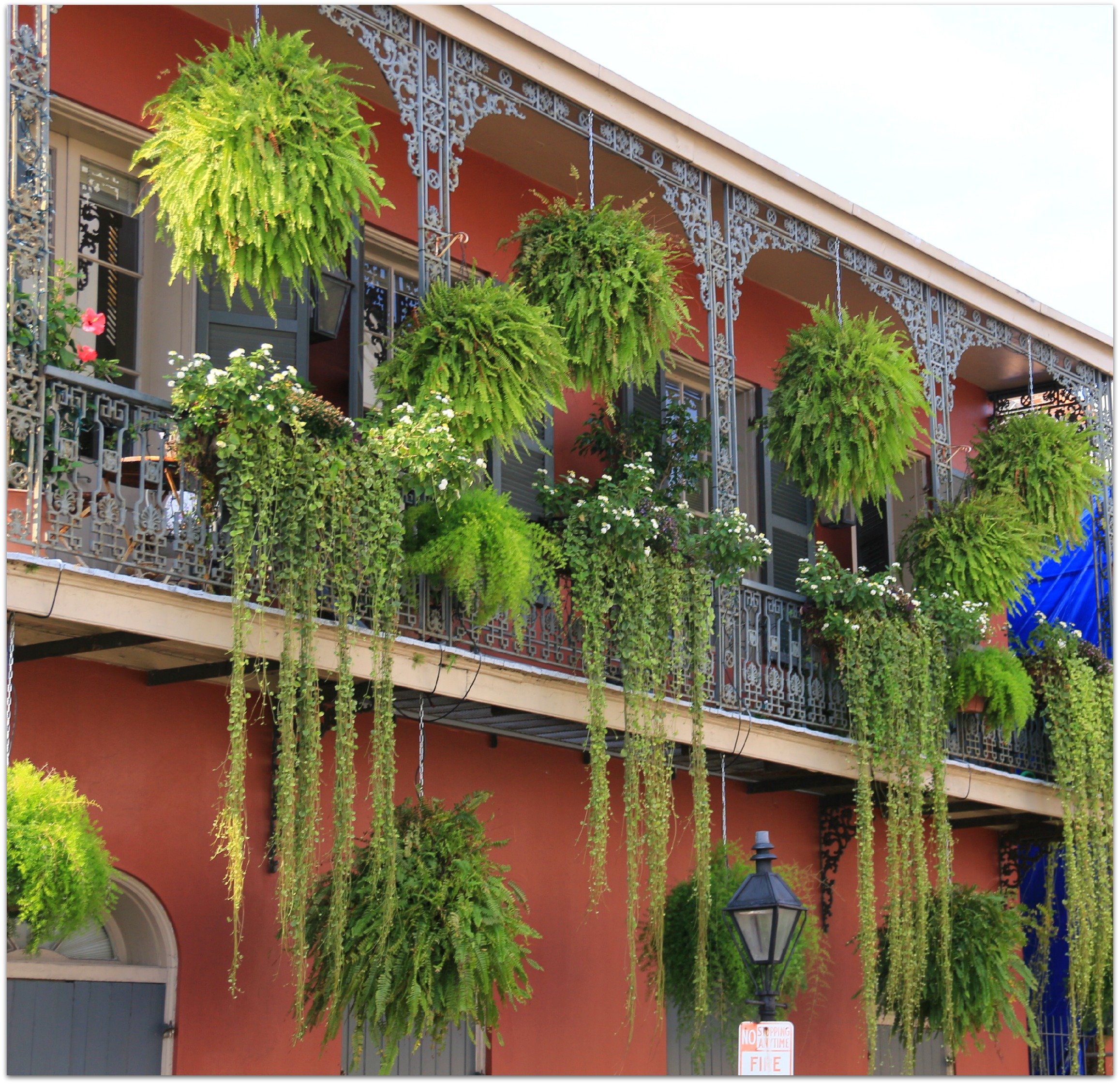
Ferns-in-New-Orleans-French-Quarter-Balconies

It was a love-hate relationship from the start, like trying to love a faithless man who, nevertheless, touches the romance in your soul and makes you laugh like Dionysus himself.  How could any writer not be enchanted with the French Quarter, standing on St. Peter beneath the apartment where Tennessee Williams completed “Streetcar Named Desire” or wandering through the dark, ancient alleys that inspired Anne Rice’s vampires?

In New Orleans I learned that punctuality wasn’t always a virtue, Mama was always Queen, a little lagniappe adds spice to life, and how to play like I was going to die tomorrow.

 Joy May Sometimes Hide Despair

I also learned about aching poverty, that some high school restrooms were so filthy kids cut class to run home and use a clean toilet, that school administrators had virtually no resources except hearts large enough to embrace the world.  I taught a crack baby turned 14 who could never sit still and saw the price everyone pays for allowing there to be a large, poorly educated underclass.  I taught kids whose fathers and brothers had been murdered and who mourned with despair when their favorite music teacher was gunned down.  I learned about anger and compassion.

All People Are One

Then I went to West Africa, traveling with other teachers on a Fulbright-Hays Travel Abroad Grant to study the literature and culture.  After flying all night, we landed with the sunrise in Dakar, Senegal on the edge of the Sahara Desert, and as I stepped onto the ground, I was overwhelmed with the feeling I was home in the deepest sense.

senegal women

Of course, the food was similar to the gumbos and jambalaya of New Orleans—most slaves brought to New Orleans had come from there—and I could hear the beginnings of jazz in the syncopated rhythms of the drums. But, it was more than that and more than the fact that humans originated in Africa.

Living Close to Nature Makes Us One

In that land, people still lived close to nature, the way I had as a child, eating from a garden and talking to the spirits of trees.  There, even Christians and Muslims integrated their traditional animistic spirituality into their daily lives.  These were people who offered the tea of friendship before they asked why you were there, whose lives were vibrant with the celebrations of rituals that gave meaning to each passage in life.

What Feels Like Home May Be An Illusion

Years later when I moved from New Orleans to New Mexico, I felt I had found my soul’s home at last.  Sunsets spread across the sky—hot pink turning to burgundy and orange melting into violet, indigo and deep space black.  On New Year’s Day, cold and crisp, the air was filled with the songs of the Corn Dance at Santa Domingo Pueblo, where the whole community danced together in sacred harmony.

adobenido.com

adobenido.com

But despite my love for this natural world and the indigenous culture there, in the world of my people there was no harmony for me.  Along with the beauty existed the reality of an earth blood-soaked with genocide, the energy of hate, and a need to protect lies.  Trying to speak the truth in my life and about the students I taught, I lost my friends, my spiritual community and my work.  The desert stripped me; my bones were burned bare by the sun.

Wholeness May Be Born From Pain

One night, in the midst of this pain and darkness, I dreamed that as I wandered through a new apartment, I found a darkened cave-like room with a high domed ceiling and rock floor.  Turning on the light, there stood before me a towering ancient cathedral, a holy place at the center of my being.  I learned I was finally whole.

I still sometimes envy those who live where their ancestors settled decades ago. But I know that if I had enjoyed such comfort all my life that security would have become a place for me to hide from the unknown.  Instead I have learned that we are all One, and I have a freedom I never dreamed possible because—everywhere I go, I’m home.

What is home to you?  Please Comment.

© 2006 Georganne Spruce                                                 ZQT4PQ5ZN7F5

Related Articles: Home Is Not A Place, Finding Home Within You, We Take Ourselves With Us Wherever We Go

AWAKENING TO THE POWER OF WORDS

“Out beyond ideas of wrongdoing, and rightdoing, there is a field.  I will meet you there.”  Rumi

Simon_Glücklich_Paar_im_Gespräch

Painting by Simon Glucklich

Do you think before you speak?  Are you comfortable communicating your feelings with those close to you?  How has the quality of communication in your relationships helped or hurt them?

Over the years, the thing that I remember most about past relationships is the way the other person and I communicated and how that style of communication helped or hurt the relationship.

Many People Fear Expressing Their Feelings

For example, my ex-husband did not reveal his feelings—it wasn’t manly.  Another man was warm and romantic when he needed to be close to me, but when he didn’t want to be bothered, he became distant and irritable.  Still another could not handle conflict or what he perceived to be conflict, and he distanced himself by literally leaving or shutting down emotionally so that no real conversation could take place.

None of those relationships lasted although I managed to stay married for ten years.  My father had been a man of few words who rarely showed his feelings, so I didn’t expect much.  In contrast, I had grown up with a grandfather who expressed his love in many ways, and I longed for that.

Book conversation

Photo: Metropolitan Transportation Authority / Patrick Cashin.

Conflicts Require Us To Choose Wise Words

We all find moments in a relationship when we need to express our hurt feelings or clarify what we or our partner has said to avoid misunderstanding.  These moments may be very touchy.  We worry about how the other person will react.  Will this separate us further or bring us closer together?  Will we choose the right words without upsetting the other person? After one of these moments in a former relationship, I wrote the following poem.

Tapestry
by
Georganne Spruce

We talk –
Our words weave webs
To trap us,
Entangling syntax and emotion
Until we catch a thread
That unravels the pattern
Or unsnags the snare
Our egos have woven.

This tapestry we weave
Is precious and rich
With dangerous detours
Like silken strands
And designs that rise
To its shimmering surface
Only after the hum of our loom
Finds silence.

We sit surprised
By the shape it has taken,
Not the form we intended
But the one we created.


FEMA_-_21662_-_Photograph_by_Greg_Henshall_taken_on_01-21-2006_in_Louisiana

Photo: Greg Henshall for FEMA

We Can Learn To Communicate Better

We are fortunate today because there are so many opportunities to improve how we communicate.  Harville Hendrix’s Imago Relationship Therapy offers training in this area and includes learning a mirroring technique that helps us to truly hear one another.  Nonviolent Communication teaches us to speak with compassion from the heart.

Let Go of the Ego and Speak From the Heart

How we communicate may determine our success or failure in a large range of activities because we are interacting with others in almost every aspect of life.  When we are able to let go of ego’s needs and center ourselves, we are more likely to be able to hear what the other person is saying.  When we release our fear and communicate with love, we help the other person to feel safe, and hopefully this will allow him to speak with honesty.

Now that I am in a relationship with a man who communicates well and isn’t afraid to show his feelings, I feel such freedom.  I know him on a deeper level than I knew most of the other men with whom I’ve had relationships, and that makes all the difference.  We share so much more of who we are because we trust each other to be honest and kind at the same time.  Sometimes our words do surprise us, but we choose to ask for clarification before we react.

Release Fear and Be in the Moment

We all benefit when we find that field, about which Rumi speaks, where judgment is suspended, where we can be heard, where we can speak without fear, and where we can untangle the web we have woven. Whether written or spoken, our words have power to enrich our lives or to harm them.  Developing the consciousness to be in the moment so that we think before we speak or send an impulsive email is a wise practice.

What have you learned lately about the power of your words?  Please Comment.

© 2014 Georganne Spruce                                                     ZQT4PQ5ZN7F5

Related Articles: Zero Negativity (Harville Hendrix), Seven Pointers for Couples to Prevent and Resolve Misunderstandings, Conflict Resolution Skills

AWAKENING TO CREATE HAPPINESS

“Happiness is not something you postpone for the future; it is something you design for the present.”  Jim Rohn

Photo: Georganne Spruce

Photo: Georganne Spruce

Are there any little things in your life that make you happy?  Are you always looking for something better or bigger?  What is the smallest thing that ever brought you happiness?

We are all different I know, but I learned a long time ago that the world, particularly the natural world, is an interesting place.  There’s nothing I enjoy more than walking through a forest and discovering something I’ve never seen before or a pattern of flowers or bark on a tree that is unique or particularly aesthetically pleasing.

Nature Can Provide Us With Delightful Moments

I remember when I was at the Botanical Gardens in Denver and saw the trees in the picture above.  The knots on the trees looked like eyes, as if the inner tree were looking out at me and smiling.  I was delighted and even laughed out loud as I imagined the conversation the two might have been having and how they were teasing me with their look.

I’ve always felt One with nature, having spent a childhood outdoors a great deal.  These little experiences like finding trees with eyes create happiness for me.  Just a little thing can change my mood quickly:  the song of a bird, the gobble of the turkeys nibbling on my lawn, or the neighborhood cat rolling around on the deck.

Photo: G. Spruce

Photo: G. Spruce

Little Things Can Make Us Happy

No matter what is going on in my life when these things occur I experience a moment of happiness.  I think I’ve learned a really important thing.  Many little things can bring us happiness if we are fully present and open to letting life interrupt our focus for just a moment.

Photo: Georganne Spruce

Photo: Georganne Spruce

When we are always focused on our accomplishments or achievement in our society, finding happiness can be challenging.  We usually set standards for ourselves and judge our actions as successful or not.  If we fail to live up to the standards we set, we are unhappy and disappointed.  We feel inadequate and the fear that we won’t be good enough grows.

Of course, it is important that we are able to do what is expected of us as parents or workers in order fulfill the responsibilities we have accepted, but too often, instead of enjoying the little successes each day, we keep expecting more before we are willing to feel good about what we do.  The tragedy is, though, if we keep putting off feeling good about ourselves or taking the time to lift ourselves up, we may never take the time to be happy at all.

Photo: G. Spruce

Photo: G. Spruce

We Can Choose to Experience Happiness

We can create happiness whenever we want.  It’s about how we choose to feel and that relates to what we are thinking.  Some people think my delight with little things is silly.  Maybe it is, but at times, silly makes me happy.  Maybe doing a crossword puzzle delights you.  Maybe trimming the shrubs enlivens you.  Maybe listening to a particular piece of music inspires you.

Make a commitment to allow something each day to make you happy by taking a moment to appreciate something that appears in your life.  Start your day with meditation, reading something inspirational, a piece of chocolate, or a hearty breakfast.  Savor it, and think how fortunate you are.  That few moments of creating happiness can radically change your day.

026 (3)

I’m sharing with you today several pictures of things that have delighted me.  I hope you enjoy them and become more aware of the interesting images that appear throughout your day.

What has made you happy today?  Please share a comment.

© 2014 Georganne Spruce                                              ZQT4PQ5ZN7F5

Related Articles:  What is Happiness?, The Source of True Happiness, The Source of Happiness from The Richest Man in Town

AWAKENING TO DEEP BLESSINGS

“The seed now begins its time of gestation in the rich dark earth.  It is the great cold of night; not the negative images of darkness, but the dark richness of that unknown, fertile, deep part in each of us where our intuitive creative forces abide.  Elizabeth Roberts and Elisa Amidon, Earth Prayers

Photo: Georganne Spruce

Photo: Georganne Spruce

Our Deepest Blessings Come From Within

We live in a culture that focuses on the external and its rewards for success, often ignoring the richness of our internal lives where the true heart of life exists.  Who we are is who we are inside at our deepest level, the truest part of ourselves.  When we have brought some of that to the surface, we can then see how blessed we are, for our deepest blessings come from that “dark richness” within.

When I was a child, I was very shy, but I had an extroverted mother who pushed me into speech and drama classes hoping it would make me more extroverted.  I did take the classes and for years felt extremely nervous speaking or acting, but underneath my resistance to being who my mother wanted me to be was a stronger desire—to be able to express who I truly was.

It was easy to write what I felt.  I didn’t have to get up in front of people and risk making a fool of myself, but my mother’s insistence that I learn to speak publically was a blessing in disguise.  Now as an adult, I am comfortable teaching classes and workshops, doing readings for my book, and networking with others.  These experiences are exhilarating, and I truly enjoy interacting with others.  I always hope that sharing what is most important to me will be valuable to them.

Creative Work Comes From Deep Within

One of the blessings of any creative work is that we must go into that “unknown, fertile” part of us and discover the phrase of movement, words, or music that we had no idea was there.  In the quiet when we are receptive to the unknown, we discover a seed that becomes a dance, poem, or symphony when we bring it into the light.  The same is true also for the creative scientist or business person.  Many treasures lie deep within.

When I taught modern dance in college, I often choreographed dances for the students.  When I was looking for ideas or was ready to create a dance, my favorite time to work was between 10:00 pm and midnight.  I loved the quiet and lack of distraction.  Problems of the day fell away.  New movements came so easily, and I accepted whatever came without judgment.  Later I would shape and rearrange the movement, but at this early stage, I learned that the wise thing to do was to let it flow.  I always felt blessed by the richness of what came to the surface.

Pilgrimage 2012 022

Photo: Georganne Spruce

Great Beauty Emerges From the Dark Earth

We are now only a few days away from the beginning of spring when the earth bursts open with her magnificent beauty.  Here in the Blue Ridge Mountains, jonquils are blooming, tulips are popping up through the earth, and some of the 80 kinds of migratory birds are stopping here on their journey and sing to us each morning.  New life is always a reminder that the darkness of the earth is what nurtures the seeds that become this blessing.

We Must Be Present To Recognize Our Blessings

We are surrounded by blessings every day, but are often not aware of them because we are not present.   When we take time each day to be present and are able to easily become present, we are more likely to notice the good that comes to us in its many varied forms.  The mail with a check in it arrives a day early when we need to pay a bill.  A friend we have missed and haven’t seen in years suddenly appears on Facebook.  A change in plans disappoints us until we realize it enables us to join friends for a more interesting evening.  Being conscious of our blessings reminds us of the abundance of our lives, creates an experience of positive energy, and raises our energetic vibration.

Photo: Georganne Spruce

Can you find the butterfly?
Photo: Georganne Spruce

Blessings Are Of the Heart

Caren Goldman in Healing Words asks the question, “When, I wonder, does a blessing become a blessing?  Is it when it’s thought of?  When it’s spoken?  When it’s heard, or when it’s acknowledged – not just in the head but in the heart?”

We are blessed every day.  Let us make a practice of noticing even the tiniest good thing that comes into our lives and feel that appreciation at the heart level.  When we feel blessed, we act blessed, and sharing that good feeling with others will be a blessing to them.

© 2014 Georganne Spruce                                                      ZQT4PQ5ZN7F5

Related Articles:  Learn to Live in the NOW with Eckhart Tolle (video), Are You Grateful for Your Life? 13 Blessings You May Be Overlooking, Do You See Blessings in Your Challenges?


AWAKENING TO OUR AUTHENTICITY

“That inner voice has both gentleness and clarity.  So to get to authenticity, you really keep going down to the bone, to the honesty, and the inevitability of something.”  Meredith Monk

Merredith Monk's Dance

Photo by chncpa.org

I am sometimes shocked by the extent to which people will go in order to please others at the expense of destroying who they really are.  I watched an hour of the Academy Awards the other night and was absolutely shocked when I saw Kim Novak who was presenting an award.  I kept staring at her because I could not find one detail about her face that looked the way she used to look.  In addition, parts of her face looked frozen. 

kIM nOVAK The next day on Facebook, I saw a picture of Goldie Hawn and had the same reaction.  I stared for a long time and could see only hints of the face she used to have.  I’ve always thought of Goldie as being very genuine, more so than most Hollywood actresses, and I would never have dreamed she would do this to herself.

Aging Can Be Empowering

I understand the competition for roles in Hollywood is fierce, but the truth is that as I age I enjoy seeing actresses who have aged naturally.  I can relate to them more.  Judy Dench is a wonderful example.  She has wrinkles and gray hair, but this seems to work to her advantage because she is frequently cast in roles with depth that tap the wisdom of her years rather than focus on her appearance.  She has lived long enough to know how to go deeper, and I can always count on her performances to have substance.

Photo by wallpaperzoo.com

Photo by wallpaperzoo.com

Unfortunately, it isn’t just the entertainment industry that is obsessed with youth.  Most of the people who have plastic surgery for cosmetic purposes are women, but ten percent of the people in the United States who have plastic surgery are men.  We are so obsessed with appearance that many feel they need to look younger in order to succeed in their careers even when appearance has nothing to do with performance.

Changing Our Appearance to Gain Confidence Is Superficial

In researching this topic, I came across the story of a young woman who had plastic surgery to change her body shape to a sexier one and was delighted with the attention she received and how it enhanced her career opportunities.  All this positive attention from others made her more confident, but I wonder how long that confidence will last when she starts aging and drooping.  Will she simply turn to surgery again or will she realize it’s time to heal her insecurity.

Fear Is the Basis of All Insecurity

When we live authentically, we accept who we.  We accept our flat chests, large noses, big ears or gray hair.  We don’t let the external define us.  We want to change our appearance only if we feel we aren’t good enough or that we must please others in some way.  Hiding beneath those insecurities is the fear that we are inadequate or that we will be rejected, so the root of the problem is our fear, not our appearance.

When we allow these fears to persist, we may not say no when we need to, so we continue to live with dysfunctional relationships that only reinforce our fears.  We are more afraid of the unknown than we are of remaining miserable and hiding our true selves.  When we live in fear, we never know joy, for it comes from deep within and comes from a deep feeling of freedom, unfettered by concerns for what others think of us.  We never know peace because we are always looking around us to see if we have pleased another.

To Be Our True Selves, We Must Get In Touch With Our Core

Relying on anything external to define us is risky.  The core of our being lies deep within us, so that the only way to truly know ourselves is to “keep going down to the bone” where we will find the inner voice that will guide us through all life’s experiences.  We must be willing to let go of society’s expectations in order to discover what we want for our lives, and when it is different from what others want for us, we must have the courage to follow our inner guidance and let go of what will no longer serve us.

Authenticity Expresses What Is Unique About Us

One of the reasons I chose the quote by Meredith Monk is because I saw her perform in the 1970s.  It was clear from the moment her modern dance company began the performance that this would be unlike anything I had ever seen.  The dance was performed with the dancers singing, much like an opera.  She created a landscape of movement, sound, and lighting that was exceptional.  Clearly she expressed herself in an authentic way and she inspired me to do the same.

Meredith Monk

Photo by chncpa.org

What I produced wasn’t always so good; sometimes it was silly; sometimes it didn’t work.  But after seeing her work, I knew I had to experiment.  I had to have the courage to find out what I could do and that was a greater motivation than the fear of failing. It is difficult to have courage if our personas are not genuine.  In that case, our real selves are hidden beneath many layers that we must peel away.  As we let go of what is artificial about our lives, what is authentic will emerge.  As we face our fears and release them, knowing we are strong enough to survive whatever change occurs, what and who we no longer need will drop away, and our real selves will emerge.

Being Authentic Gives Us Freedom

This is why having a meditation or contemplative practice is so important.  These practices clear away the mental debris so that we can hear the inner voice that will guide us.  Until we become who we truly are, we may not even see the true gifts life has given us because they do not fit into the inauthentic life we created, but these may be gifts the world deeply needs.  Finding love and joy and the freedom to express ourselves is a gift, not only to ourselves, but to the other people as well, and we can only do that when we are authentic. © 2014 Georganne Spruce                                 ZQT4PQ5ZN7F5

Related Articles:  Meredith Monk: Songs of Ascension (video), What Being Authentic Means…And What Gets in the Way, Becoming More Authentic: Accept Yourself and Stop Seeking Approval