Tag Archives: Wholeness

AWAKENING TO LOVE ALL WE ARE

“The supreme happiness in life is the conviction that we are loved–loved for ourselves, or rather, loved in spite of ourselves.”  Victor Hugo

Denver 018 Do you ever feel that you aren’t loving enough?  Do you feel that you are a failure if you don’t do everything perfectly?  Do you feel that you can’t be loved for who you really are?

We all need to feel we are loved, and that we are loved despite our imperfections, but often we set standards for ourselves and others that only create more stress and problems.  At times we set goals or expectations that are impossible to meet, and when we or our friends don’t meet them, it damages our self-esteem and relationships.

Expecting Perfection Can Be Harmful

We all have ideas about the perfect relationship.  We may even have a list of requirements that a potential partner or friend must have, but inevitably, if these standards are too high, we are setting up ourselves and our partner for failure.  Ultimately what we really want is to be able to make mistakes and still be loved and respected.

Growing up, my parents had high expectations for me.  I was intelligent, so they expected me to make A’s in school, which I often did.  They also taught me to be kind and respectful to others and not to do or say things that would hurt others.  As a Southern woman, my role was to take care of others, make them feel good, and put my needs last.

There was a lot of conflict between my parents so I developed the idea that I needed to do everything perfectly to prevent any further conflict.  When I achieved what they wanted, I was rewarded with praise.  This was before the days when parents bribed their children into doing what they wanted in order to receive toys or electronics.

Setting Standards Of Perfection May Cause Illness

I felt very nervous and fearful much of the time because my parents’ conflict was disturbing to me, and sometimes I was punished for what was a fairly small thing because they were so on edge.  As a result I became a perfectionist well into adulthood.  I experienced a great deal of anxiety around trying to meet high standards in school, relationships, and in work, and with time this stress contributed to my developing Chronic Fatigue Syndrome.

When we expect too much from ourselves or others, we will inevitably be disappointed at some point.  Stress caused by any condition affects our health in a negative way, but I didn’t realize the harm I was creating for myself until I attended a clinic where every health practitioner with whom I spoke told me not to be so hard on myself.  Fortunately, they convinced me my perfectionist thinking was not healthy.

We Need To Accept Ourselves As We Are

At first, I was angry that they wanted me to lower my high standards.  I was proud of having high standards and trying to be a really good person, but I had so little energy, I had no choice but to change.  Having to limit my activity forced me to go deeper and explore why I needed to be so perfect.  The more I explored this idea, the more I realized I thought I wouldn’t be loved or liked if I didn’t meet these expectations.

As I moved from believing things had to be done in a certain way to being more open and flexible, I learned to say “no” to situations that were too stressful or not truly beneficial.  As I stopped expecting perfection from myself, I realized how difficult life could be for others and grew more empathetic.  I learned to expect less from others.  I also learned to accept my imperfections while also trying to change some things for the better without judging every step I took.

Loving Ourselves Helps Us To Love Others

I learned to love who I was—even when I was able to do little of what I wanted to do.  I learned to love myself as I was.  I knew I was doing the best I could everyday despite it being less than I had previously done.  As I recovered from the illness, I came to value well-being so much that it became my priority, not what I achieved in the eyes of the world.

Learning to love ourselves compassionately teaches us how to love others, and what we all want most is to be loved for who we really are.  As I came to love myself more, I was able to love more generously and accept others’ irritating qualities with more compassion.  I learned to love them for who they truly were.

The most wonderful love we can experience is with someone who really knows us and accepts our eccentricities and difficult aspects.  We know that we do not have to be perfect—that we can be human and make mistakes and still be loved.  It also gives us an opportunity to grow in our love, to say, “Well, I didn’t handle that well, but I can do better the next time,” and to take the time to contemplate a more effective or caring response to the problem that arose.

Love comes From Within Not From Without

I’ve met many people who do not love themselves, and in order to prove to themselves that they are loving, they exhaust themselves doing good deeds for others.  However, when we act in this manner, we aren’t acting from love; we are acting from a wounded ego.  When we do for others out of love, we do not feel we have to ignore our own needs, and we balance our time between taking care of ourselves and caring for others.

With the exception of abuse, we may grow by learning to accept aspects of our partners and friends that don’t always please us.  Of course, there are always limits to what is healthy and appropriate in a relationship, but if there truly is enough there to make the relationship good, we need to exercise the effort to accept and hopefully understand those things about our partner that irritate us and have compassion for their struggle.

Wholeness Includes Loving All Of Who We Are

In talking with friends who have been married many years, I am always impressed with how they have grown together, adjusting and changing as needed to make the relationship more workable for both.  But it is clear that the one thing that holds them together is this—they know they are each loved for who they truly are, for their best qualities and their most irritating ones.

Learning to give to others what we want in return tends to draw to us that same energy.  One of the most profound thoughts I’ve read in Oneness by Rasha is this:  “The key to the self-mastery that is so fervently sought by you who are so keenly aware of your process of evolution, is not to love yourself despite your perceived shortcomings—but rather, to love yourself because of them.  In your embracing of all that you Are…is the unconditional gift of wholeness that awaits you.”  (p. 238)

These challenges we face in relationships reveal to us aspects of ourselves we may rather not see; yet they offer us opportunities for growth and challenges in loving ourselves and others.  Let us learn to love all of who we are and share that understanding and love with others.  Only love will heal the world.

© 2013 Georganne Spruce                                                      ZQT4PQ5ZN7F5

Related Articles:  How To Love Yourself, Wayne Dyer – Looking For Love, Self-Love: A Definition

AWAKENING TO A PEACEFUL HEART

“Any intelligent fool can make things bigger, more complex, and more violent.  It takes a touch of genius – and a lot of courage to move in the opposite direction.”  E. F. SchumacheR

Denver 008

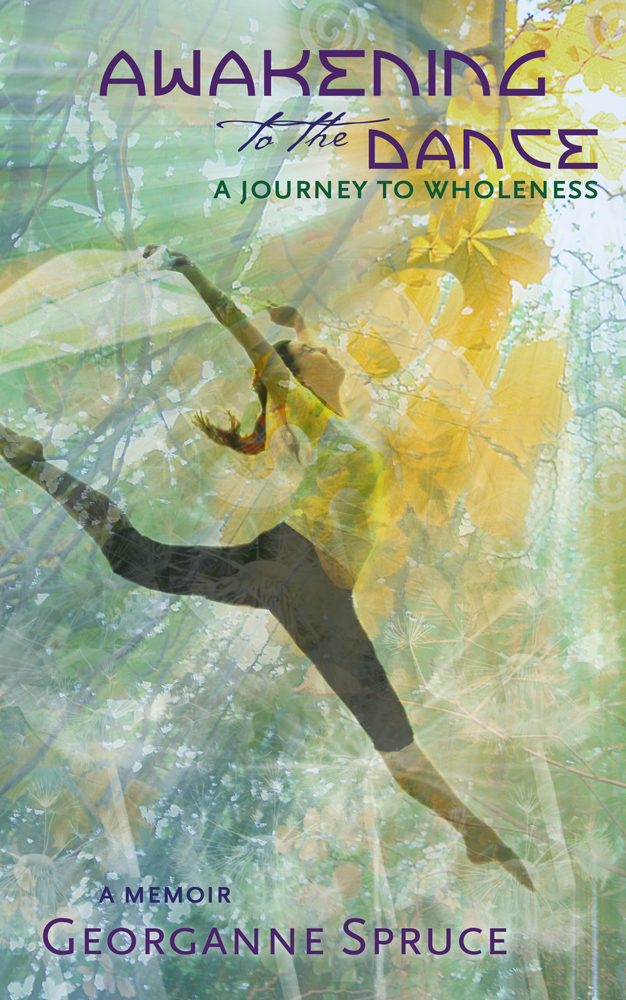
A few months ago, my life was so full I felt I was in constant motion.  I was promoting my memoir Awakening to the Dance: A Journey to Wholenesswith book signings, and I met a wonderful man and began a relationship with him.  Combined with the usual things one has to take care of in life, I was fairly overwhelmed.  As a result, I stopped going to the spiritual celebration I often attend on Sundays because I needed time for myself.

When We Feel Anger, We Need To Take A Breath

Then one day, I did attend the Sunday celebration, and as I entered the building, I ran into a young man I hardly knew who greeted me.  “Good to see you.  We haven’t seen you in a long time.  You did your presentation and sold your books; then you disappeared.”

Wow! I’m sure my face was red with the anger I felt.  How dare he suggest I just used my community in this way!  I’d been there nearly every Sunday for eight years!  I hardly knew this person and he knew nothing about my personal life.  A dozen angry responses flashed through my mind—but I took a deep breath, decided to be direct, and said, “Well, I was really exhausted after I finished the book.  Then I had to do all the promotional stuff, and I’m now in a relationship.   I just needed time to take care of myself.”

Another person walked up to us and I was able to slip away, thankful that I’d been able to respond with an explanation that would perhaps make him realize his assumption had been wrong.  I was also pleased with the restraint I’d shown.  When I calmed down and thought about what he had said, I realized it reflected some issue he was struggling with.

Two people in a heated argument about religion...

Two people in a heated argument about religion when Mahmoud Ahmadinejad spoke at Columbia University. Click the audio button found above and to the left to listen to them. (Photo credit: Wikipedia)

Our Issues Are About The Ego

We all have our issues and when those buttons get punched, it is so easy to act in a way we will regret later.  Inevitably, if we just react emotionally, without taking a deep breath first, we create more of a problem, making the problem “bigger, more complex, and more violent” as Schumacher suggests.  Pausing to take that breath before responding reminds us we are in the moment and need to respond in the moment from the heart, not in response to our injured ego that wants revenge, attention or is responding to our past negative experiences.

In taking that breath, we are also affirming we want peace, and it may allow us to see the source of the discomfort for the other person.  Taking a breath allows us to notice the tone of his voice or the expression on his face and that may guide us to respond in a positive way.  I realized instantly that the young man who spoke to me knew nothing about my personal life, and that being open to him might create a bridge of understanding.

It Takes Courage To Be Peaceful When Others Are Not

I don’t agree with Schumacher that choosing the more peaceful path requires genius.  I think it’s just common sense, but in a world where we’re still fighting wars and most television shows are about violence, it does sometimes take courage to take a different path.  It takes courage in order to go against what those around us believe, especially if they are friends or family.

I taught high school English for years and was often appalled by the hateful things teens said to each other, even to their friends.  When students chose not to engage in that disrespectful behavior, they were often ostracized, so the penalty for nonconformity was huge.

I once had a student ask me if I thought most people were good.  I answered that, yes, I thought most people were basically good.  She responded that she didn’t agree—she thought most people were mean.  With that as the basis of her thinking, it is not surprising that she often responded hatefully to others.  She wanted to hurt them before they hurt her.

Our Responses Reflect Who We Are

In the end, though, it doesn’t matter whether others are good or hateful.  How we respond in every situation is our choice and we have to live with it.  We have to decide who we want to be.  Do we want to be the one who comes back with a more hateful remark or do we want to be the one who creates a bridge or lets the emotional charge from our opponent die because we choose not to feed their negativity with ours?

Courage Comes From The Heart

When we are in doubt about how to respond to a negative situation, it is always wise to take a breath and consult the heart.  Responding out of love and peace is never a bad choice, and it doesn’t mean that we are weak by not confronting the anger or hatefulness in another.  We can still hold to our point of view, but when we do that from a peaceful base, it is more likely to be heard by others.  It may then be possible to turn an argument into a conversation or a misunderstanding into friendship.  Courage is most powerful when it comes from the heart.

© 2013 Georganne Spruce                                                  ZQT4PQ5ZN7F5

Related Articles:  Don’t Run From Anger – Use It to Heal and Evolve, Video: S.T.O.P. – A Conversation with Eckhart Tolle and Deepak Chopra, What’s Your Reaction to Conflict

AWAKENING TO AN ADVENTUROUS LIFE

“The purpose of life is to live it, to taste experience to the utmost, to reach out eagerly and without fear for newer and richer experience.”  Eleanor Roosevelt

English: A group of drummers in Accra, Ghana, ...

English: A group of drummers in Accra, Ghana, wearing dashiki shirts and knitted kufi caps. (Photo credit: Wikipedia)

Do you often try out new activities or ideas?  Or do you feel the most content when things remain the same?  Have you ever learned anything important from doing something new?

Unlike many people who have one vocation, marriage, or passion in life, I’ve always been interested in many things.  During the time I was a dancer, I was also a teacher, receptionist, employment counselor, and lawyer’s assistant, doing whatever I needed to do to pay the rent.  Of course, teaching has been my primary profession, but I taught English, dance, drama, and exceptional children.

Curiosity Can Motivate Exploration

After being somewhat of a recluse as a child because of illnesses, as an adult I was always hungry for new experiences.  After I started to really explore life, I couldn’t stop.  Each experience created a curiosity that motivated me to try something else that was new.  At times, I was fearful, but I chose not to let that stop me.  As a result, I have had a full and rich life.

2011 002

When we open our minds, many new opportunities present themselves.  We can expand our lives simply by being present in these situations.  Do we take the time to listen when someone expresses an idea with which we disagree?  It’s possible that understanding that person’s beliefs may expand our thinking so that we are better able to understand people who don’t share our beliefs.

Release Fear of Differences

Many of us are afraid of people who are different from us.  This cultural disconnect creates many problems that don’t need to exist.  If we could put aside our fear of what is different and embrace what is similar among us, we could create bridges instead of wars.

Experiencing Other Cultures Expands Our Understanding

In 1994, I was privileged to travel and study in West Africa.  It was one of the richest experiences of my life because, for a time, I was immersed in a culture very different from the one where I grew up.  It touched me deeply because I saw that it was possible to live a life where art and spirituality were integrated into daily life and where family was of supreme importance.  I also saw the ways that stereotypes disregarded the depth and beauty of the people whose lives were rich in ways many westerners’ lives were not.

On the daily level, the trip also taught me to appreciate the regularity with which my phone worked, hot water always flowed from the faucet, and a prescription was filled from a pharmacy whenever I needed it.  These were not sure things in Africa.  But most of all, the trip taught me not to accept others’ concepts of people or ideas without doing my own research.

 New Experiences Can Deepen Our Spiritual Lives

New Orleans Mardi Gras Indian

New Orleans Mardi Gras Indian (Photo credit: Wikipedia)

Because I lived in New Orleans when I traveled to Africa, learning about the historical origins of the city helped me value aspects of the culture I had not appreciated before, such as the origins of Voodoo as a religion, the call and response aspect of Mardi Gras Indian music, and the source of many New Orleans dishes.

My way of dealing with life changed after this trip.  I explored my spiritual beliefs more deeply and worked to integrate them into my daily life, believing that this would be a path to greater wholeness, and it was.

Adventures Broaden Our Understanding

When we see life as an adventure, we welcome what is unknown or unfamiliar.  Adventure is about going where we have never gone before.  (Yes, I was a “Star Trek” fan.)  I loved where I grew up in the hills of Arkansas, but when we moved to Tulsa, I learned about the Cherokee’s Trail of Tears and the plight of Native Americans elsewhere.  When we moved to Memphis in the early 1960s, I experienced the civil rights movement. In every place I lived, I learned and grew in significant ways because each place was different.

The Inner Journey Is As Important As the Outer Journey

When I hear people say they’re bored, I’m always puzzled.  There are so many things we can do to make life interesting if we are willing to make the effort.  Are we willing to take on this responsibility?  There are books to read, movies to see, and conversations to initiate.  And in this culture, we often think we have to do something all the time.  Perhaps we need to learn that just being may be the most interesting thing we can do.

It is not just the outer adventure that can excite us, but the inner one as well.  What led me to a point where I felt my life and spirituality were integrated and I felt whole was a spiritual journey where I explored several spiritual practices and stayed open to see whatever showed up as a possible teacher.  The journey inward has been as rich and expansive as the outer one.

Adventures Expand Our Human Awareness

Adventures are what we make them.  To one person, eating Indian food may be an adventure.  To another, living in India is an adventure.  But what they all have in common is our willingness to try something new, to open a door that wasn’t open before, and peek in or step into a new experience.  Even if it isn’t a particularly pleasant experience, we learn something we didn’t know before and that expands our lives because that’s why we’re here—to learn all we can about being human.

© 2013 Georganne Spruce                         ZQT4PQ5ZN7F5

Related Articles: Re-awakening Joy, Trying New Things, 7 Benefits of Being Open-Minded

AWAKENING TO THE HEALING DANCE AGAIN

Technology continues to be a challenge.  I apologize to my subscribers because they didn’t receive the blog post last week because I didn’t reblog correctly.  So, I’m adding another blog on healing first.  If you missed last week, please scroll to the second post and read it first.  Peace, Love, and Joy to you all, Georganne

“There is no coming to consciousness without pain.  People will do anything, no matter how absurd, in order to avoid facing their own soul.  One does not become enlightened by imagining figures of light, but by making the darkness conscious.”  Carl Jung

How willing are you to be aware of your emotional pain?  Do you use pleasant experiences or material things to make you feel better or deaden the pain?  Do you have the courage to face and heal the deeper truth?

In the first blog of this series, I wrote about how our wounds often lead us to see what needs to be healed in our lives.  Although we see them as part of our emotional darkness, they are gifts.  In the second part of the series, I pointed out that we all need love in our lives and that it may come from many sources if we are open to seeing it.  Today, I want to write about the importance of letting go of our attachment to the pain we experience.

Fear of Letting go of Pain

Years ago, after a painful divorce, I began seeing a therapist to help me deal with the deep betrayal of my husband.  At the time, I was teaching modern dance and dancing with a company and choreographing.  As the therapy progressed, I began to feel better about myself and spent less time overwhelmed by negative emotions, but one day I became very upset during a session.

“Sometimes I’m afraid that getting ‘well’ will destroy my creativity. It’s changing something in me, and I don’t feel I need to create so much. I feel like I’m losing my creative edge.”

“How is it doing that?” my therapist asked.

“Because it’s the inner turmoil that makes me want to create. If I get well, I’ll have no reason to create!”

“What if being healthy makes you more creative?”

I only shrugged, but as I thought about this, I was unable to imagine how that could be so.

(Excerpted from Awakening to the Dance: A Journey to Wholeness)

Why We Won’t Let Go

We all have belief systems that keep us trapped in unhealthy places.  That’s why many people refuse to get help for their problems.  They’re afraid to discover what lies in their darkness or are so insecure that they cannot handle the idea that they have done something wrong or are not all right.  My mother is a good example.  She could not let go of the idea that she wasn’t a good Christian if she loved herself.  Her entire sense of worth was based on what she did for others.  She was a loving person in many ways, but very unhappy and took care of herself only so she wouldn’t burden others.

Sometimes, though, we take the risk, and in our process of changing, we begin to feel better and hit another layer of fear that limits our consciousness.  We may cling to our negative feelings simply because they are so familiar, just as we cling to negative relationships because they are known and nothing scares us like the unknown. Letting go of these attachments is often a big step.

Becoming Conscious of Our Shadow

Fortunately, though, after my divorce, I liked feeling better more than being in pain and decided that my ideas for dances could come from many sources, even the past negative feelings, for I could remember them, even if I no longer felt them.  I filed them away as I would any reference material and took responsibility for making myself happier.

Through therapy and through reading and attending workshops as a member of the Carl Jung Society in New Orleans for ten years, I learned to understand my difficulties and how to resolve them.  I learned about the value of what Jung calls, “the Shadow.”  It is that dark part of ourselves that we don’t want to see, but the less conscious we are of it, the more it harms us.  Becoming enlightened or conscious requires that we examine and heal it, for when we become conscious of the thoughts or experiences that have caused our pain, we can heal them, then let go and move on.

All Spiritual Healing Requires the Journey Inward

This spiritual journey inward may seem eccentric to some people who have bought into our materialistic society.  Eventually, the materialism fails to solve the problems.  The drugs that seemed to make us feel better become a destructive addiction.  All of the “cures” for our pain only create an illusion of temporary healing.  The only true healing takes place when we go within, and that is often true of physical, as well as emotional pain.  We have to bring it to the surface, heal it, and let it go.

We can free ourselves only when we become conscious.  No one I’ve read has written more clearly about our pain than Eckhart Tolle in A New Earth: Awakening to Your Life’s Purpose in his discussion of the “pain body” and how to heal it.  I highly recommend this book. (See Links I Like at the side bar)

What pain have you healed recently? Please comment.

© 2012 Georganne Spruce

Related Articles:  Eckhart Tolle Releasing the Pain Body (video), Carl Jung’s Concept of the Shadow (related to life), Overcome Your Emotional Roadblocks

Last Week’s Blog

Many healing issues have arisen in my life lately, so I intended to write about healing today.  I know several people dealing with cancer and others dealing with emotional issues.  But when I looked at a series I wrote on this topic last year, I realized I would just repeat what I’d already said.  So, I’m reblogging the posts that seem most relevant.  I hope they will be helpful.  Namaste. 

“The wound is the place where the light enters you.”      Rumi

How tall are the walls you build around yourself? Why do you need so much protection? What will it take to heal your wounds?

It was freezing last night and my bedroom was still cold when I awoke. All I wanted to do was snuggle further into bed, hide out in my pleasant dreams and the warmth.  But after briefly indulging my desires, I climbed out of bed, and walking into the center of my house, I was warmed by the brilliant, morning light spilling through the windows.

When life is rough, it is natural to want to hide out, build protective walls, and ignore the source of our pain; yet, if we do that for too long, it can become a dark cave from which we may never emerge.  We learn to lie brilliantly to ourselves.  We evade capture.  And we become hard and defensive around the edges, so that the one thing that can heal us is unable to penetrate.  Even the light needs a chink to pass through.

Wounds Are Valuable Assets

How do you deal with your most painful wounds? Do you build walls to protect yourself or do you see the pain as a sign something needs to be healed?  Our wounds are some of our most valuable assets.  They are the portals through which we can heal the pain that stops us from living our lives fully.  We have to learn to dance with them in the dark so that we can dance with them in the light.

Have you ever had the experience that, when a small conflict arises, you suddenly explode or react in some way that is inappropriate to the situation?  This is always a sign that a deeper issue has been triggered.  It is usually a sign that, deep within us, there are unhealed, deep wounds struggling to reach the light. So, what can we do to heal these wounds?

How To Heal Your Emotional Wounds

Being present is the key.  Has this happened before?  When did it begin?  What was the source of the original pain? There is always fear present with emotional pain, so I try to identify my pain so I can focus on it.  Am I afraid I’m not loved?  Am I afraid of losing someone or something I value?  Am I afraid of being harmed?  Regardless of how you identify the fear or don’t, the first step is to release it.

Releasing Your Fear

I take a deep breath, and as I exhale, I feel and/or visualize this fear leaving my body.  I repeat this process until I do feel the fear released, then sit a moment with the peaceful quiet that appears after the release.  Without the fear blocking my mind, I ask that this emotional pain be healed permanently, knowing that my wish will be granted.

Being Patient With the Process

The next step requires the most patience.  The pain may be healed immediately.  More than likely, though, I will be drawn to those experiences that will guide me through healing myself, and that is very empowering.  Healing may come in many forms:  a book, a person, a workshop, or technique.  Over the years, I have found valuable guidance for healing in therapy, spiritual practices, support groups, healing techniques like Emotional Freedom Technique, affirmations, numerology, astrology, Medicine Wheel cards, and simple conversations with friends. If I’m drawn to it, I dance with it, and in dancing with it, I may be healed.

How Did You Help Create This Wound

This deep pain is the kind we don’t want to return, so it is also wise to become aware of the role we played in creating the pain. The answers are always within us. That is why it is important to be receptive, but not passive.  We need to ask, “What did I do to help trigger this?  What was my role?”  Unless we can see the patterns in our behavior, we will repeat them.  It is in this step of the healing process that therapy is most valuable.  Therapists cannot change you, but they can help you understand your behavior and others.  Only you can make the change once you understand what you need to do.  Awareness is the key.

It is not always possible to identify our role in creating the pain, for sometimes it is the result of karma from past lives or that we are in a situation in order to learn a lesson.  Still, as frightening as it is, we must be willing to be vulnerable—to let the light shine through our journey to understand how to dance the healing dance, the one that we choreograph for our own healing.  Love the wound, then let it go.

What techniques have worked well for you in healing emotional pain? Please comment.

© 2012 Georganne Spruce

Related Articles: Eckhart Tolle – Dealing with Pain (video)Shift Your EmotionsBeing Present – Healing the Past

© 2013 Georganne Spruce                                      ZQT4PQ5ZN7F5

AWAKENING TO RELATIONSHIPS: INTEGRITY, Part 3

“Living with integrity means: Not settling for less than what you know you deserve in your relationships.  Asking for what you want and need from others.  Speaking your truth, even though it might create conflict or tension.  Behaving in ways that are in harmony with your personal values.  Making choices based on what you believe, and not what others believe.”   Barbara De Angelis

036

Do you have integrity?  In all situations or just some?  On what beliefs do you base your integrity?  Do you act with integrity when you know it will create difficulties?

Integrity is the third element in what I call the essentials for a good relationship of any kind.  The elements I’ve already written about are empathy and intimacy, and I’ll conclude the series next week with the topic of commitment.

Integrity Strengthens Trust and Love

Integrity is usually defined as being true to your moral or ethical principles, so it has meaning only when it is coupled with a belief system.  In a relationship, acting with integrity can create trust and strengthen love because you learn you can depend on the other person to act in accordance with their values.  This, of course, assumes that you are in a relationship with someone whose values are compatible with yours.

Integrity Begins With Being True To Your Self

I like Barbara De Angelis’ quote because it covers several important aspects of integrity, mainly the idea that we must be true to ourselves if we are to be true to others.  That’s where it starts—being true to yourself.  Only then can you be true to others.  When we always try to please others to the extent that we go against our own values or harm ourselves, we are out of integrity.

What Is Integrity In A Relationship

Years ago, I was in a relationship with a man whom I deeply loved.  We were both creative people and that bound us in a spiritual way that was very powerful.  But over and over, to be with him, I made choices that were not good for me financially.  One time, I cashed out a life insurance policy so I had the money to spend an extended amount of time with him to see if we could live together.  At the time, I was unemployed, but a month before I was to leave to see him, I was offered a good job and I turned it down.  I put the relationship first.

Our relationship had always been off and on because he was afraid of commitment although he clearly loved me, and when things were good between us, they were very good.  But in this case, I had sacrificed my security by turning down a job to be with him and expected him to understand I would need to get work.  He kept insisting that I needed to create my own business and not work for any institution.  He was self-employed and had no respect for people who worked for institutions.

I had tried to be self-employed, but I didn’t have the financial resources he did, so I had to work for other people.  He had a fit over this.  While he was true to his values, he had no respect for my needs—a not unusual dilemma in relationships.  The situation disintegrated from there.  I asked for his understanding and didn’t get it.

At this point, I realized I was settling for a lot less than I deserved.  Clearly, his set of values and mine were not compatible.  I didn’t feel I should have to sacrifice my financial security to be with him, and he couldn’t afford to take care of me, nor did I want him to.  But I was not taking care of myself and I didn’t feel good about that.  However much I disliked the choices this man made in relation to me, he was being true to his own belief system, no matter how selfish I may have judged it.  It became clear that he would not change anything in order to be with me.  At that point, I finally had the sense to walk away.

Being True To Ourselves Empowers Us

What became very clear to me was that, by speaking my mind and not sacrificing what I needed in a relationship, I felt more empowered, although it created conflict.  I found the courage to be more of who I was and committed to living with more integrity in relationships.  I could not live with someone who felt he would be out of integrity in order to meet my needs.

Daisy's first days 032

Integrity Is The Core For Decision-making

Living with integrity helps us to respect ourselves even when it creates difficulty, but without it, we lack an inner core from which to make decisions.  On the other hand, we also need to look at our value system.  Does it allow us to live with integrity and relate to others in a loving and caring way?  Most of us want to be in a relationship in order to share in a deep and loving way, and that may require some compromises.

Relationships Require Compromise

The question is always: what can you compromise and still be true to yourself?  Some couples want to keep the peace no matter what they have to do because they are afraid to explore what is hidden and unknown.  The problem with hiding ourselves is that we can never be loved for who we really are because our partner never knows who we are.  It may never dawn on us that our partner might love us more if they knew who we truly were.

The Value Of Shared Values

It’s not a choice I would make.  I want the person I’m in a relationship with, even in just a friendship, to know who I really am and show me who he really is.  I want the relationship to have integrity based on a shared set of values, and if the price we pay is to disagree sometimes, so be it.  Disagreements hopefully lead to a discussion that leads to a deeper understanding of each other and enriches the relationship.  Besides, making up can be a lot of fun.  It’s all good.

Please share your thoughts by leaving a comment.

© 2013 Georganne Spruce                                                                     ZQT4PQ5ZN7F5

Related Articles:  Selling Out: Compromising Integrity in Intimate Relationships,  Integrity in RelationshipsTrust Your Inner Self – Wayne DyerA Lesson on Integrity from Gandhi

AWAKENING TO GOOD HEALTH

“To enjoy true health, to bring true happiness to one’s family, to bring peace to all, one must first discipline and control one’s own mind.  If a man can control his mind he can find the way to Enlightenment, and all wisdom and virtue will come to him.”  Buddha

English: Holistic health, body, mind, heart, soul

I wanted to write today about the connection between body and mind and good health, but when I read back over a previous post, “Body and Soul As One,” I decided to repost it because, at the moment, I feel it says everything I want to say.  When we love ourselves, we take care of all parts of ourselves:  body, mind and soul.  And when we are ill, we need to take care of the mind, body, and soul.  Even science is now proving this connection exists.

The Body As Container For The Soul

One of the problems I’ve often had with traditional religion is the way it describes the body as a lesser part of our being.  The body is, after all, the container for our soul.  If we didn’t need it in some cosmic sense, we wouldn’t have it.  At this stage in our spiritual journey, we are experiencing a physical life because we need to learn lessons we can only learn by being in a physical body.

If we embrace the idea of wholeness or oneness, then we have to acknowledge that all parts of ourselves are sacred.  Living in a body offers us infinite opportunities to learn.  As a child, I had many illnesses including one that left me with a heart murmur which I out grew by the time I was twelve.  I missed those early carefree years of life that others remember with joy.  What I remember is lying in bed alone reading and designing paper doll dresses, feeling weak and shy and inadequate when we played softball at school and never learning to ride a bicycle.  I remember having a friend or two but never feeling part of a group because so many group activities were too strenuous.

 Awakening The Body And Soul

As a result of this childhood experience, I developed two interests: good health and creativity which I later developed through dance and writing.  Staying healthy became a priority in my life.  As a young adult I began to search for the answers that would allow me to become stronger and stay in good health My love of dance was not just about expressing myself creatively.  It was about building muscles on my skinny frame to become strong.  It was also about the mind/body connection.  Having rejected traditional religion by this time, I found that dancing brought me joy and touched my spirit.  At times, dancing was transcendent, my body seemed to fall away and I was all spirit.

Each physical challenge has been a teacher.  Around 1976, I studied with an amazing dancer, Erick Hawkins during a summer dance program at American University.  Having studied Eastern philosophy and anatomy and kinesiology, he had created a modern dance technique that trained the body gently, working with the pelvis as the center of the body, and teaching us to respect our own bodies.

Hawkins in El Penitente, 1930s

Hawkins in El Penitente, 1930s (Photo credit: Wikipedia)

But that summer, I was in distress, and despite Hawkins’ peaceful way, I made a decision I would regret.  I injured one foot simply walking across campus, adding more pain to the tendinitis slowly healing in the other foot.  I was in a dance company and had a performance coming up.  We were short on dancers; I couldn’t disappoint the director.  So, I demanded that my doctor give me cortisone shots which he did, going against his own better judgment.

When I danced, my feet were numb; I couldn’t feel the floor, but somehow I got through the performance.  Afterwards, as I rested and healed over several weeks, I realized I had committed a terrible act of aggression against myself.  I’d somehow crossed a line I’d never crossed before and was willing to abuse myself in order not to disappoint others. This was clearly a signal that something was very wrong with my thinking.  I realized at that moment that I couldn’t stop thinking about the reverence with which Hawkins treated the body even in training.  As I thought about Hawkins and the reverence he had taught us to have for our own bodies, I realized he had been my spiritual teacher that summer.

 Loving Ourselves With Good Health

This experience made me realize that I needed to learn to love myself.  I had created unnecessary suffering and my soul ached. Dance taught me about one aspect of taking care of my body, but other experiences taught me about a healthy diet.  When I had Chronic Fatigue Syndrome, I found a doctor of integrated medicine who taught me how to use food and supplements to heal. What I learned from him has continued to serve me well over the years to support my immune system, keep my blood sugar level, and sustain a level of energy that creates a feeling of well-being.

It is difficult to enjoy life when we don’t feel well, and while it is important to take care of our minds and soul, taking care of the body is sacred work too.  To deny the body’s needs is just as detrimental to our well-being as ignoring our spiritual or emotional needs.  Although I am middle aged, I’m actually healthier than I’ve ever been, and I believe that is because, in addition to taking care of my spiritual life, I have cared for my body, this precious container for my precious soul.

2012 009 (2)

 Do you want life to be a dance or a drag?

We have a choice and it’s an important one.  Caring for our bodies makes it possible to do things that feed the soul like walking in the forest, dancing until dawn or jogging through the early morning air with your daughter.  What are you willing to do to make your body and soul one?

© 2011 Georganne Spruce

Related Articles:  Erick Hawkins, Dancing to Our Imperfections, The Mind Body Connection –  Health is a State of MindMind Body Connection: How Your Emotions Affect Your Health

AWAKENING TO ALL THE LOVE

“Love is a state of Being.  Your love is not outside; it is deep within you.  You can never lose it, and it cannot leave you.”  Eckhart Tolle

Malaprop's Book Signing

Malaprop’s Book Signing

When I think of love, I have to remind myself that it comes in many forms.  There’s the romantic version with roses and champagne, kisses and hugs.  There’s the long-lasting, deeper love that allows one to accept and solve the real problems that always arise in life and stay together over time.  There’s the love of friendship and community, of being there for each other for fun and support.  There’s the spiritual love that puts us in touch with something greater than ourselves, greater than anything we can find on the physical plane.  There’s love of mankind that motivates us to become involved with helping those who have less than we do.  There’s also the self-love that allows us to accept ourselves, be the best we can be, and see our mistakes as learning opportunities, not has a reason to condemn ourselves.

A Different Valentine’s Day

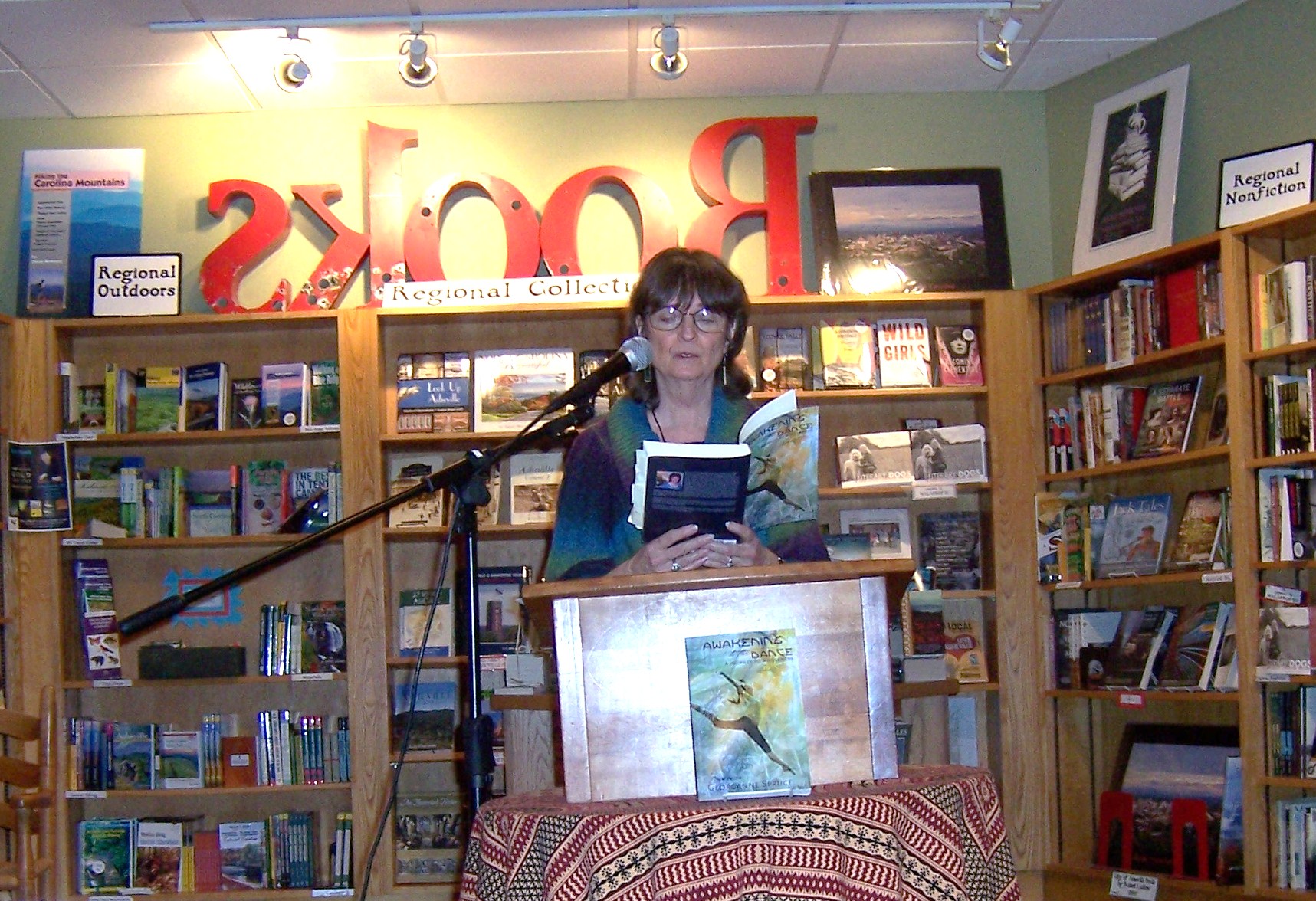
Last Friday, I read from my memoir Awakening to the Dance: A Journey to Wholeness at Malaprop’s Bookstore in Asheville.  It felt like Valentine’s Day, for the room was full of friends, acquaintances and strangers.  Some were there just to support my writing efforts; some were there because they were curious about the story; others were there just because we love each other.  Robin, who introduced me, made me sound like a celebrity.  The audience was wonderfully responsive and asked great questions.  It was fun to use my dramatic skills to interpret literature publicly – especially since it was my own creation, and I could see immediately the audience’s response to what I had written.

Malaprop's Signing 002

Surrounded by Loving Friends

Among my friends were several who have seen me through all kinds of challenges, especially the most difficult one, two years ago, when a love relationship ended.  The pain overwhelmed me, but the constant flow of warm hugs and kind words helped me remember who I really was—a loving and loved woman.  How they put up with my tears and lengthy sad stories I don’t know—actually I do know—they are incredibly loving people.  Even if they thought my book was horrible, which they don’t, they would have come to this event because they know how much it took for me to complete it and put it out into the world.  And they know that I hope that what I’ve learned will help someone else create a happier life.

Real Love Connects With Spirit

When I read Eckhart Tolle’s quote on love, I started searching for some articles and videos to share.  In some of these writings, he points out that our love is often ego-based, but it is real love only when the transcendent becomes a part of it.  He says, “Love becomes a source of suffering when the transcendental is missing.”  Hmm.…So I’ve gathered some articles and videos by him because I think his work is so important for us to understand.

English: Head-shot of Eckhart Tolle from direc...

I’ve also written a lot about love this year and if you missed any of these posts, I’ve listed them for you.  So, instead of doing a new post, I want to ask you to do this:  look over the links below, trust your intuition, and when you feel drawn to one, look at it.  It may be just what you need to hear today.

Love

Happy Valentine’s Day!  Remember we are all lovers.  We don’t need anyone to complete us although it is always nice to share our love.  Let the love within you fill your day.  You are Love!

© 2013 Georganne Spruce                                                                 ZQT4PQ5ZN7F5

 RELATED ARTICLES on Eckhart Tolle:  Relationships: True Love and the Transcendence of Duality, Eckhart Tolle – One-Sided Love Relationship – Video, Real Love Doesn’t Make You Suffer, Eckhart on Personal Love

RELATED BLOG POSTS: Awakening to Love Ourselves, Receiving Love, Awakening to Love the World, Part I, Awakening to Love the World, Part II, Diversity, Awakening to Love the World, Part III, Cooperation, Awakening to the Healing Dance: Feel the Love

WE ARE ALL ONE

Daisy's first days 032

May your holiday be filled with peace, love, and joy!

AWAKENING TO WHOLENESS

Dear readers, If there are inconsistencies in my blog, please excuse them.  Each time I preview it, what appears is different.  The post page keeps changing what I have put on.  such is the technical world.  Look carefully for the words with links.  They are not holding the blue color.

“I now have a view of spirituality I didn’t have before.  It’s a more integrated spirituality where wholeness is experienced throughout the entirety of our lives.  I now believe that separation of sacred and mundane is hurting our civilization more than helping.”  Dr. Amit Goswami

001

Do you feel whole within or do you always feel something is missing?  If you feel whole, how did that come about?  Are you able to express it in your mundane life?

The End Is The Beginning

Today is 12-12-12.  Some identify it as the end of the Mayan calendar and the end of an era.  Some believe it’s the end of the world.  But one truth stands out above all the theories for me.  Every ending is a beginning.  We are leaving behind a life totally centered on rationality and patriarchal values.  This change is a beautiful opportunity to balance and find wholeness within ourselves and our world.

Making the SHIFT

I’ve  pointed out that we need to move from competition to cooperation, but today, I want to look at another split we need to heal and this integrated approach to spirituality is beautifully described in an article “Endless Emergent Possibilities:  Spirituality +Science =SHIFT!” by Kathy Young in the December issue of Science of Mind Magazine.

For many of the years I was a dancer, my spirituality came from the transcendence I experienced while dancing or creating dances.  I felt the same thing when I wrote poetry.  In those moments, I was (and still am) in touch with something greater than myself.  Athletes would call this being in the “zone.”  In those moments we go beyond the physical body to a place where there are no boundaries and no limitations.

Integrating Sacred and Mundane

In the article, Dr. Goswami states, “We see that anytime we have a creative feeling, we are engaging with the sacred.  It makes much more sense to abolish the separation and recognize that the sacred is the creative, and to actively invite that into every activity in everyday life.”  Artists and writers understand this although they may not necessarily label it as sacred.

Valuing the rational above all else has limited our development as human beings.  There are always times when we need to think rationally.  It allows us to organize, focus, and act.  It is a valuable trait, but it is only one aspect of mind power.  To be whole, we need to embrace the rational and emotional, the mundane and the spiritual, and the masculine and the feminine in each of us.  The Tao symbol is the perfect visual image of the balance we need to achieve, for the yin and the yang are intertwined.

Religion has given us an image of the sacred that is controlled by rules and the idea that we must transcend this earthly plane to become spiritual.  But when we find the spiritual wholeness at our centers, it is not limited by man’s definitions of what we should be.  Our mundane and sacred aspects become One and we experience a beautiful freedom that opens the mind.  As the mind opens more, we can accommodate new ideas and new visions.

Education Must Include Creativity

One of the worst things we have done in our society is to remove creative classes from our schools.  Art develops spatial awareness.  Music develops mathematical awareness.  Dance develops spatial and kinesthetic awareness.  Being involved with theater productions develops so many talents, I can’t list them all—all the above and psychological understanding of character, empathy, and how to take different elements and integrate them into a whole.

It’s no surprise that our most amazing business people are the most creative ones.  What if we started encouraging creativity in all areas of life and rewarded those who came up with new ideas?

Living Enlightenment On Earth

This morning I read an article that describes so perfectly what I am saying and what Dr. Goswami is suggesting about integrating the sacred and mundane.  On the Biltmore Estate, they are growing canola plants.  They will be harvested and the oil will be sold to local restaurants.  The left-over leaves will be fed to cattle.  After the restaurants use the oil, it will be recycled into biodiesel fuel to run the machinery on the farm.  Brilliant!

If we encourage and allow people to become the naturally creative beings they are, we can truly save the world because that creativity can take us to that realm where all the answers reside.  We don’t need to transcend this earthly plane to achieve enlightenment.  We just need to learn to live enlightened lives right here, right now and change our world so that we are all whole, healthy, and respect all life.  Bringing the sacred and the mundane together can heal all our lives.

© 2012 Georganne Spruce                                                             ZQT4PQ5ZN7F5

Online Interview with Georganne: Dames of Dialogue

Related Articles:  What is Quantum Activism? With Dr. Amit Goswami, Scientific Proof of the Existence of God,  The Divine Feminine and Sacred Sexuality

AWAKENING TO COMMUNITY

Writer's Stop

Writer’s Stop (Photo credit: Stephh922)

“Some people think they are in community, but they are only in proximity.  True community requires commitment and openness.  It is a willingness to extend yourself to encounter and know the other.”  David Spangler

Are you part of a community, personally or professionally?  What does it offer you that you value?

My blog post today is a bit different.  Recently, Brad Swift, a member of my writing community, tagged me for a blog tour, The Next Big Thing—my very first!  The way it works is that a writer answers questions about her/his next book (or one recently published), tags five other writers and passes it on.  The next week those writers do the same thing, so it’s a great way for writers to connect with a larger audience.

I love this idea because it’s about community.  As I’ve often written, one of the major world shifts we need to make is from competition to community.  That’s why I’m grateful to be living in a town where writers are a community and the writers I’ve tagged below are a part of that.  We’re here to support and help each other so that we are all successful.  It’s a great way to live, so check out these special people at the bottom of my answers.

What is the title of your latest book?  Awakening to the Dance:  A  Journey to Wholeness which I published in June 2012.  

Where did the idea come from for the book?  I never planned to write a memoir, but ten years ago when I was out of work and had reached a point with a novel that I couldn’t get past, a woman suggested to me that I’d lived an interesting life in an interesting time and should write about it.  Desperately needing a new project, I began reading my journals from the 1960’s to the present.  As I began writing, the process of exploring my past was spiritually transforming and became part of the story.

What genre does your book fall under?  It’s a memoir.

What actors would you choose to play the part of your characters in a movie rendition?  I’d love for Kiera Knightley to play me.  Kevin Costner would be perfect for Neal.  Judy Dench would be perfect for my mother.  Of course the book spans about 40 years, but I’ll let the director solve that problem.

What is the one-sentence synopsis of your book?  Awakening to the Dance: A Journey to Wholeness is the inspirational story of a woman’s search for her true identity apart from society’s expectations, her commitment to following her passions of dance and writing, her desire to find a soul mate, and the gift she receives by integrating spirituality into her life.

Was your book self-published or represented by an agency?  I published the ebook through  Kindle and Pubit and the paperback through Create Space.  It’s available on all three and on Amazon.com.

How long did it take you to write the first draft of the manuscript?  I took almost ten years to write the book.  I was teaching full-time, and I have no idea how long it took to complete the first draft.  I probably spent at least two years just picking and choosing the most important stories.  Then I had to pare those down and focus the story more on the main theme.  I did extensive rewriting for several years because the book was originally too long.

What other books would you compare this story to within your genre? Every story is unique, but my guess is that any memoir written by a woman who grew up in the 1950s and 1960s would have similar themes.  It’s not about abuse or alcohol and drug addictions as many memoirs are. Of course, part of it could be called a “dance memoir” but even that part focuses on how dance increased my mind/body connection and contributed to my spiritual awareness that we are all One.

Who or what inspired you to write this book?  I realized that I had used many practices, such as meditation, affirmations, chakra balancing, and releasing my fear, that dramatically changed my life for the better.  When I was younger, I had no idea it was possible to live mostly free from fear, so I wanted to inspire others so that they could create the lives they desire and be free from fear.

What else about the book might pique the reader’s interest?  During the 1960s and 1970s when I was a modern dancer, the entire art world was experimental, breaking all the old rules and supporting authentic expression.  It was a fascinating time.

In everyday life, men and women were struggling with the male and female stereotypes that no longer served us.

The book also has a strong love theme. I write about several major relationships with men all of whom were very powerful forces in my life.  In one way or another, each helped me grow and explore the nature of love.  But loving oneself and spiritual love are also themes that run throughout my story.

Please take a look at these fascinating writer friends:

Debra LloydTrey CarlandJohn Waterman ,Celia Miles

What does your community mean to you?  Please comment.

 ©2012 Georganne Spruce                                                                         ZQT4PQ5ZN7F5