AWAKENING TO THE GUIDES IN OUR LIVES

“Be grateful for whoever comes, because each has been sent as a guide from beyond.”    Rumi

Who have been the major guides in your life?  What have you learned from them?

Throughout the last year and a half, as I edited and prepared Awakening to the Dance: A Journey to Wholeness, I became more aware of the many transformations that took place in my life because of the influence of other people.  Some were pleasant experiences; some were not; some were lovely and disappointing. 
I’m not sure I believe the old saying, “Time heals all wounds,” but I do believe time gives us the ability to see those old experiences in a more enlightened way.  As we grow and learn, we hopefully come to a deeper understanding of our lives and the lessons we’ve learned from our life challenges.  At this point in my life, I have a whole basket of thank yous to hand out that I would never have viewed as good things at the time they happened.


Being Thankful For the Chaos

The summer after my divorce many years ago, I studied dance with Erick Hawkins. His gentle classes were just what I needed, and I learned more than one life lesson from him.  I wrote about the first awareness, concerning an injury, in the post “Body and Soul As One.”  The second awareness occurred as a result of a comment.

Hawkins in El Penitente, 1930s

Hawkins in El Penitente, 1930s (Photo credit: Wikipedia)Hawkins.  

“That summer, Erick Hawkins was my spiritual teacher. One day, he said that in Zen one said, ‘Thank you’ when things were at their worst. The idea was profound—that we should be thankful for all experiences because we could learn from them and become more aware. Although I learned to have more respect for myself after the injury, I wasn’t yet able to see what positive things I had learned from my divorce. So I thanked Erick Hawkins for opening my heart and showing me how to have compassion and respect for myself as well as for others. I could even say, ‘Thank you for the chaos of my life,’ having faith that someday I would know what good sprang from it.”

Forgiving Ourselves and Others

Now, many years later, I can see how badly matched my ex-husband and I were, and how we were so unprepared, at that stage in our lives, to give each other what we needed in a relationship.  I no longer blame him or me for the hurtful choices we made, but I did learn how a good relationship requires the kind of communication we didn’t have.

Feeling Gratitude For What Is Good

It was many years before I really embraced Hawkins advice, but now part of my daily gratitude practice is being thankful for the difficulties that arise in my life.  I say, “Thank you for this difficulty and the valuable lesson I will learn from this.”  I have learned that nothing is meaningless and trust that the opportunity to learn lessons is everywhere.

The next relationship I was in, I chose a man who was an artist and whose spiritual life was entwined with art like mine.  I wrote about this relationship in the book as well.

“In the quiet of an early Sunday morning, I reread the letter from Neal that had arrived the day before. Embracing me with his words, he said I was very dear to him and that he found pleasure in my mind, smile, laughter, and movement. How lucky I was to have found a fairly liberated man, but a part of me was afraid to surrender and love him completely because losing him would then be unbearable. The spiritual bond that our art created between us was deep, for sometimes he thought he was me—that was the only way he knew to describe it, as if we had developed from the same root. We hurt in similar ways, we grieved in similar ways, and we celebrated in similar ways. When we danced or made love, a sheer, pure pleasure flowed through us. We could appreciate silence, share it, and not feel ill at ease. Even with hundreds of miles between us, I felt his touch.”

The relationship lasted for eight years.  At times we were just friends; at other times, we were lovers considering marriage.  There was joy, laughter, and tears, but despite our powerful connection, we parted.  Although we loved each other, he didn’t really want what I would call a relationship, and I could not live the way he wanted us to live. Despite that, the list of positive things I learned from that relationship is endless, not the least of which was that I could be loved for who I truly was.

Letting Go And Finding A Better Life

These are only two examples of the many guides who have passed through my life and taught me who I am and how to live with more joy and meaning.  When I began to write my memoir I was searching to understand why I was experiencing so many negative things.  Now I can look back and say, “It was time for me to move on and I wasn’t moving,” so the Universe made it impossible for me to stay where I was, and I am so grateful.  Without that push I might not have come to North Carolina, I might not be writing, I might not have the life I love.

What is one of the important lessons you’ve learned from a guide in your life?

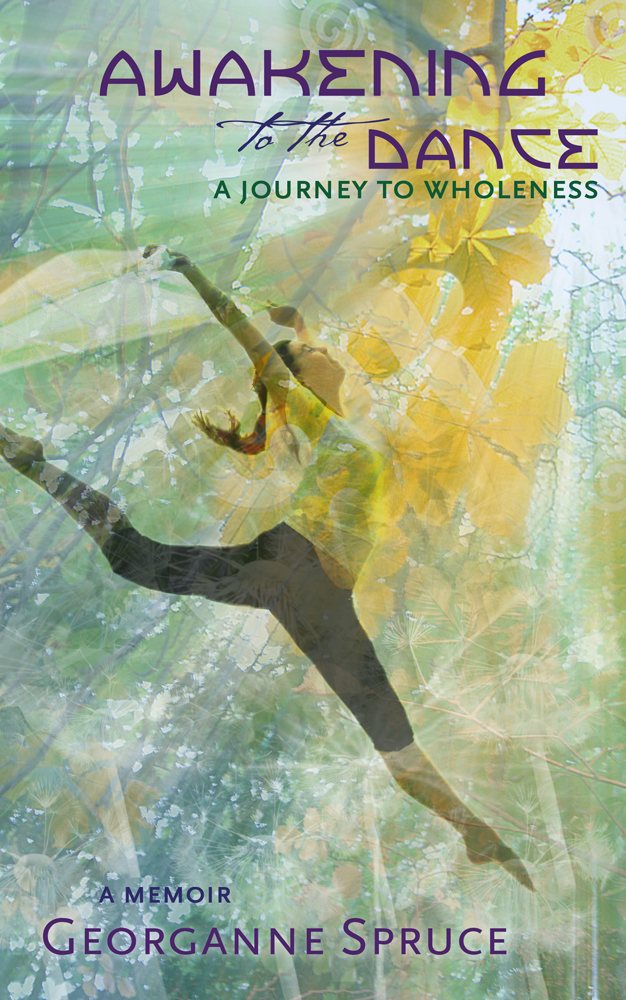
I hope you will want to read more of my story and how I used my spirituality to grow and change. Awakening to the Dance: a Journey of Wholeness is now available as a paperback at Create Space and as an ebook on Amazon and Barnes and Noble.  The paperback is also available on Amazon in this country and some European countries.

I will continue to the Wildness Series as I have time to interview some wonderfully wild people I know.

©2012 Georganne Spruce                              ZQT4PQ5ZN7F5

AWAKENING TO WILDNESS, ONE WITH NATURE, Part 2

“In wildness is the preservation of the world.”               Thoreau  – thoreau’s Birthday is today

What is your relationship to nature?  Are you a hiker, fisherman, gardener?  What part of you comes alive when you are in touch with nature?

The Soul Is Wild

“The soul is like a wild animal – tough, resilient, savvy, self-sufficient, and yet exceedingly shy.  If we want to see a wild animal, the last thing we should do is to go crashing through the woods, shouting for the creature to come out.  But if we are willing to walk quietly into the woods and sit silently for an hour or two at the base of a tree, the creature we are waiting for may well emerge, and out of the corner of an eye we will catch a glimpse of the precious wildness we seek.”  Parker Palmer

What is it about wildness that touches so many of us deeply?  For my friend Jerry, it is nature’s inability to be domesticated.  Even at four years of age, he was allowed to go into the forest where he created fantasy games, often related to the stories he was reading.  The woods were his playground.  As a young man, he ran a program similar to Outward Bound.  He was a woodsman first and later became a psychologist.

Wildness Is Central To Spirituality

Jerry often quotes William Blake or Thoreau, both writers who embody wildness.  When I asked him how wildness relates to his spirituality, he said, “It is central to it.  I’m part of the natural—part and parcel of the fauna—I’m not outside looking in.  I can’t think of spirituality without wildness.  I’m not sure I could be wild if I lived in the city all the time because that environment is so domesticated.”

The Space With No Name

During my twenties, I was enthralled with the Romanic writers, the transcendentalists like Emerson and Thoreau, who saw a deep, but wild connection between nature and spirituality.  So, when I was first invited to visit Jerry’s “Space With No Name,” I was truly awed by its natural beauty and felt as if I had stepped into another world.

After Jerry and his wife Jane moved to their cabin in the woods, he needed a space to put his parents who had passed away and been buried on someone else’s land.  After one plan fell through, he found a beautiful rhododendron area.  As he wandered through it, he thought, “This is not a graveyard, the old burial ground; this is a wilderness space that will sanctify my parents.”

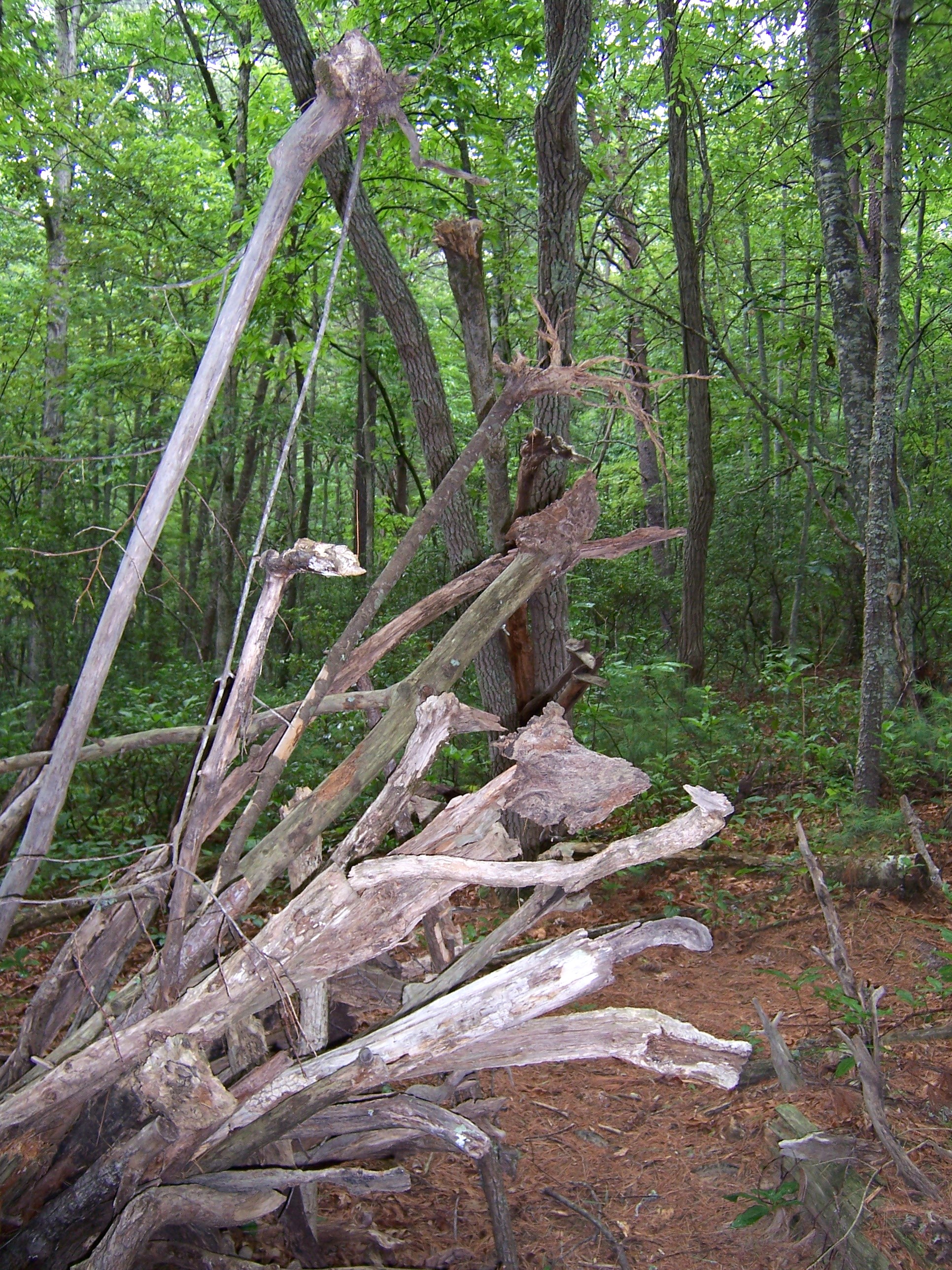
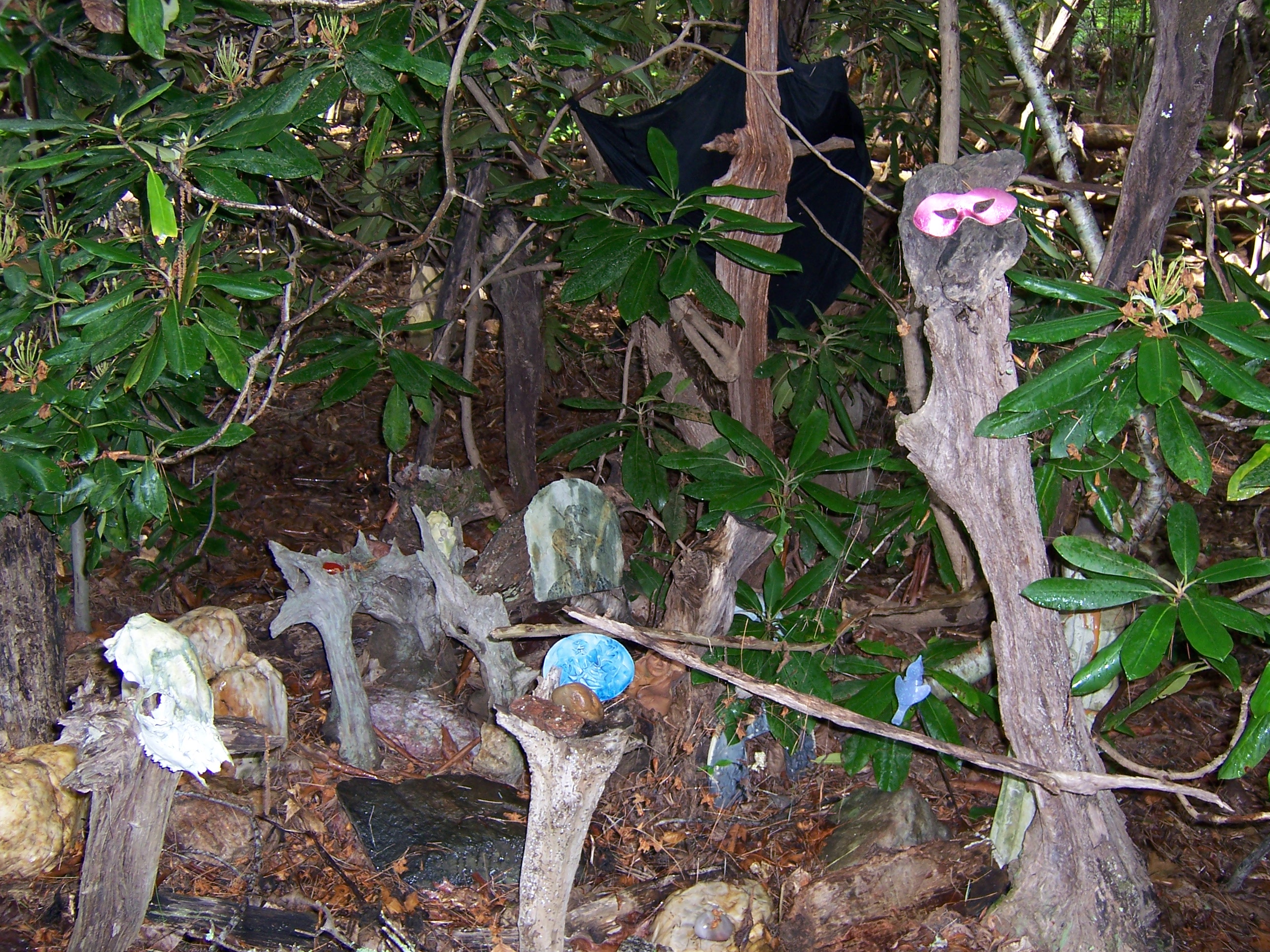
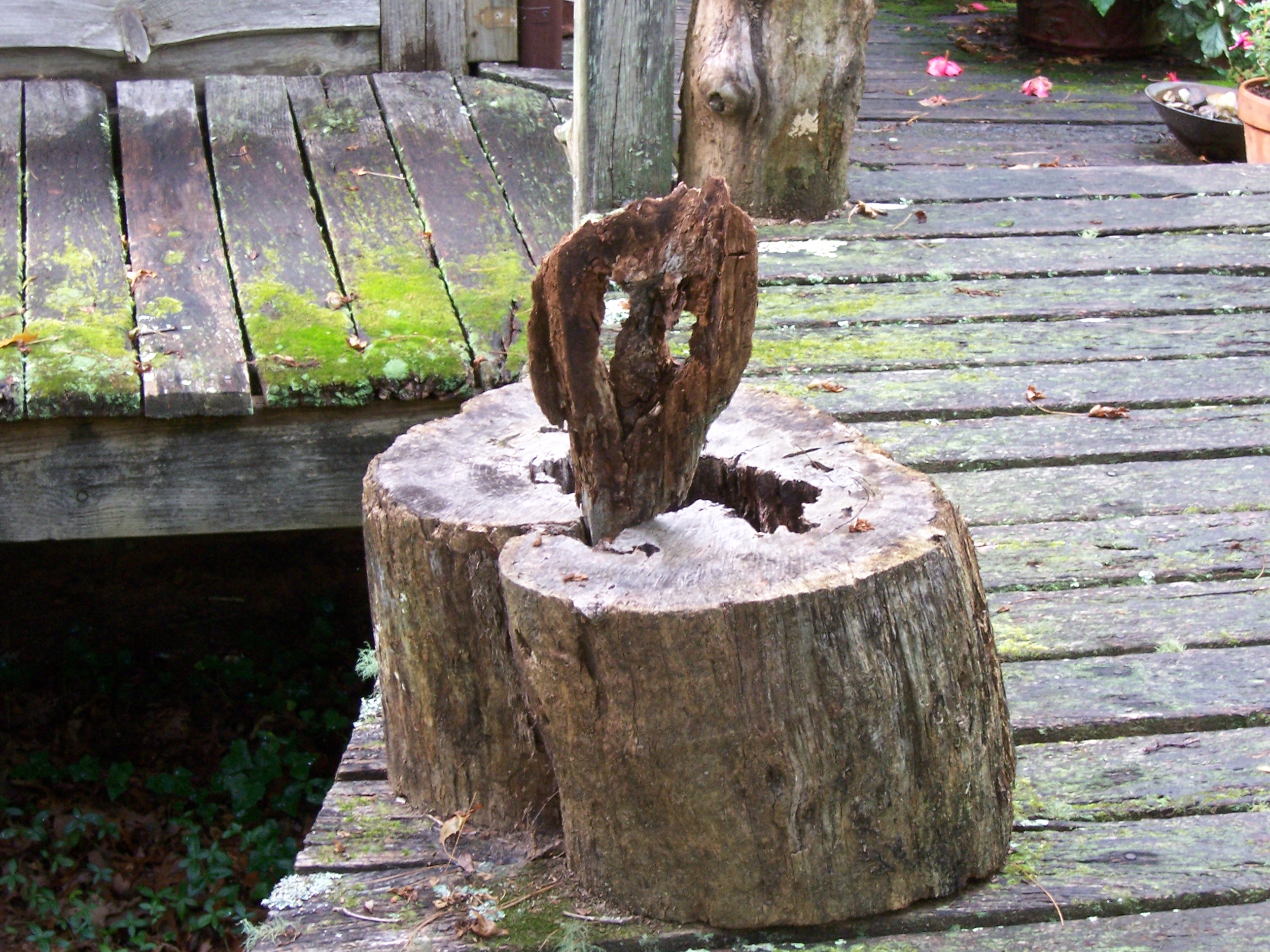
Gathering wood off the ground, he created a little container and using the contours of the hill as paths, he created this special space.  He put creatures on the fence posts and before long, he says, “The space over ran itself.” Every day he walked the paths, very attentive to what was there, then the next day in the very space that had been empty, a creature would appear—branches with knarled ends or pine knots, stumps with interesting configurations, or rocks with faces.  Things began to show up on their own, and he swears they also moved around, sometimes falling off perches or appearing mysteriously in new places. He insists, “I swear, it became alive.”

I have no doubt this is a sacred space.  The last time I was there, I glanced toward a small metal sculpture of a dancing earth mother and was stunned by what I saw next to it.  In the same area was a knarled wooden creature that looked like a samurai warrior that had once appeared in a vision I had while meditating.  For a moment, all time and space was one, and my unconscious become conscious—which is what this space does to one.

In “The Space With No Name” there are around a thousand creatures, natural and ones created from several natural forms.  I asked Jerry, “Aren’t these composite creatures art?”

“I don’t want to claim it as art,” he said.  “It’s fine with me if people say, ‘You’re not a caretaker, you’re an artist.  It may be one and the same thing.  I was never a painter, poet, or composer.  I didn’t and don’t do Art, yet living so close to Art, I recognize and appreciate her presence, practice, and performance, and her Wildness, and She has surprised me with a gift of animistic sensibility in the “Space With No Name,” where I am in close communion with the living, breathing woods and hundreds of wild creatures, including rocks, roots, stumps, pine knots.  There are hawks, bugs and birds; trees, red fox, wild turkey, bob cat, bear, raccoons and possum; stealthy presence of coyotes.  Neither owner nor creator of this space, I am lucky to be its caretaker.

Being One With All That Is

His animism permeates Jerry’s whole life.  “This rock, in my space, that I sit on has an eternity I don’t have.  I wouldn’t take all this as seriously as I do if I weren’t animistic.  I’d say, ‘That’s just a tree stump.’  But it’s so much more.  One day, Jane was working on a sculpture, a mask.  I was walking around and saw something sticking out of a tree stump.  I was curious so I pulled it out—it looked like a mask.”  He pointed to the mask-like image sitting on the tree stump in front of us.  When we are in touch with our core of wildness and Oneness, these things often happen.

As I listened to Jerry, I realized his relationship to nature exemplifies Oneness.  We are all a part of Oneness—one with each other, nature, and the Universe, but we are not all conscious of it.  It is only when we become aware of it, that it enriches our lives. The wildness of Oneness is at the core of what Jerry experiences each day when he enters the “Space With No Name.”  He is truly blessed by that experience, and I am truly blessed to know him and his wife Jane who shares his sensibilities.

What part of yourself do you find in nature?

©2012 Georganne Spruce                                                           ZQT4PQ5ZN7F5

Related Articles:  Awakening to Wildness, Being Authentic, Part 1, John Muir, Zen Buddhism in John Muir

AWAKENING TO OUR WILDNESS, Being Authentic, Part 1

“Be your authentic self.  Your authentic self is who you are when you have no fear of judgment, or before the world starts pushing you around and telling you who you’re supposed to be.  Your fictional self is who you are when you have a social mask on to please everyone else.  Give yourself permission to be your authentic self.”  Dr. Phil

When you dance with life, which dance do you prefer: the one someone else created or the one you created?  Who are you really?

Getting in Touch With Our Untamed Self

There is a part of me that has always remained untamed.  As a child and for many years, it primarily remained underground.  I tried to be a good girl, not cause trouble, and do the right thing.  As a result, I was very uptight, nervous, anxious, and socially uncomfortable.  I had this feeling that who I really was, this thinking, creative being, wasn’t a good thing.

But there were two things that saved me.  The first was that my family spent many hours out-of-doors where I experienced Oneness with nature.  When the weather was good, we went on hikes, swam in lakes and rivers, and picnicked under the trees.  In the silence of nature, there were no expectations, only the silence in which to be.  And I loved our pet cats because they were cuddly and playful, but undomesticated unlike dogs.  They simply remained who they were.

The second thing that saved me was my creative nature.  That creative energy within felt like the real me.  It was spacey and flowing, unpredictable and joyful, not at all practical like the main quality of most of my kin.  As a child, I created wardrobes for my paper dolls; as an adolescent, I was in plays and wrote speeches; as a young adult, I became committed to being a modern dancer; as a mature adult, I began writing.  Those creative expressions came from a mysterious and unique place deep within me that no one else could touch.

Hiding Behind Society’s Masks

As I entered adulthood and faced my impending marriage, I became aware of the extent to which I had learned to accommodate who I was supposed to be.  Sometimes, I caught myself telling little white lies.  They were created to keep the peace, and I realized I had been doing that for a long time out of fear of being rejected.  I began to monitor myself and tried to be more honest in my communication with those I cared about because I knew I wasn’t being totally genuine.

But being a good wife, teacher, and dancer was stressful.  In Awakening to the Dance: A Journey to Wholeness, my spiritual memoir, I reflected on this dilemma.  “At times, who I was seemed as mysterious to me as the mystery of who Gary [my husband] was. What was behind the masks we wore? We put on our husband and wife masks and did the marriage dance, the balletic pas de deux—playing the prince and princess. We smiled, we touched each other affectionately in public. He brought me flowers when I performed and roses on Valentine’s. We celebrated birthdays, promotions, and performances. But sometimes beneath his persona as a police officer, behind the uniform and the revolver, I saw moments I pretended not to see—moments of insecurity he pretended didn’t exist, doubts—doubts about himself, our marriage, or me.”

We play out these conditioned roles because it is uncomfortable to go against society or our families.  People we love may desert us.  We may lose a job.  This happened to me twice because I refused to do what I felt was unethical. When others are comfortable doing the foxtrot, they resent our doing the tango. But as long as we wear the masks others create for us, we are dancing their dance, not ours.

We are taught these roles are who we are supposed to be, but who we are authentically can only be created by us.  Shakespeare said it best, “This above all: To thine own self be true, and it must follow, as the night the day, thou canst not be false to any man.”(Hamlet)  And that is the core of it.  If we cannot be honest with ourselves about who we are, we cannot be honest with others.

Being Authentic Makes Us Free

Being authentic is true freedom.  It puts us in touch with our Wildness, that purity of nature that lures us to the forest or ocean, for the energy and essence of nature is within us.  We are all One.  When we are in touch with our Wildness, our Oneness, we no longer fear the judgments of others.  We empower ourselves by accepting who we are, and on the deepest level, what we think of ourselves is all that matters.  This is not to say that we do not have to treat others in a responsible manner.  It does mean that we will take full responsibility for our own choices and accept the consequences of our actions.  If we mess up, we have to clean it up.

When we are authentic, we feel secure, for we are also connected with our inner spirit, and thus with that Spirit that is Oneness.  In the silence of meditation or nature or creative expression, we are able to touch our deepest core and who we truly are.  When we are authentic, it is easy to love ourselves.  When we love ourselves, it is easier to love others and to draw to us those people who will truly love us for who we are.

Next week, I will introduce you to a friend who has created a space in which to experience his Wildness, The Space With No Name.

In one sentence, who are you really?

©2012 Georganne Spruce                                                        ZQT4PQ5ZN7F5

Related Articles: The Dance Edition: Watch the Yang Li Ping video, Being Truly Authentic, Wayne Dyer talks about being yourself

STOP AND SMELL THE FLOWERS

“There is pleasure in the pathless woods; There is rapture on the lonely shore; There is society, where none intrudes, by the deep sea and music in its roar:  I love not man the less, but nature more.”   Lord Byron

I’m taking a day off from writing the blog to be with nature and myself–to nurture and balance and find new inspiration.  May you have a lovely day, and maybe take time to revisit one of my previous posts under “Recent Posts” or “Topics to Explore.” Be good to yourself today.


ZQT4PQ5ZN7F5


AWAKENING TO JOURNEY WITH GRATITUDE

“We can only be said to be alive in those moments when our hearts are conscious of our treasures.” Thornton Wilder

Do you practice gratitude often?  How deep are you willing to dig to find something to be grateful for on those days when life feels awful?  Are you grateful for change even when you don’t know what will happen?

Raising Our Vibration

I’m having a lot of trouble focusing these days.  Yesterday, as I sat on my deck proofing the paperback version of my book for the nth time, I really felt I was in another world.  The sun filtered through the trees as they swayed lightly in the breeze; their rustling leaves gently accompanied the conversational song of the birds resting nearby.  I stopped looking at the book and allowed myself to become one with this vibrant natural energy.

From deep within, there rose such happiness and contentment.  I could easily have sat there all afternoon, and probably should have.  Filled with gratitude for the lovely place where I live, I also longed to have more time for these positive experiences and realized it had been too long since I had taken the time to practice gratitude.

When I had chronic fatigue many years ago, I awoke one morning in hot, muggy New Orleans to the sound of birds and a cool breeze.  I was overwhelmed with gratitude, and as that feeling filled me, I realized that was the key to retaining a positive mindset—to find something everyday to be thankful for.  I hadn’t yet been exposed to the idea that gratitude could raise our vibration, but I knew what I was feeling lifted my energy, and I liked it.

Using Gratitude to Light the Journey

At a wisdom group I attend, the teacher quoted from an article by Tom Kenyon in which he said one of the best ways to protect ourselves from the negative energy that is so prominent in our world today is to practice gratitude.  Click on his name to read more about this and the effect of the current solar flares on our energy.  I had expected him to outline some complicated process, but his solution was so simple—just find something to be thankful for each day and allow that energy to encompass you.

Gratitude Comes From the Heart

What is so healing about gratitude is that it takes us out of our minds and into our heart and activates the energy of love.  If we are expressing gratitude for a friend, we are remembering the times they have listened caringly to our woes, not the times we were unhappy with each other.  Practicing gratitude calls on us to focus on what is good, and no matter how difficult it may be some days to find something to be grateful for, making the extra effort will raise our vibration and take us out of the darkness for awhile.  Once we have gotten in touch with that positive energy, it is easier to maintain it.

Use Gratitude to Release the Old Ways

Our world is changing rapidly and it is difficult not to experience chaos in some area of our lives.  Most of us are not terribly comfortable with change, but, at this time, the more we cling to the old ideas and the old ways, the more troubled our lives will be.  Gratitude can help us let go, too.  Express your gratitude for what was good about the old ideas, then release them, having faith that what will replace them will be better.  Resisting change only causes more pain.

Turn to gratitude each day to heal and uplift, to raise your vibration, bring some light into the darkness, connect you with your heart energy, and let go of what no longer serves you.  We are being awakened to a better world and a better life, even when it seems everything is falling apart.  But isn’t that the way it usually is?  We have to clear out the old to make room for the new.  Be grateful for the empty container in your life and envision something beautiful to fill it.

What are you grateful for today?  Please share with us.

©2012 Georganne Spruce                            ZQT4PQ5ZN7F5

Related Articles:  2012: Think with Your HeartThink With Your Heart and Feel With Your Head (Instead of Over-Reacting), The Law of Appreciation – What Are  You Grateful For (Video)

AWAKENING TO HIGHER CHOICES

“When you do things from your soul, you feel a river moving in you, a joy.” Rumi

How do you make decisions?  From the ego or from your higher self?  How do you know when you’ve made the best decision?

Which Way is San Jose?

 Do you remember the song, “Do You Know the Way to San Jose?”  Recently, as it floated through my mind as old songs often do, I decided to look at the lyrics, most of which I didn’t remember.  I discovered that the narrator in the song is longing to return to San Jose because she wants to leave Los Angeles and return to a place where she can find peace of mind, space to live, and reconnect with friends.  She wants to return home where she has what she really needs because her Hollywood dream has fallen apart.

Becoming Aware of Wrong Choices

Like so many, the narrator of this song was pursuing a dream that evaporated in the midst of the noise, intensity, and superficial environment of L. A.  How many of us have experienced something similar?  How many times do we have to make the wrong choice in order to see what the right choice would be?  Hind sight is always a valuable evaluator.

When the path takes us to places that are the wrong places for us, how we respond to these situations is very important.  We often blame ourselves for being foolish or blind to the reality we can later see clearly.  But what if these twists in our spiritual path are simply other ways to get to the place we need to go?

We are not all infallible.  We can only see what is possible based on the level of our consciousness.  More than once in my life, I have chosen to stay in a job, friendship or relationship because I was afraid of the consequences of leaving or because I thought I could fix what was wrong with the situation.  Sometimes we can resolve the challenges that face us, so knowing when to leave is a huge decision.

Higher Choices Come From the Soul Level

In order to make the highest decisions, we need to consult our soul, go deeper, meditate, and take the time to evaluate the spiritual value of the situation.  When we do this, and out of this contemplation, we discover an answer, we then need to look closely at that answer.  Could ego have slipped in there to derail our best intentions?  Will the way we decide to handle a situation hurt someone?  I test myself by asking this question: “What choice can I make that is for the highest good of all?”

If we live in love for other humans, the decisions that are the most difficult are the ones where we know others will be hurt by our decisions, but sometimes walking away from a situation is for the highest good of all although it hurts.  It may be the higher choice. We not only need to love others, we need to love ourselves as well and choose not to allow others to undermine and abuse us.

I once met a woman who stayed with a man who abused her.  When I asked why she did that, she replied that she believed showing him unconditional love helped him to finally see that what he was doing was wrong and that it motivated him to change.  Did she make a decision that was for the highest good of all?  I don’t know.  I wouldn’t make a similar choice, but I do not know the details of her journey or the lessons of her lifetime.

Soul Choices Expand Our Lives and Free Us

The choices we make from the soul level are the highest choices no matter how they look to others.  They always serve us well even when the path is difficult.  They take us deeper.  They expand our understanding.  When I had to walk away from a relationship I’d been in for eight years, I was terrified, and yet, the moment after I said good-bye I was flooded with peace and joy. I never expected this response; I just wanted to be free of the irresolvable conflicts.  But no matter what doubts I’d had before that, I knew in that moment, I had made the highest choice.

Although we may sometimes feel we are overwhelmed by that river moving within us that Rumi refers to, it will lead us to moments of joy, confirming we have chosen the best way.  It is all part of the dance of life, and the more we awaken to our higher choices, the more we will love our lives.

What higher choices have you made lately?  Please share your thoughts.

© 2012 Georganne Spruce

Related Articles:  Every Choice Is A Spiritual ChoiceKeep an Open Heart in All of Your Relationships,

AWAKENING TO VENUS

“Venus favors the bold.”  Ovid

English: 2004.06.08 Venus Transit, Celestron 8...

English: 2004.06.08 Venus Transit, Celestron 8″ Catadioptric Telescope (Photo credit: Wikipedia)

Compared to the sun, Venus is only a dot, and as I watched her move across the sun yesterday, I thought her rather bold and a rather wonderful symbol for us all. Life often looms large, like the sun, blinding us with its powerful brilliance and overwhelming what we feel are our small contributions to life.  And yet if each of us stood still, afraid to venture into the unknown or the known that seems too much for us, where would we be? Slowly and surely, one mile at a time, Venus progressed across the face of the sun, which is 113 times larger than she.  It took about seven hours for her to make the transit.  Not completing the journey is not an option.  She just does it.

Finding the Spiritual Courage to Fulfill Dreams

How many times have we dreamed a dream and hesitated or abandoned it because of fear—the fear that it was too difficult, that it would take too long, that it would cost too much, that it would require too much sacrifice.  But the price of walking away from our dreams is huge.  I have had dreams for which I worked for years.  I succeeded in becoming a modern dancer dancing with a company, but I could never make the other dream manifest—that of having a career as a dance teacher in a college where I could teach and earn a livable wage. Even though I didn’t get exactly what I wanted, I have no regrets and feel good about my attempts. In the last year and a half, I have felt a little like Venus trying to make her way through this huge project of writing and publishing a book.  As it turned out, the publishing part has been much more challenging than I could have imagined, and if I had had any idea how difficult it would be, I probably would never have started.  But the secret is this—I simply took it one step at a time and trusted that what I needed next would show up.  And it has.

Living With the Natural Flow

Most of life lives in trust with nature, moving through the natural cycles without questioning the process.  Only we humans use our minds to separate us from the natural rhythms that can support and assist us.  Trusting in nature or Spirit or ourselves allows us to also release the fear that often blocks our progress.  It puts us in the flow where all answers reside.

Venus Supports the Changes We Need

I taught Greek mythology for years and always made a point of relating the myths and the characters to real life.  Venus or the Greek Aphrodite is the Goddess of Love.  She represents beauty, truth, harmony, love, and creativity.  To see her as a sex goddess is to deny her real essence.  As a planet, she is the only feminine one.  In her bold move across the sun, she is calling to our attention all that she represents.  It is a time for the feminine to become more influential in our world, time for us to seek harmony rather than winning, time to be creative in solving our personal and world problems, time for us to learn to love those who are different, and time for us to demand a more transparent government to support truth.

Being Bold Enough to Change

The astrological influences of this transit are also interesting.  If you want to know more about those, I recommend Belinda Dunn’s website, astrodelight.com and her Celestial Currents for May.  She, too, affirms that we are in a significant time of change.  It is time to pursue our dreams, and the irony is this:  when what we know falls apart, it’s time to change.  In my community, I am awed by the number of people who are creating small businesses when the economy is so precarious.  They are boldly reevaluating their lives, examining their true talents, and using those talents to create a new life that feeds their souls as well as their finances. Our journeys are often not as peaceful and straightforward as Venus’ Transit.  But that is her journey.  We each have to follow our own. One of these days, I’ll actually have that paperback book available for sale.  When it’s done; when the time is right; when it’s in Divine Order. In the meantime, I want to remember that Venus teaches us to value harmony, and I’ll try to stay in harmony with myself, others, and the planet—boldly, of course.

What thoughts or feelings has the Venus Transit brought up for you?

© 2012 Georganne Spruce

Related Articles:  Venus Transit* Astrology and Symbolism, June 5-June 6, 2012: The Return of the FeminineThe Meaning of the Venus Transit in 2012

DANCING WITH OUR IMPERFECTIONS

“The thing that is really hard, and really amazing, is giving up on being perfect and beginning the work of becoming yourself.”  Anna Quindlen

I’m a recovering perfectionist.  I say, “recovering,” because I still often find myself attached to wanting a creation of mine or my own action to be perfect and have trouble deciding when it is good enough to reveal to others.  Editing my own writing can become an endless task.  I can always find a better way to phrase a sentence or a more expressive word to use.

The Illness of Perfection

About fifteen years ago, when I was diagnosed with Chronic Fatigue Syndrome, I visited my doctor’s clinic where I interacted with a wide variety of health care professionals.  I saw nothing wrong with my perfectionism until, repeatedly, the people there, one by one, told me the same thing: “Don’t be so hard on yourself.”  I remember sitting in the therapist office with tears streaming down my face.  They were right.  I was just too exhausted to continue living this way.

What the people at this clinic gave me was permission to be imperfect, something I had been unable to do for myself.  With the fatigue I suffered at that time, I began to understand that it was impossible for me to do everything I thought I needed to do if I wanted to heal.  I had to learn to love myself and my imperfection.  Accepting my limitations became a spiritual practice, and as a result, I began to let go of other’s expectations of me.  It allowed me to become more of who I really was.

Living From the Soul Level

When we can strip away other’s expectations from our lives and clearly look at who we want to be, we begin the authentic spiritual journey.  All that we discover about ourselves will show us who we truly are.  By discovering at the soul level who we are, it becomes easier to identify our true calling in life, and living with that at the center of our lives, can bring us tremendous joy.

Spiritual teachings tell us that we are perfect just the way we are, but we have all come to this lifetime with certain issues to resolve.  We see the repetition of particular themes and judge ourselves as failures instead of seeing how each repetition offers us the opportunity to further solve the problems those themes create.  The earth is a school where we are able to grow and learn, and all these “problems” that arise are part of the curriculum.  Spirit, our teacher, does not judge us, it only guides us.

Blocks to Going Deeper

Many people live in denial, blaming others for negative experiences.  By being unwilling to go deeper and by choosing to feed the ego’s desire to be right, they shut themselves off from that spiritual core through which Spirit guides us.  Being unwilling to examine our lives and understand our own motivations creates an extremely limited life.

These patterns are often created in childhood.  Because my parents argued, I always tried to be the perfect child so I would not create more dissention.  I believed that I would be loved only if I were good enough. And so these patterns continued into adulthood, stunting me in ways I was unable to see until a powerful event pushed it in my face.

 Living from Our Spiritual Core

 When a powerful event occurs, we face the real test.  Are we willing to do the work we need to do in order to grow beyond our childhood neurosis?  Only when we are willing to find that spiritual core inside that guides us to a higher path will we be able to let go of these negative patterns that made us feel secure in some way.  In touch with our spiritual selves, we can find the security that will allow us to let go and move on. When we truly accept that we are spiritual beings, then we can accept that everything that comes into our lives is in Divine Order.

Accepting what is, without judgment, allows us to accept that all our imperfections are in Divine Order.  In fact, the irony is—we are already perfect.

© 2012 Georganne Spruce                                                   ZQT4PQ5ZN7F5

Related Articles:

Are you a recovering perfectionist – How to Address Spiritual Superiority

The Spirituality of Imperfection: Storytelling and the Search for Meaning

The Origins of Perfection

AWAKENING TO GROW

“The highest form of ignorance is when you reject something you don’t know anything about.”  Wayne Dyer

Are you open to changing and growing?  Or do you try to keep things the way they are despite the Universe’s hints?

Growing Can Be Challenging

I’m a day late posting this blog because I needed to spend yesterday growing.  It wasn’t the sort of growth I like.  It involved downloading new software and learning to use it, and it was very challenging.  One piece, Scrivener, is what I believe will be a very useful piece of software that will make my writing and compiling books so much easier.  I’ve been putting this off because I didn’t want to deal with the learning curve.  But I couldn’t finish the paperback version of my book without doing this, so I took the plunge.

The second software was unexpected.  When I received the book file from my friend Brad Swift who formatted it, I couldn’t open it because it was zipped.  (You technical people know what this means.)  My operating system is supposed to have the ability to unzip, but, in fact, it doesn’t.  It has a bug in this area, so I had to download another program just for zipping and unzipping.  Isn’t that just zippy!

Oneness Will Bring Us Help

Fortunately, I had some good help—from Brad, who is a coach and creative thinker.  We tried everything to get that file open, but finally had to admit, something was wrong with my computer.   I also had a great tech, Jeffrey, from Scrivener emailing like crazy, analyzing and suggesting the next step.  It was a long day.  Sometimes I left the computer to cry, sometimes to scream.  I even stopped to read inspirational thoughts once.  That didn’t help.

Well, I messed up the downloads more than once, but fortunately I could delete them and try again.  I wanted to give up more than once.  My brain felt totally fried.  Despite a part of me saying, “You don’t have to do this now,” I knew I did.  I knew that if I gave in to that part of me that is the helpless little girl, I would be very unhappy with myself.

Awakening to Our Inner Strength

You see, as a child who was often sick, my overprotective mother often told me I was too weak to do something or that I would hurt myself if I pushed too much.  So, I felt weak and helpless for a long time until I began to dance and feel strong.  It’s at times like this that my little girl sneaks out again, and I have to remind that part of me that I have recovered from helplessness and can do this difficult thing.

We all have messages from the past that occasionally haunt us, but if we are willing to grow, we say, “Ah, there you are again.  Sorry, but I need to move on.  I’m grown up now.”  Just as flowers need good soil, enough sun and water to grow, we must nourish our own growth.  It may involve feeding our inner selves with meditation, a walk in the forest, or an inspiring book.  Or it may mean trying to do something we have no idea how to do and deal with the frustration and our deflated egos as we try and fail and try again until we succeed.

Having the Courage to Try

Despite my mother’s fears that I would hurt myself, she taught me a contradictory message that has been so powerful.  She insisted that there was no disgrace in failing, only disgrace in not trying.  If you never try, you’ll never know if you can do it, and you’ll always wonder.

My file is now unzipped with the document sitting beautifully in the new software as if it had been born to live there.  Do I know how to use this program?  Sort of.  But I’ll learn more, and I’m already envisioning how it will help me write my next book.  Thank you, Brad and Jeffrey.  And when this paperback is on sale, I’ll let you know because it is a story of growth, despite many challenges, and I hope it will help others to grow too.

How have you grown lately? Please share.

©2012 Georganne Spruce

Related Articles:  Eckhart Tolle – Facing Adversity5 Ways to Let Go of Resistance, A Constant Self-Growth, Awakening to the Power of Pleasant Thoughts

ZQT4PQ5ZN7F5

AWAKENING TO THE LAUGHTER WITHIN

“When people are laughing, they’re generally not killing each other.”       Alan Alda

Does it bother you when others laugh at you?  Are you able to laugh at yourself and especially the challenges in life?

Seeing the Humor in Life

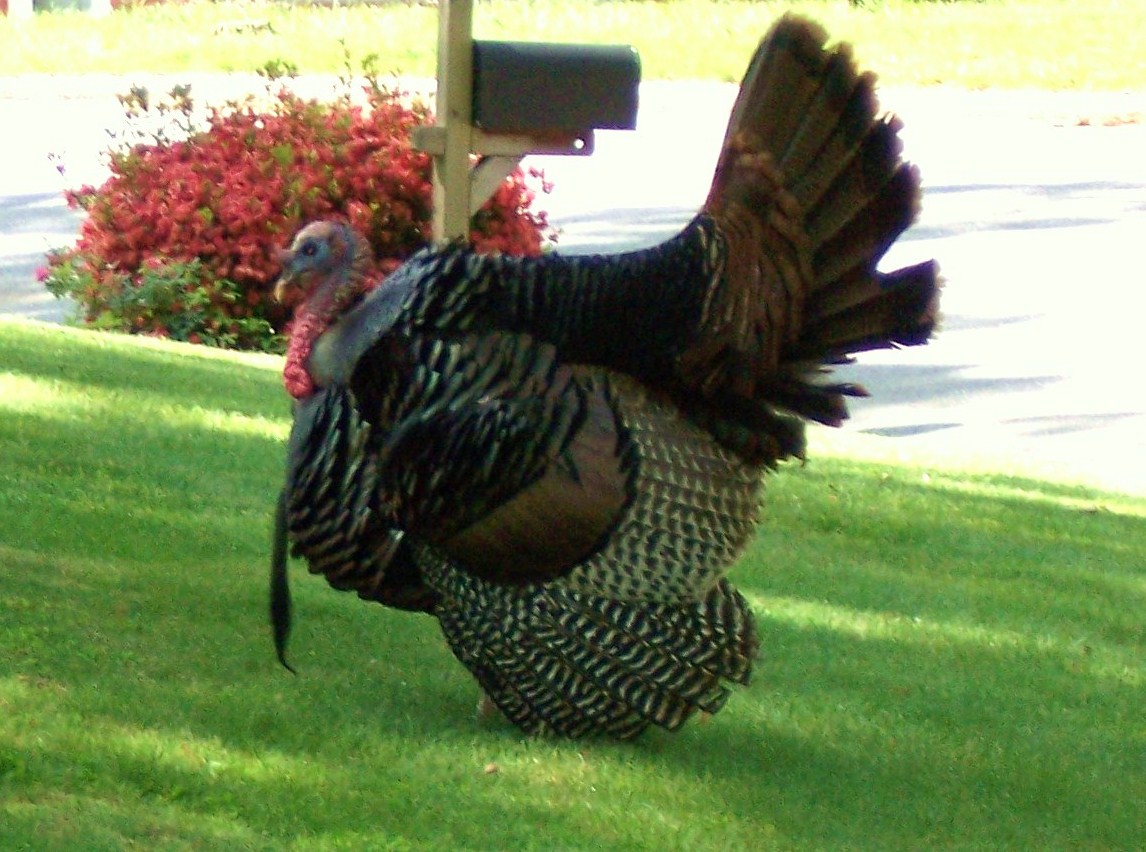
I’ve been writing about Jung’s Shadow and dealing with difficulties lately, and to balance things out a bit, today I’m writing about laughter.  A couple of weeks ago, I had a pretty funny experience with a turkey.  I was working in the front yard and heard a strange gobble.  The female turkeys commonly wander through my yard, but this didn’t sound like them.  I looked around and spied a Tom at the bottom of my driveway, with beautiful red and blue coloring on his neck, gobbling and fanning his tail feathers and flirtatiously looking in my direction.

It was the first time I’d seen a Tom in the neighborhood and I blurted out, “You are one beautiful boy!”  He began walking up the driveway toward me.  I ran inside to get my camera and came back outside while he completed his slow strut to the upper, flat part of the yard.  Wanting to get a picture, I asked enthusiastically, “Would you show me your beautiful feathers again?”  He looked at me and unfurled his feathers.  I was shocked.

He continued walking across the yard a few feet from me, gobbling pleasantly and showing his feathers when I asked him to do so.  When I stopped taking pictures, he looked at me, sensing our little encounter was over, and wandered into the neighbor’s yard.  All afternoon, I heard him gobbling through the neighborhood.  I felt rather sorry for him because it was clear he was looking for a lady turkey, and the best he could do was to get the attention of a human one.

Sharing the Joy

Later, when I told the story to friends, it gave us all a good laugh.  Then one friend pointed out that this wasn’t the first time I’d attracted a turkey, but she hoped it was the last.  With this, we practically fell out of our chairs.  Although I don’t really think of my “exes” as turkeys, the joke was too clever, and laughing at myself felt very cathartic.

Releasing Ego Needs Enhances Our Spirituality

Laughing at ourselves is a good way to put the ego in its place.  For a second, my ego wanted to object to my friend’s remark, but some part of me, the wiser part, said, “Let it go—share the joy of the laughter.  I don’t know when I’ve laughed so hard or long, and the laughter washed away some emotional debris that had been building up.  My vibrational energy felt higher the rest of the evening.

Well into adulthood, I found it difficult to laugh at myself.  I was never a care- free child because of many illnesses, including rheumatic fever and a heart murmur that lasted until I was twelve.  There was often tension in the household with my parents arguing and also the fears created by my brother’s illness as well.  I was well into adulthood before I could laugh at myself and not feel humiliated if others made fun of me.

As the core of who we are is strengthened, we become more resilient.  Our confidence cannot be eroded by a friendly joke, and as we are able to see the humor in our life circumstances, we are more able to let go of the need to protect the ego.  We learn to let go of the need to be right all the time.  We learn to accept our own mistakes as human, fix them if we can, and move on, trying to be wiser the next time.

Being The Wise Fool

I have a great fondness for Shakespeare’s plays, for his wisdom is boundless.  His tragedies always include, among the characters, a fool who is usually part of the king’s court.  He entertains, but more importantly, he hides behind what appears to be his stupidity in order to confront the person in power with his own folly.  While others laugh at him, he makes fun of the king or opposes his actions in a way that entertains even the object of his ridicule.  As Isaac Asimov stated in A Guide to Shakespeare, “That, of course, is the great secret of the successful fool—that he is no fool at all.”  The fool is often the wisest man.  Humor often allows us to state truths that otherwise we could never express.

When we can play the fool and laugh with others, we raise our vibration and experience joy.  It is also a great defense against those who might use humor to hurt us.  If we can find the humility to admit we are not perfect and not feel defensive at another’s derision, we can sabotage their efforts to harm us.  Laughing at ourselves diminishes their power over us.  As Alda points out in the opening quote, laughter takes us to a positive place that tends to bring people together, not separate them.  Perhaps when the leaders of the world meet, they should begin their meeting with each offering a joke to remind themselves, We Are All One.

How has laughter served you well lately?  Please comment.

© 2012 Georganne Spruce                                        ZQT4PQ5ZN7F5